
Plants
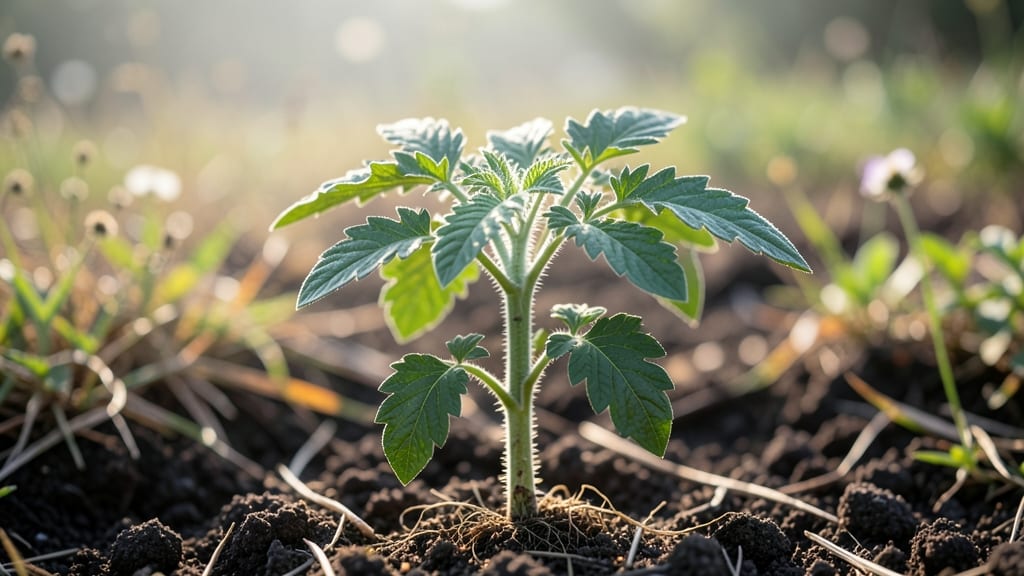
Tomato seedlings look like tiny, thin green sprouts with two small leaves at first, then grow into stocky plants with jagged-edged leaves and a bushy shape. Healthy ones have bright green leaves and sturdy stems ready for transplanting.
When they first emerge, tomato seedlings resemble miniature versions of their mature selves, but with key differences. 🌱 The initial pair of leaves, called cotyledons, are smooth-edged and round, while later "true leaves" develop serrated edges that help distinguish them from weeds.
I always check for these jagged edges when identifying seedlings—it's a dead giveaway! As they mature, the stems thicken and leaves grow larger, signaling readiness for transplanting when they reach about 6 inches tall with 4-6 true leaves.
What's interesting is how quickly these plants transform. Within just 3-4 weeks after sprouting, seedlings can double in size if given proper light and nutrients. The vibrant green color indicates strong health, while yellowing leaves or weak stems suggest overwatering or nutrient deficiencies.
Paying attention to these details helps gardeners avoid common pitfalls like leggy growth or disease.
💡 In This Article
- Identifying Tomato Seedling Stages by Leaf Shape
- Common Tomato Seedling Problems and Fixes
Identifying tomato seedling stages by leaf shape
The very first leaves you'll see on tomato seedlings are called cotyledons—these are the plant's initial food storage leaves. They're smooth-edged and round, typically about 1/4 to 1/2 inch wide, and appear within 5-10 days after planting seeds.
These aren't true leaves but rather the plant's first sign of life, providing energy through photosynthesis until the real leaves develop. 🌱 What's fascinating is how these cotyledons serve as a biological "placeholder" while the plant establishes its root system below ground.
True tomato leaves begin appearing about 2-3 weeks after germination, and this is when you'll notice the distinctive serrated edges that set tomato seedlings apart. These leaves are deeply lobed with jagged, saw-tooth margins—unlike the smooth cotyledons.
At this stage, the leaves are typically 1-2 inches long and grow in a spiral pattern up the stem. The serration helps increase surface area for photosynthesis while reducing water loss, which is crucial for young plants still developing their root systems.
As seedlings mature, the leaf shape becomes more complex. Later leaves often have 3-5 lobes with even more pronounced serrations, resembling miniature versions of a mature tomato plant's foliage.
This progression helps distinguish tomato seedlings from weeds or other plants—many weeds have smooth or entire leaf margins. 🌿 For example, purslane (a common garden weed) has thick, fleshy leaves with no serrations, while tomato seedlings develop these distinctive jagged edges early in their growth cycle.
Another key visual cue is the stem thickness and growth pattern. Healthy tomato seedlings develop a compact, bushy habit rather than stretching tall and thin. The stems should be sturdy enough to support the leaves without bending, and the internodes (spaces between leaves) should be relatively short.
This compact growth indicates strong genetic vigor and proper growing conditions—light levels, temperature, and moisture all play critical roles in this development.
Consider these visual milestones when identifying healthy tomato seedlings:
- Week 1-2: Cotyledons appear (smooth, round leaves)
- Week 3-4: First true leaves emerge (serrated edges, 1-2 inches long)
- Week 5-6: More complex leaves develop (3-5 lobes, deeper serrations)
- Week 7+: Bushy growth pattern with 4-6 true leaves and sturdy stems
The transition from cotyledons to true leaves is particularly important because it marks when the plant begins producing its characteristic tomato foliage.
This stage is also when seedlings become more susceptible to pests like aphids, which are attracted to the new growth. 🐛 Regular inspection during this period helps catch issues early before they compromise plant health.