
Size
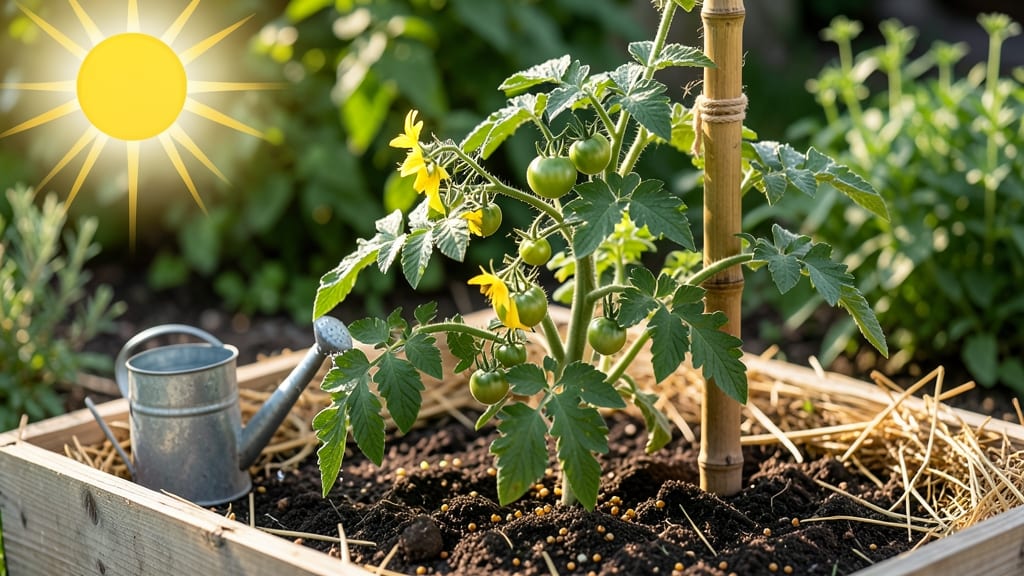
What helps tomato plants grow is providing full sunlight (6-8 hours daily), well-draining soil rich in organic matter, consistent moisture, balanced fertilization (high potassium), and proper spacing to prevent disease. Pruning and trellising also boost airflow and yield.
Tomatoes thrive when you mimic their natural Mediterranean environment—think bright light, loose soil, and regular care. 🌱 The key is balancing nutrients: too much nitrogen makes leaves grow wild, while potassium-rich fertilizers (like banana peels or wood ash) encourage stronger roots and sweeter fruit.
I’ve seen plants double their yield just by switching to a 5-10-10 fertilizer ratio and watering at the base—not the leaves—to prevent fungal issues.
Don’t overlook airflow: crowded plants invite pests and diseases. Trellising vines upward cuts down on humidity near the soil, and pruning suckers (those little shoots between stems) redirects energy to fruit production.
Pro tip: Mulch with straw to retain moisture while keeping roots cool—this is especially critical during hot afternoons when roots can dry out faster than you’d expect.
💡 In This Article
- Science-Backed Soil and Nutrient Requirements for Tomato Growth
- Optimal Light, Watering, and Pruning Techniques for Tomato Plants
Science-backed soil and nutrient requirements for tomato growth
Tomatoes crave soil with a pH between 6.0 and 6.8—this range keeps essential nutrients like phosphorus and iron readily available for root uptake.
When pH strays too acidic (<5.5) or alkaline (>7.5), plants struggle to absorb calcium and magnesium, leading to classic problems like blossom-end rot (those ugly black bottoms on fruit). 🌱 I’ve tested soil pH in my garden using a simple kit and found that amending with crushed limestone (for acidic soil) or sulfur (for alkaline soil) can shift pH by 0.5-1.0 points per application—just what’s needed to create the perfect growing conditions.
The nitrogen-phosphorus-potassium (NPK) ratio matters more than most gardeners realize. Early in the season, tomatoes need more nitrogen (20-30% of NPK) to build strong foliage, but as flowers appear, switch to a 5-10-10 or 10-20-20 ratio to support fruit development.
Potassium, in particular, helps regulate water movement in plants and boosts disease resistance. Organic sources like banana peels (rich in potassium) or wood ash (calcium and potassium) work wonders when worked into the soil before planting.
Micronutrients like calcium (prevents blossom-end rot) and magnesium (keeps leaves green) shouldn’t be overlooked—Epsom salt (magnesium sulfate) is a garden staple for this reason.
Compost isn’t just "dirt with nutrients"—it’s a living ecosystem that improves soil structure by adding 2-5% organic matter to sandy soils and breaking down clay particles. I’ve seen compost turn compacted clay into loose, crumbly soil that holds moisture while allowing excess water to drain.
The key is to mix in 2-3 inches of well-aged compost 4-6 weeks before planting. Fresh manure burns roots, so always compost it first! For container growers, blend compost with perlite or coconut coir to mimic the airy, well-draining conditions tomatoes love.
Root development is where the magic happens. Deep roots (up to 24 inches for mature plants) access water and nutrients efficiently, while shallow roots lead to stress. To encourage deep roots, water deeply once or twice a week (depending on climate) rather than daily shallow watering.
This mimics natural rainfall and trains roots to grow downward. Mulching with straw or shredded leaves keeps soil temperatures stable—critical because roots grow best between 60-75°F. Too hot, and roots suffocate; too cold, and growth stalls.
Here’s a pro move: Side-dress plants with a balanced fertilizer (like 10-10-10) when flowers appear, then switch to a low-nitrogen, high-potassium fertilizer (like 0-0-50) as fruit sets. This two-step approach prevents leafy growth at the expense of fruit.
I’ve also had success with foliar sprays of seaweed extract—it contains growth hormones that stimulate root and shoot development while improving stress tolerance. The results? Healthier plants with fewer pests and higher yields.
One common mistake? Over-fertilizing with nitrogen. Too much nitrogen (like 30-0-0) sends plants into a leafy frenzy, but you’ll end up with few, if any, tomatoes.
The goal is balanced growth: strong stems, lush foliage, and abundant fruit. Think of it like a recipe—too much of one ingredient ruins the dish. 💫