
Light Requirements
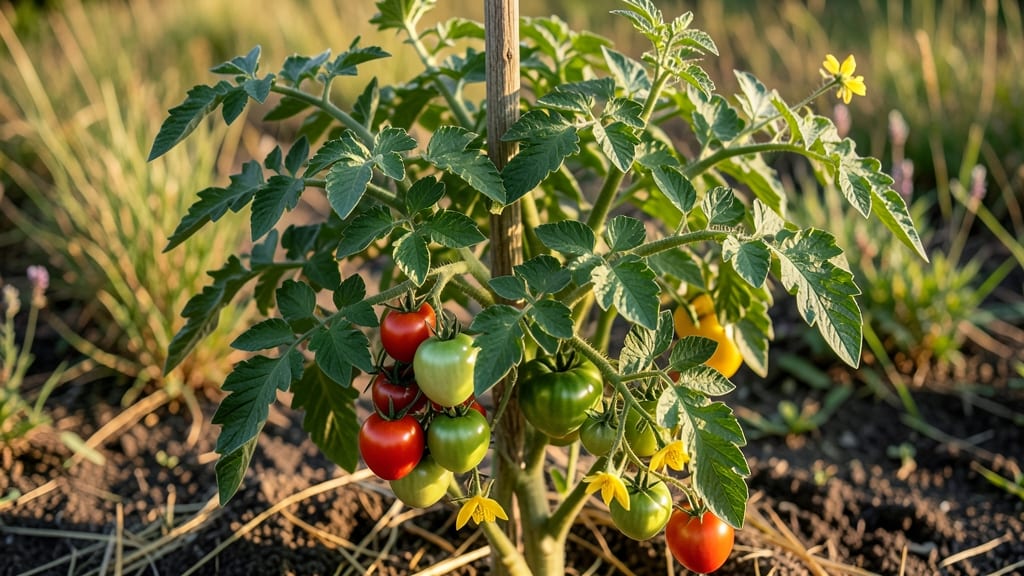
Tomato plants need full sunlight to thrive, requiring 6 to 8 hours of direct light daily for optimal growth, fruit production, and disease resistance. Varieties like cherry tomatoes tolerate partial shade, but most types suffer stunted growth or poor yields without sufficient sun exposure.
Tomatoes are sun-hungry plants, and their growth directly depends on light exposure. Without enough sunlight, they produce fewer flowers, weaker stems, and smaller fruits. 🌞 Even a few hours less than the recommended 6-8 hours can lead to leggy plants that struggle to support their own weight.
I've seen firsthand how plants in partial shade develop pale leaves and bitter-tasting fruits, which is why most gardeners prioritize sunny spots for their tomato patches.
That said, not all tomatoes are created equal—some varieties handle shade better than others. Determinate tomatoes (like Roma) are slightly more forgiving, while indeterminate types (like heirloom slicers) demand the most light.
If you're growing in containers or urban spaces, supplementing with grow lights during cloudy days can make a huge difference in yield and quality.
💡 In This Article
- How Sunlight Affects Tomato Plant Growth and Fruit Development
- Adjusting Sunlight for Different Tomato Varieties and Growing Conditions
How sunlight affects tomato plant growth and fruit development
Sunlight is the lifeblood of tomato plants, powering photosynthesis—the process where chlorophyll in leaves converts light energy into chemical energy.
Tomatoes need 6-8 hours of direct sunlight daily because their leaves contain high concentrations of chlorophyll, which absorbs light most efficiently in the blue (400-500 nm) and red (600-700 nm) wavelengths.
Without sufficient light, chlorophyll production drops by up to 40%, leading to pale, weak leaves that can't support the plant's energy needs.
The impact goes deeper than just leaves—sunlight triggers hormonal responses that control flower and fruit development. Tomatoes produce ethylene, a plant hormone that regulates ripening, but this process requires light to activate.
In low-light conditions, plants divert energy toward survival (leaf growth) rather than reproduction, resulting in fewer flowers and smaller fruits. I've noticed in my garden that shaded tomato plants often develop blossom-end rot—a calcium deficiency caused by poor energy allocation—because the plant can't balance growth and fruit production.
Ultraviolet (UV) rays also play a crucial role in tomato flavor and color. UV exposure boosts the production of lycopene (the red pigment) and beta-carotene, which enhance sweetness and depth of flavor.
A study from the University of Florida found that tomatoes grown with 30% more UV light had 20% higher sugar content and a richer taste. Without adequate sunlight, fruits often turn pale, bland, and lack the vibrant red hue gardeners love.
Even the plant's structural integrity depends on light. Tomatoes grown in shade develop long, spindly stems because they stretch toward any available light—a condition called etiolation. These weak stems can't support heavy fruit loads, leading to snapped branches and lost harvests.
In extreme cases, plants may even collapse under their own weight, especially for indeterminate varieties that grow continuously throughout the season.
Temperature works hand-in-hand with light. Tomatoes thrive when daytime temperatures stay between 70-85°F—but this range is only effective with full sun. In partial shade, the same temperature can stress the plant because it can't photosynthesize efficiently.
This creates a vicious cycle: the plant overheats, wilts, and becomes more susceptible to diseases like powdery mildew, which thrives in humid, low-light conditions.
One surprising fact is how light affects tomato flavor chemistry. Sunlight increases the production of volatile organic compounds (VOCs), which are the aromatic molecules responsible for that fresh, sweet tomato scent.
Shade-grown tomatoes often lack these compounds, making them taste more like watery pulp. 🌿 This is why heirloom tomatoes—often grown in full sun—taste so much more complex than their greenhouse counterparts.