
Plants
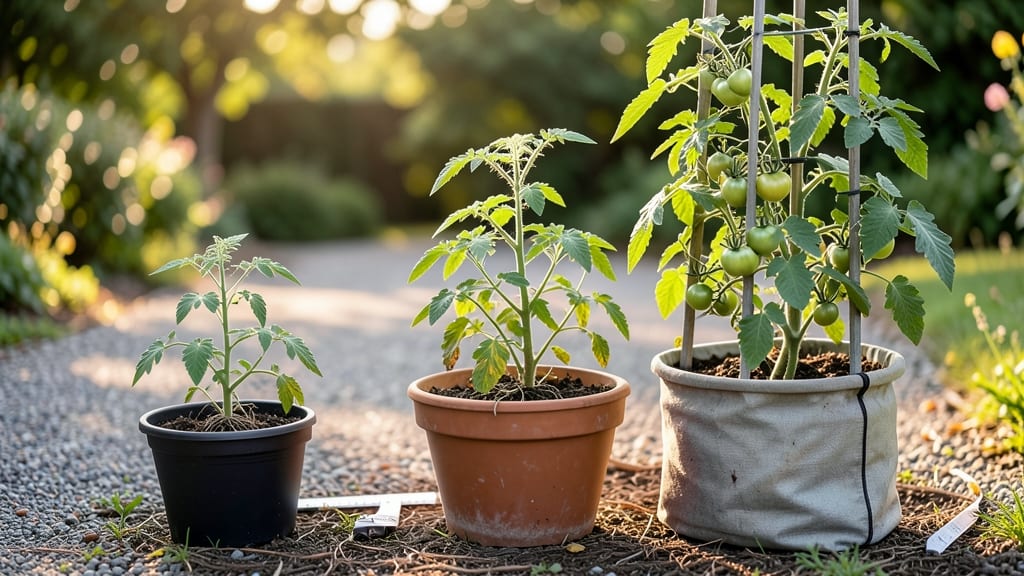
A tomato plant needs a pot that matches its growth habit—whether you’re growing a compact 🍅 cherry tomato or a sprawling indeterminate vine, the right container size is the difference between a bounty and a bust.
Picture this: You’ve spent weeks nurturing your seedlings, only to watch them topple over or produce tiny, stunted fruit because the pot was too small. That’s not just a setback—it’s a lesson in how root space directly impacts your harvest.
In this guide, I’ll break down the exact pot sizes for every tomato type, from 5-gallon buckets for bush varieties to 15-gallon containers for vining giants, plus material tips to keep roots happy and drainage in check.
You’ll also learn how to repot as your plants grow, spot the signs of root-bound stress, and avoid the 3 biggest mistakes that kill container tomatoes before they even reach peak season.


Minimum pot size requirements for tomato plants by variety
Choosing the right pot size for your tomato plants is critical—especially when space is limited. Root space directly impacts fruit production, plant stability, and even disease resistance.
Determinate (bush) tomatoes and indeterminate (vining) varieties have vastly different needs, so let’s break it down by type to help you maximize your harvest in containers.
I’ve grown tomatoes in everything from 5-gallon buckets to fabric grow bags, and I’ve learned that cramped roots lead to stunted growth and poor fruit quality. The key is matching your container size to the plant’s mature size and growth habit.
For dwarf varieties, you can get away with smaller pots, but even these need room to thrive.
Here’s the golden rule: Indeterminate tomatoes (the vining types) need at least 5 gallons of soil at maturity, while determinate tomatoes (bush types) can thrive in 3-5 gallons. But don’t stop there—root depth and drainage matter just as much.
A shallow pot might hold enough soil, but it won’t support a heavy fruit load or prevent root-bound stress.
For urban gardeners or balcony growers, space-saving hacks like vertical trellises or stackable containers can help. Even in small pots, you can grow cherry tomatoes or bush varieties like 'Patio Princess' with the right care. The trick is balancing root space with your available area—don’t sacrifice health for convenience.
Let’s dive into the specifics with this comparison table to help you pick the perfect pot for your tomato variety:
If you’re growing indeterminate tomatoes, like 'Sungold' or 'Black Krim', aim for at least 5 gallons—but 7 gallons is ideal for those towering vines. These plants keep producing fruit all season long, and their roots need room to explore.
I’ve seen root-bound plants struggle to support heavy tomatoes, leading to cracked fruit or even snapped stems.
For determinate varieties, such as 'Roma' or 'Celebrity', a 5-gallon container is often sufficient. These plants set fruit all at once and stop growing once they reach maturity, making them perfect for smaller spaces.
Just ensure your pot has drainage holes—waterlogged roots are a silent killer for container tomatoes.
One of my favorite space-saving hacks is using fabric grow bags for indeterminate varieties. They allow roots to breathe and expand naturally, reducing the risk of circulation issues that come with rigid plastic pots.
Plus, they’re lightweight and easy to move if you need to adjust sunlight exposure. For dwarf tomatoes, I’ve even repurposed old buckets or hanging planters with great success.
Remember, root space isn’t just about width—it’s also about depth. A pot that’s too shallow will restrict root growth, leading to nutrient deficiencies and poor fruit development. If you’re unsure about your pot’s size, measure it or check the manufacturer’s specifications.
And if you’re growing multiple plants, ensure they have enough space to avoid competition for water and nutrients.
Pro tip: If you’re starting with seedlings, begin in a smaller pot (1-2 gallons) and transplant into a larger container when roots fill the space. This gradual transition reduces stress on your plants. I’ve also had luck using self-watering containers to maintain consistent moisture, which is crucial for container-grown tomatoes.
Finally, don’t forget that drainage is non-negotiable. Poor drainage leads to root rot, which can kill your plants quickly. If your container lacks holes, add a layer of gravel or perlite at the bottom to improve airflow. With the right pot size and care
How to choose the right container material for tomato growth
Choosing the right container material for your tomato plants isn't just about looks—it directly impacts root health, water retention, and even yield potential.
Different materials offer unique benefits, from breathability to heat resistance, and understanding these differences helps you pick the best option for your growing conditions. Whether you're dealing with urban balconies or patio setups, the material you choose can make or break your harvest.
Fabric pots, for example, excel at preventing root circling and allow roots to breathe, which is crucial for indeterminate varieties that grow continuously. On the other hand, terracotta pots wick away moisture quickly, making them ideal for hot climates but requiring more frequent watering.
Each material has its own trade-offs, and your choice should align with your local climate, watering routine, and space constraints.
Container Material Comparison for Tomatoes
- ✅ Pros:
- ✔️ Prevents root circling (roots grow outward)
- ✔️ Excellent aeration (reduces root rot risk)
- ✔️ Lightweight (easy to move)
- ✔️ Breathable fabric (reduces overheating)
- ❌ Cons:
- ✖️ Dries out faster (needs frequent watering)
- ✖️ Less durable (can tear over time)
- ✖️ Limited insulation (roots exposed to temp swings)
- ✅ Pros:
- ✔️ Retains moisture well (good for drought-prone areas)
- ✔️ Lightweight and affordable
- ✔️ Wide variety of sizes (easy to find large options)
- ✔️ Durable (long lifespan)
- ❌ Cons:
- ✖️ Poor aeration (roots can suffocate)
- ✖️ Overheats in sun (can scorch roots)
- ✖️ Root circling risk (requires repotting)
- ✅ Pros:
- ✔️ Natural drainage (prevents waterlogging)
- ✔️ Breathable material (reduces fungal risks)
- ✔️ Aesthetic appeal (great for decor)
- ✔️ Cools roots (ideal for hot climates)
- ❌ Cons:
- ✖️ Heavy and fragile (hard to move)
- ✖️ Dries out quickly (needs frequent watering)
- ✖️ Expensive (especially high-quality options)
- ✖️ Limited size options (hard to find large pots)
- ✅ Pros:
- ✔️ Insulates roots (protects from temp swings)
- ✔️ Natural look (blends with gardens)
- ✔️ Good moisture retention (if lined properly)
- ✔️ Customizable size (can build to fit needs)
- ❌ Cons:
- ✖️ Requires sealing (to prevent rot)
- ✖️ Heavy when wet (hard to move)
- ✖️ Can harbor pests (if not treated)
- ✖️ Limited drainage (needs modification)
Tip: For indeterminate tomatoes, fabric pots or wooden containers are best for root health. For determinate varieties, plastic or ceramic can work if you monitor moisture closely. 🌱
If you're growing indeterminate tomatoes, which can reach heights of 6+ feet, prioritize containers with deep root zones and good aeration. Fabric pots are my top recommendation because they encourage outward root growth instead of circling, which is common in plastic pots.
For determinate varieties like bush tomatoes, which stay compact, plastic or ceramic pots can work well—just ensure