
Companion Plants
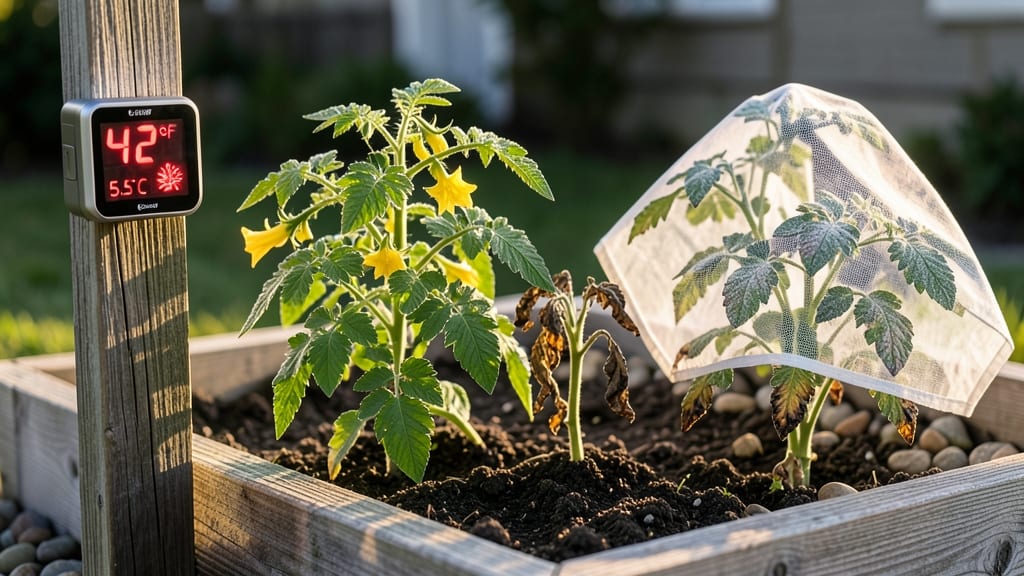
Too-cold temperatures for tomato plants begin at 50°F (10°C), where damage occurs, and drop to 32°F (0°C)—frost level—where plants die instantly. Seedlings need consistent warmth above 55°F (13°C), while mature plants can handle brief dips to 45°F (7°C) if acclimated. Chilly nights below 50°F (10°C) slow growth and trigger blossom drop.
Tomatoes are tropical plants at heart, so even a light frost can devastate them. 🌱 The real danger zone starts when nighttime temps dip below 50°F (10°C), where metabolic processes slow dramatically. Seedlings are especially vulnerable—their delicate roots and stems can't handle anything below 55°F (13°C) without permanent stunting.
I've seen gardeners in cooler climates use row covers or black plastic mulch to create a microclimate that keeps roots protected while allowing foliage to breathe.
What's fascinating is how different varieties respond—some heirlooms like 'Stupice' can handle 45°F (7°C) for short periods, while most commercial types will show stress at 50°F (10°C). The key is gradual hardening off: expose plants to slightly cooler temps over 1-2 weeks before the first frost warning.
Even then, frost cloths become your best friend when temps threaten to drop below freezing.
💡 In This Article
- Tomato Plant Cold Sensitivity by Growth Stage
- Protecting Tomato Plants from Early Cold Snaps
Tomato plant cold sensitivity by growth stage
Tomato plants aren't just sensitive to cold—they experience different thresholds at each growth stage due to their physiology. Seedlings, with their delicate root systems and tender stems, require consistent temperatures above 55°F (13°C) to prevent cellular damage.
Below this, their metabolic processes slow dramatically, leading to stunted growth and poor nutrient uptake. 🌱 The real danger occurs when nighttime temps drop below 50°F (10°C), where photosynthesis rates plummet by up to 50%, causing leaves to yellow and growth to halt.
Vegetative plants (those focused on leaf and stem growth) can handle slightly cooler temps, typically down to 50°F (10°C), but prolonged exposure causes chilling injury—visible as dark, water-soaked spots on leaves and stems.
This happens because cold temperatures disrupt membrane integrity in plant cells, causing them to leak vital nutrients. Mature fruiting plants, however, are more resilient, often tolerating brief dips to 45°F (7°C) if properly hardened off, though fruit development slows significantly below 55°F (13°C).
What's often overlooked is how nighttime cold affects blossoms. When temperatures dip below 50°F (10°C), a process called "blossom drop" occurs—flowers abscise (detach) to conserve energy, reducing your harvest potential. This is especially critical for indeterminate varieties, which rely on continuous flowering.
The damage isn't just cosmetic; cold-stressed plants also become more susceptible to diseases like early blight, which thrives in damp, chilly conditions.
Cold sensitivity varies by variety too. Heirlooms like 'Stupice' (a Czech variety) can handle 45°F (7°C) for short periods, while most modern hybrids show stress at 50°F (10°C). The difference lies in their genetic adaptation—some have thicker cuticles or faster metabolic recovery rates.
Even with cold-tolerant types, sudden temperature swings (like daytime warmth followed by freezing nights) are more damaging than steady cool conditions.
Physiologically, cold stress triggers the production of ethylene gas in tomato plants, which accelerates aging processes. You'll notice leaves curling inward, stems becoming brittle, and a general wilting appearance—all signs the plant is conserving energy.
In extreme cases, frost at 32°F (0°C) causes ice crystals to form in plant cells, rupturing them instantly. This is why frost protection is non-negotiable in cooler climates.
Consider this: a tomato plant's optimal growing temperature range is 70-85°F (21-29°C). When temps drop below 50°F (10°C), every degree counts—growth rates can slow by up to 70%.
That's why gardeners in marginal climates use techniques like row covers or mulching to create a buffer zone, keeping root zones warmer while allowing foliage to adapt gradually.