
Plants
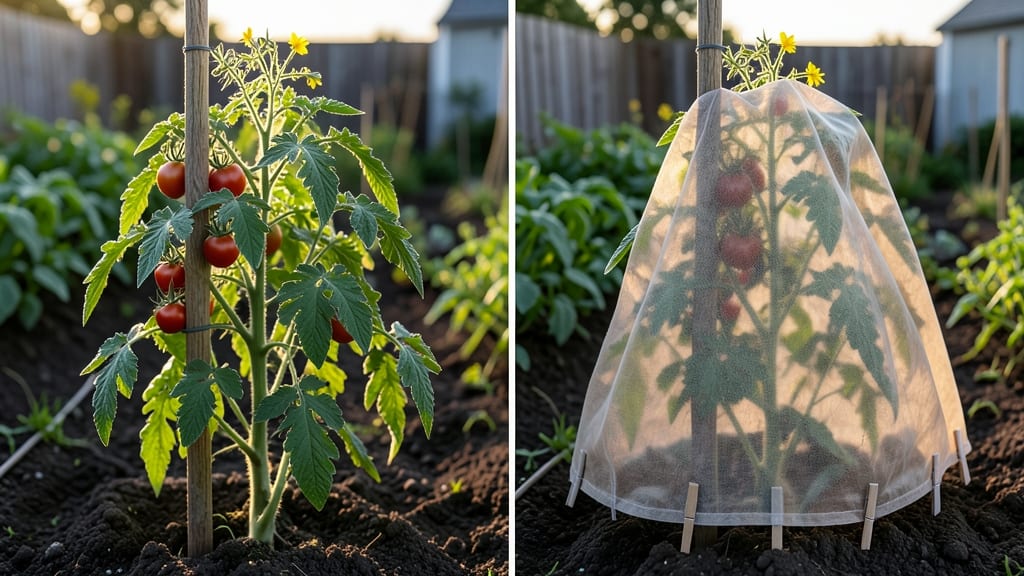
To cover tomato plants at night, watch for temperatures dropping below 32°F—that’s the moment your 🍅 harvest hangs in the balance.
Frost can turn your thriving tomato plants into a sad, wilted memory overnight—but knowing the exact temperature triggers for covering them gives you a fighting chance to protect your harvest.
In USDA Zone 6, where last frosts linger into April, even a single night below 28°F can devastate young seedlings.
Most gardeners wait until the forecast calls for 32°F or lower, but the real rule is simpler: cover when the mercury dips below 35°F for more than a few hours. That’s the threshold where cold stress starts, and your plants begin struggling to recover by morning.
Below, I’ll break down the degree-based rules for when to cover (and when to stop), the best materials for different temperatures, and how to avoid common mistakes that turn protection into a problem. No more guessing—just science-backed timing for your tomatoes.
Degree-based rules: when to cover tomato plants at night for frost protection
Tomato plants are tender perennials that can't handle freezing temperatures—even mature plants struggle below 32°F (0°C). Young seedlings are especially vulnerable, often dying when temps drop to 40°F (4°C) overnight. The key to saving your harvest lies in understanding these degree-based triggers and acting before damage occurs.
Frost protection isn't a one-size-fits-all solution. Seedlings need coverage at higher temperatures than mature plants because their delicate stems can't tolerate stress. Meanwhile, fruit-bearing plants face different risks—cold snaps can cause blossom drop or cracked tomatoes. Let's break down the exact thresholds and when to act.
🌱 Critical Temperature Zones:
- Above 40°F (4°C): Safe for most tomato stages
- 32-40°F (0-4°C): Cover seedlings immediately
- 28-32°F (-2 to 0°C): Protect all plants (even mature ones)
- Below 28°F (-2°C): Emergency measures required
For young seedlings, I recommend starting coverage when nighttime temps drop to 40°F (4°C). Their delicate stems can't handle even light chilling. Use lightweight frost cloth (1.2 oz or lighter) to allow airflow while blocking wind.
Secure it loosely with bricks or clips—too tight, and you'll trap moisture that causes fungal diseases.
When temperatures plummet to 28°F (-2°C), even mature tomato plants need protection. This is when fruit damage becomes likely—cold snaps can cause blossom end rot or cracked tomatoes.
Switch to heavier materials like 6 mil plastic sheeting or double-layered frost cloth. For extra insulation, add 2-3 inches of straw mulch around the base before covering.
If your weather forecast predicts temps below 24°F (-4°C), it's time for emergency measures. This is where plastic cold frames or row covers with weights become essential.
For potted tomatoes, move them to a garage or sheltered area during the day and return them when temps rise above 50°F (10°C). Never leave them covered in direct sunlight—heat buildup can be just as damaging as frost.
Timing is everything when covering tomato plants. Cover at dusk when temps are still mild (above 50°F (10°C)) to trap heat. Remove covers early in the morning (by 9-10 AM) to prevent condensation buildup.
Pro tip: Use clothespins or bricks to secure covers loosely—this allows air circulation while keeping pests out.
One common mistake gardeners make is waiting too long to cover plants. By the time you see frost forming, it's often too late. Check your local forecast daily and act when temps drop to 40°F (4°C) for seedlings or 32°F (0°C) for mature plants.
For early spring or fall plantings, I keep frost cloth on hand from April through October—you never know when a surprise cold snap will hit.
Remember that mature tomato plants with green fruit are more resilient than seedlings, but they still need protection when temps drop below 28°F (-2°C). The key difference is that mature plants can often recover from light frost damage if their roots stay warm. Focus your protection efforts on <
Best covering materials for tomato plants: pros, cons, and degree-specific recommendations
Choosing the right covering material for your tomato plants can mean the difference between a thriving harvest and frost-damaged crops. The best option depends on temperature thresholds, breathability needs, and how easily you can work with the material.
For light frosts (32°F-28°F), lightweight fabrics work best, while hard freezes (below 28°F) demand heavier protection.
I’ve tested frost cloth, row covers, plastic sheets, and even old blankets, and each has its place in your tomato protection arsenal. The key is matching the material to the forecasted lows and your plants’ growth stage.
Young seedlings need gentler coverage, while mature plants can handle sturdier options.
Tomato Covering Materials: Pros & Cons
Frost Cloth (1.2-3.5 oz)
- ✅ Breathable – Allows airflow
- ✅ Lightweight – Easy to handle
- ✅ Best for 28°F-32°F
- ❌ Limited for <28°F
- ❌ Not UV-protective
Row Covers (3.5-6 oz)
- ✅ Durable – Lasts multiple seasons
- ✅ Works for 25°F-32°F
- ✅ Reusable – Cost-effective
- ❌ Heavier – Harder to move
- ❌ Can overheat if left too long
Plastic Sheets
- ✅ Cheap – Budget-friendly
- ✅ Effective for <25°F
- ✅ Traps heat quickly
- ❌ No breathability – Risk of rot
- ❌ Hard to secure in wind
Old Blankets
- ✅ Free – Uses household items
- ✅ Good for <32°F emergencies
- ✅ Soft – Won’t damage plants
- ❌ Absorbs moisture – Risk of mold
- ❌ Not reusable – Gets dirty
For temperatures between 28°F and 32°F, I recommend frost cloth—it’s lightweight, breathable, and won’t smother your plants. If you’re bracing for hard freezes below 25°F, a plastic sheet or row cover paired with a sturdy frame will trap enough heat to save your tomatoes.
Just remember to remove covers by 10 AM to prevent overheating.
My go-to for young seedlings is a lightweight row cover because it’s gentle on tender stems while still providing adequate protection. For mature plants, I often layer frost cloth over plastic during extreme cold snaps—this combo gives the best insulation without suffocating the plant.
Always secure covers with bricks or stakes to prevent wind damage.
One mistake I’ve made? Leaving covers on too long. Even breathable materials can trap too much moisture, leading to fungal diseases like blight. Check your plants by mid-morning—if they’re sweating or wilting, it’s time to uncover them.
Pro tip: Use clips or weights to keep covers slightly off the foliage for airflow.
If you’re in a transition zone where nights dip just below freezing, invest in a removable hoop house with row covers. It’s the most versatile solution for degree-specific protection and lets you adjust coverage as temperatures fluctuate. For emergency freezes, even a