
Companion Plants
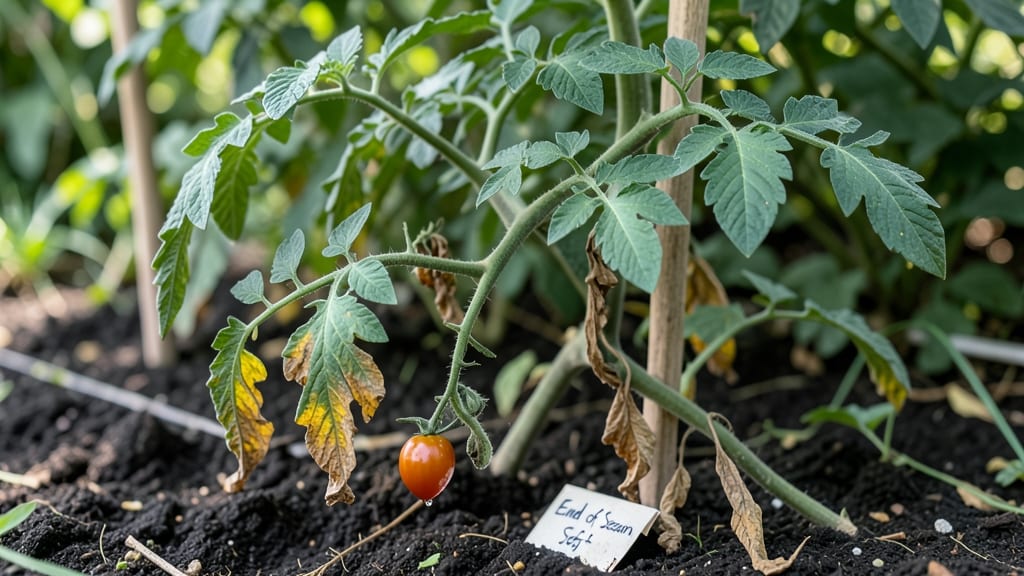
Tomato plants die after fruiting in cooler climates because they're annuals that redirect all energy into producing fruit, flowers, and leaves, eventually exhausting their resources. However, in warmer climates, they can continue growing with proper care and pruning.
This natural lifecycle happens because tomato plants prioritize fruit production over their own longevity. 🌱 Once they've finished setting fruit, their bodies shift into senescence mode, where leaves yellow and drop as nutrients are pulled back into the remaining stems.
Determinate varieties (like Roma tomatoes) tend to shut down faster than indeterminate types (like cherry tomatoes), which may keep producing for months if conditions stay ideal.
In warmer climates, you can extend their life by pruning suckers regularly, fertilizing lightly with phosphorus-rich compost, and maintaining consistent moisture. I've seen gardeners in Zone 9 keep their tomato plants fruiting for nearly a year with these techniques—though the quality eventually declines as the plant ages.
Even in cooler areas, you can save seeds from your best plants to grow fresh tomatoes next season, effectively "resurrecting" your harvest through propagation. The key is understanding when to let nature take its course versus when to intervene with care.
💡 In This Article
- Why Tomato Plants Decline After Harvesting
- How to Prolong Tomato Plant Productivity
Why tomato plants decline after harvesting
The decline of tomato plants after fruiting begins with a fundamental biological trade-off. These plants are annuals, meaning their entire life cycle—from seed to fruit—is designed to complete within one growing season. 🌱 Once they've allocated energy to produce flowers, fruit, and leaves, their systems become overwhelmed.
The plant's priority shifts from growth to reproduction, draining nutrients from older leaves and stems to sustain the remaining fruit. This process is called senescence, where the plant essentially cannibalizes itself to support its final harvest.
Determinate varieties (like 'Celebrity' or 'Roma') are particularly aggressive in this process. Their growth habit is genetically programmed to stop once they reach a certain height, often around 3-4 feet, and then focus entirely on fruit production.
Indeterminate types (like 'Sungold' cherry tomatoes) take a different approach—they continue growing upward indefinitely, producing fruit along the way. However, even these varieties eventually hit a wall when temperatures drop below 50°F or when their energy reserves are depleted, leading to leaf yellowing and dieback.
The hormonal shift plays a crucial role too. As fruit ripens, the plant produces more ethylene gas, a natural plant hormone that accelerates aging. You can often smell this gas near overripe tomatoes—it's the same compound that causes bananas to turn brown in your fruit bowl.
Ethylene triggers the breakdown of chlorophyll in leaves, turning them yellow and eventually causing them to drop. This is nature's way of conserving energy, but it also signals the plant's impending death in cooler climates.
Nutrient exhaustion is another key factor. Tomato plants are heavy feeders, requiring high levels of nitrogen, phosphorus, and potassium throughout their lifecycle. By the time they've produced a substantial harvest, the soil around them may be depleted of these essential nutrients.
Unlike perennial plants that can recover over multiple seasons, annuals like tomatoes don't have this luxury—they burn through their resources in a single season. This is why gardeners often see a dramatic decline in plant health just as the fruit begins to ripen.
Consider this comparison: A determinate tomato plant might produce its entire crop in 60-70 days, while an indeterminate variety could keep fruiting for 6-8 months in ideal conditions. The difference lies in their growth patterns and how they allocate resources.
Determinate plants are all-in on one massive fruiting event, while indeterminate types spread their energy over a longer period. Understanding this distinction helps explain why some tomato plants seem to "give out" quickly while others linger.
What most gardeners don't realize is that this decline isn't just about age—it's about the plant's strategic energy allocation. The same biological mechanisms that make tomatoes such prolific producers also ensure they'll eventually shut down.
This is particularly evident in cooler climates where the growing season is shorter, forcing plants to prioritize fruit production over their own longevity. 🌿