
Fertilization
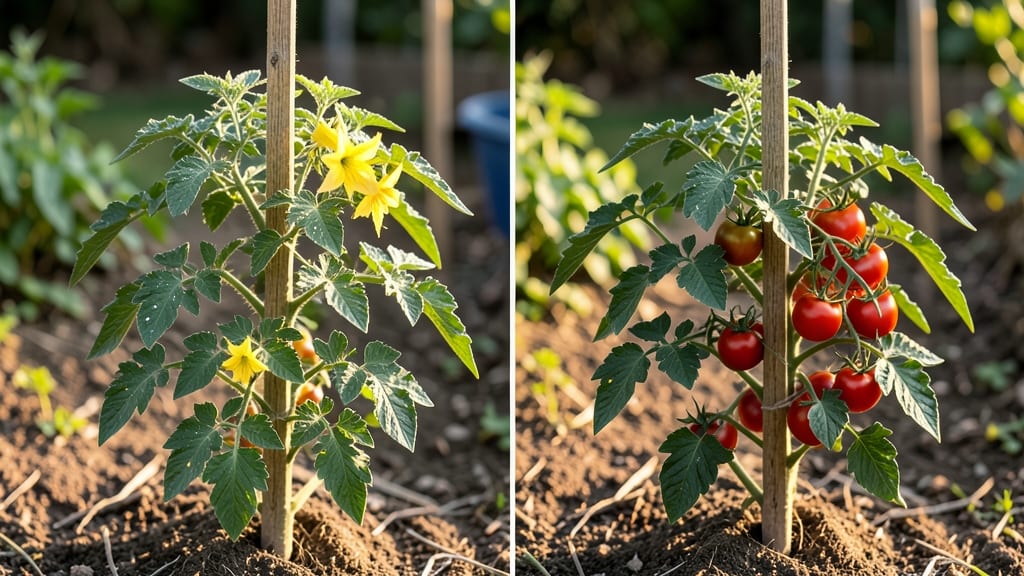
Your tomato plants are throwing a growth party while throwing tomatoes out of the picture—why are my tomato plants big but no tomatoes? Honestly, I've seen this happen more times than I can count—lush green foliage but zero fruit.
The good news? It's almost always fixable with a few targeted tweaks.
Most of the time, it comes down to one of five mistakes: too much nitrogen (pushing leaves, not flowers), not enough sunlight (plants grow tall but lazy), poor pollination (wind or bees aren't doing their job), or environmental stress (heat waves or inconsistent watering).
My first garden journal entry from 2018 still has a circled note: "Nitrogen is the enemy of tomatoes—stop feeding them!"
You'll see the first signs of progress within 3-5 days of adjusting care—more blossoms, then fruit sets. The key is balancing sunlight, water, and fertilizer so the plant stops growing leaves and starts growing tomatoes. We'll walk through each fix step by step.
Works for backyard gardens, containers, and even raised beds—no matter your setup, these solutions apply. Let's get those plants producing the harvest you planted for!
Root Causes Behind Leafy Tomatoes
Tomato plants that grow tall and lush but refuse to produce fruit often point to a few key underlying issues—many of which are tied to nutrient imbalances, environmental stress, or hormonal signals.
Below, we break down the science behind why your plants might be throwing all their energy into leaves instead of tomatoes, along with actionable fixes to redirect their focus.
Your tomato plant’s growth is a balancing act between nitrogen (N), phosphorus (P), and potassium (K). Too much nitrogen (the "green growth" nutrient) at the expense of potassium (the "fruit production" nutrient) creates a classic "leafy monster" scenario.
- What’s happening? Nitrogen fuels rapid leaf and vine growth, but it suppresses flowering and fruiting hormones (like gibberellins and cytokinins).
Meanwhile, potassium helps translocate sugars to fruit and strengthens cell walls—without it, blossoms drop or fail to set. - Symptoms: Dark green, soft leaves with weak stems; flowers appear but don’t develop into fruit.
- How to fix it: - Adjust your fertilizer ratio. Switch to a balanced or low-nitrogen, high-potassium feed (e.g., 5-10-10 or 0-0-50).
Avoid "green boost" fertilizers mid-season. - Add organic potassium sources: Wood ash (sprinkle lightly around the base), banana peels (composted), or greensand. - Flush the soil with water to leach excess nitrogen if you’ve been over-fertilizing.
Tomatoes are sun-worshippers—they need 6–8+ hours of direct sunlight daily to trigger flowering. Without enough light (or consistent warmth), plants prioritize survival over reproduction.
- What’s happening? - Low light: Plants stretch (etiolate) to reach sunlight, diverting energy to leaves. Flowers may form but abort due to lack of photosynthesis. - Inconsistent heat: Tomatoes need daytime temps above 70°F (21°C) and nighttime temps above 55°F (13°C) to set fruit.
Below these thresholds, pollen development fails. - Symptoms: Leggy, pale stems; flowers that fall off ("blossom drop"); or fruit that starts but stops growing.
- How to fix it:
- Move potted tomatoes to a sunnier spot or use reflective mulch (white plastic or aluminum foil) to bounce light onto leaves.
- Use grow lights (LED or fluorescent) for 12–14 hours/day if indoors.
- Protect from cold snaps: Use row covers, cloches, or move containers indoors temporarily.
- Mulch with black plastic to absorb and radiate heat into the soil.
Water stress—whether drought or overwatering—disrupts the delicate hormonal signals that trigger fruit set. Tomatoes need consistent moisture to avoid sending mixed signals to the plant.
- What’s happening?
- Underwatering: Causes blossom end rot (calcium deficiency) and flower drop due to stress hormones like abscisic acid (ABA).
- Overwatering: Leads to root suffocation (anaerobic conditions), preventing nutrient uptake, especially calcium and boron—critical for fruit development.
- Inconsistent watering: Causes splitting or cracking of existing fruit as cells expand unpredictably.
- Symptoms: Wilting leaves, yellowing lower foliage, or flowers that turn brown and drop.
- How to fix it: - Water deeply but infrequently: Aim for 1–1.5 inches per week (more in heatwaves).
Use drip irrigation or soaker hoses to keep roots moist but not soggy. - Mulch heavily (straw or wood chips) to retain moisture and regulate soil temp. - Avoid wetting leaves (especially at night) to prevent fungal diseases like blight, which also stress the plant. - Add calcium if you see blossom end rot: Use crushed eggshells, gypsum, or a calcium nitrate spray.
Even if your plant is healthy, extreme temps or lack of pollinators can halt fruit production before it starts.
- What’s happening? - High temps (>90°F/32°C): Cause male sterility in pollen, leading to empty anthers or pollen that doesn’t stick to stigmas.
Flowers may look fine but fail to set fruit. - Low temps (<55°F/13°C): Disrupt pollen tube growth, preventing fertilization. - No pollinators: Tomatoes rely on bees, wind, or vibration (like from hummingbirds) to transfer pollen.
In greenhouses or urban areas, this can fail. - Symptoms: Flowers that wilt and drop without fruit; small, undeveloped fruitlets.
- How to fix it: - Hand-pollinate by gently shaking plants or using a paintbrush to transfer pollen between flowers. - Provide shade cloth in extreme heat (30–50% shade can help). - Attract pollinators: Plant basil, marigolds, or dill nearby to draw bees.
Avoid pesticides! - Use a fan indoors to mimic wind pollination.
Pruning too aggressively or subjecting plants to physical stress (like transplant shock) can delay or prevent flowering by altering hormone levels.
- What’s happening?
- Over-pruning: Removing too many leaves reduces photosynthesis, so the plant focuses on regrowth instead of fruit.
- Root disturbance: Transplanting mature plants (or even repotting) can trigger stress hormones that pause flowering.
- Symptoms: Bushy growth with no flowers; slow recovery after pruning.
- How to fix it: - Prune strategically: Remove only suckers (side shoots) and bottom leaves touching soil—never more than 1/3 of the plant at once. - Avoid transplant shock: Harden off seedlings gradually before planting.
For container tomatoes, top-dress with compost instead of repotting. - Use a mild stress reliever: A seaweed extract spray (rich in cytokinins) can help plants recover faster.
Fixing Your Tomato Plants Now
If your tomato plants are lush but fruitless, don’t panic—there’s still time to turn things around! Below, we’ll tackle the five most common causes of leafy but barren tomato plants, along with practical fixes and prevention tips to ensure a bountiful harvest. Let’s get those tomatoes growing!
Problem: Your plants are growing big and green but lack energy for fruit production. Too much nitrogen (common in lawn fertilizers) promotes leafy growth at the expense of flowers and tomatoes.
How to Fix It: ✅ Switch to a balanced or phosphorus-heavy fertilizer (look for a ratio like 5-10-10 or 10-20-20 on the label). ✅ Add bone meal or compost (rich in phosphorus) around the base of the plant. ✅ Prune lower leaves to improve airflow and redirect energy to flowering.
Prevention Tip: 💡 Test your soil before planting—this helps you avoid over-fertilizing with nitrogen. A simple DIY test kit works!
Problem: Tomatoes need 6-8 hours of direct sunlight daily. If they’re shaded, they’ll grow leaves but won’t flower or set fruit.
How to Fix It: 🔥 Move potted plants to a sunnier spot immediately. 🍳 Thin out nearby plants (like tall weeds or competing veggies) to improve light exposure. 👨🍳 Use reflective surfaces (like white sheets or mirrors) to bounce extra light onto the plants.
Prevention Tip: ✨ Plant in the sunniest spot in your garden—tomatoes are not shade-loving!
Problem: Too much or too little water can shock plants, causing them to drop flowers or fail to set fruit. Tomatoes also need consistent moisture to thrive.
How to Fix It: 🔥 Water deeply 1-2 times per week (about 1-2 inches per week), focusing on the roots, not the leaves. 🍳 Use drip irrigation or soaker hoses to keep moisture steady. 👨🍳 Mulch around the base to retain soil moisture and prevent temperature swings.
Prevention Tip: 🌡️ Water in the morning to reduce evaporation and fungal risks.
Problem: Tomatoes stop flowering when temps rise above 90°F (32°C) or drop below 55°F (13°C). This is especially common in summer heatwaves or early spring.
How to Fix It: 🔥 Provide afternoon shade (use shade cloth or a light tarp) if temps exceed 85°F (29°C). 🍳 Use row covers in early spring to protect from cold snaps. 👨🍳 Choose heat-tolerant varieties (like ‘Solar Fire’ or ‘Heatmaster’) for hot climates.
Prevention Tip: 🎯 Plant in late spring (after the last frost) and space plants properly for airflow.
Problem: Bugs (like hornworms, aphids, or whiteflies) and diseases (such as blight or powdery mildew) can stress plants, leading to poor fruit production.
How to Fix It: ⏰ Handpick pests (like hornworms) in the morning. 🔪 Spray with neem oil or insecticidal soap for aphids and whiteflies. 🍳 Remove diseased leaves and rotate crops next season to prevent soil-borne issues.
Prevention Tip: 💡 Encourage beneficial insects (like ladybugs) by planting marigolds or basil nearby!
Before you give up, run through this 3-step reset:
- Fertilize with a phosphorus-rich supplement (like 5-10-10).
- Ensure full sun (move plants if needed).
- Water consistently (deep and even).
With these fixes, your tomato plants should start flowering and fruiting within 2-4 weeks! 🚀
Need more help? Drop a comment below—we’re happy to troubleshoot with you! 🌿
Frequently asked questions
Why do my tomato plants look healthy but still won't produce fruit?
Even with lush green growth, your plants may be missing key triggers for fruiting. Check for 6-8 hours of sunlight daily—without enough light, they prioritize leaves over flowers. Also verify your fertilizer isn't too nitrogen-heavy (like lawn food), which fuels foliage but starves fruit production. A quick fix is switching to a 5-10-10 or 10-20-20 fertilizer to balance growth hormones.
Can I still get tomatoes if my plants are already big and leafy?
Start by pruning lower leaves to redirect energy upward, then adjust care immediately. Add bone meal or compost for phosphorus (the "fruit" nutrient), and ensure consistent watering (1-1.5 inches per week). With these changes, you'll often see new flower clusters within 2-3 weeks—sometimes even on the same season's growth!
What's the fastest way to fix nitrogen overload in my tomato plants?
Flush the soil with 3-4 gallons of water per plant to leach excess nitrogen, then top-dress with wood ash or banana peels (natural potassium sources). Follow up with a low-nitrogen fertilizer like 5-10-10. For potted plants, replace the top 2 inches of soil with fresh potting mix. You'll notice improved flowering within 7-10 days.
Why do my tomato flowers keep falling off before turning into fruit?
This "blossom drop" usually signals temperature stress (above 90°F or below 55°F) or water inconsistency. Provide afternoon shade during heatwaves, and mulch heavily to stabilize soil moisture. Also check for calcium deficiency—side-dress with crushed eggshells if you see blossom end rot on existing fruit.
How do I know if my tomato plants are getting enough sunlight?
If your plants are stretching toward light with pale stems (etiolation) or leaves are small and dark, they need more sun. Move potted plants to sunnier spots, or thin nearby vegetation to improve light penetration. For containers, place them on reflective surfaces (like white trays) to maximize light exposure. Tomatoes need 6-8+ hours of direct sun daily for proper flowering.