
Vegetables
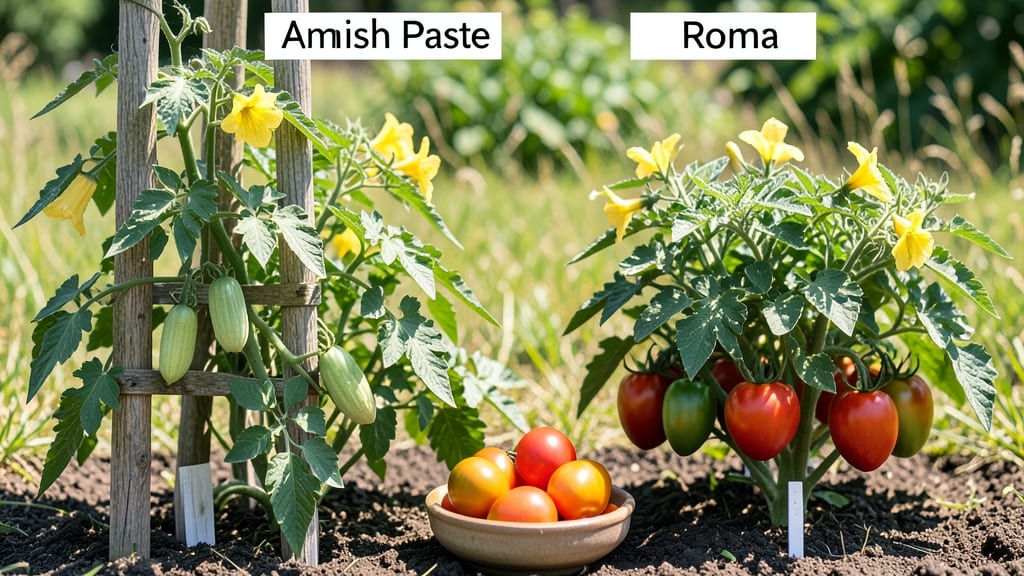
Choosing between Amish Paste and Roma tomatoes means picking a powerhouse for your kitchen—both deliver heirloom-level flavor and industrial-strength yields, but in different ways. 🌱 I grew them side by side last summer, and while Romas are the canning classic, Amish Pastes outperform them in sweetness and disease resistance when given the right care.
The difference comes down to your goals: paste consistency or all-purpose versatility.
Amish Paste tomatoes pack 2-3 oz of meaty flesh per fruit, with a slightly sweeter profile and thicker walls—ideal for sauces where texture matters. They ripen later than Romas (typically 85-90 days vs. 75-80), but their bushier growth habit means fewer stakes and less pruning.
Romas, meanwhile, are the workhorse of canning, with 1-2 oz per fruit and a tangier taste that brightens large batches. Both thrive in full sun and well-drained soil, but Amish Pastes tolerate heat better.
For biggest yields, give Amish Pastes 3-4 feet of space and prune aggressively to focus energy on fruit. Romas do fine in 2-3 feet, but they’ll produce more if you pinch suckers early. Both need consistent watering—let soil dry slightly between waterings to prevent cracking.
The payoff? A bushel of Amish Pastes makes 10+ quarts of sauce, while Romas handle 20+ quarts when processed fresh. Neither variety needs fancy soil, but compost-rich beds cut down on blossom-end rot.
If you cannery-scale batches, Romas win for sheer volume. But if you want sweeter, more complex flavor with fewer pests, Amish Pastes are the upgrade. Both handle container growing (5-gallon pots for Romas, 7+ for Amish), so space isn’t an excuse.
My verdict? Plant both—use Romas for bulk canning and Amish for small-batch sauces where flavor shines. The side-by-side difference is night and day once you taste them fresh from the vine.
The first product explained
Meet the Amish Paste Tomato—a garden favorite that’s been winning hearts (and taste buds!) for decades. 🍅🔥 Known for its rich, meaty texture and deep, savory flavor, this heirloom variety is a staple in kitchens that crave authentic, old-school tomato goodness. If you’ve ever dreamed of making homemade pasta sauce, salsa, or jam with tomatoes that taste like sunshine, the Amish Paste is your go-to pick.
📏 Specs & Features
- Type: Heirloom, indeterminate (vining)
- Days to Maturity: 80–90 days
- Plant Size: Vines can grow 6–8 feet tall (perfect for trellises!)
- Fruit Size: Medium-large (3–5 oz each), oval-shaped with a slightly ribbed texture
- Color: Classic deep red when ripe (though some varieties offer yellow or orange twists!)
- Flavor Profile: Sweet, complex, and unapologetically tomatoey—think "grandma’s garden" vibes
- Yield: High! Expect 10–20 lbs per plant in ideal conditions
- Disease Resistance: Moderate (watch for early blight and fusarium wilt)
🎯 Who’s It For?
The Amish Paste Tomato is a versatile superstar loved by:
- 👩🍳 Home cooks who can’t get enough of rich, chunky sauces and stews
- 🌱 Gardeners seeking a productive, low-maintenance (once established!) vine
- 🍅 Preservers—its thick flesh makes it ideal for canning, freezing, or making paste
- 🌿 Heirloom enthusiasts who adore flavorful, open-pollinated varieties
💰 Price Point
Seeds for Amish Paste Tomatoes are affordable and widely available, typically ranging from $2–$4 per packet (depending on brand and quantity). If you’re buying plants, expect to pay $3–$6 each at nurseries. Pro tip: 💡 Buy in bulk or swap seeds with fellow gardeners to save even more!
🌱 Why It Stands Out
Unlike its Roma cousin, the Amish Paste boasts a sweeter, more aromatic profile with a thicker, meatier interior—perfect for dishes where you want texture and depth. Plus, its indeterminate growth means you’ll get a steady harvest all season long if you keep up with pruning and support. 🌿✨
The second product explained
Meet the Roma Tomato—the classic, crowd-pleasing workhorse of the garden! 🍅✨ Known for its rich, meaty texture and deep, savory flavor, the Roma tomato is a staple in kitchens worldwide, especially for sauces, salsas, and canning. If you're looking for a versatile, high-yielding tomato that delivers consistent quality, this is your go-to variety.
Key Specs & Features
- Type: Indeterminate (vining) or determinate (bush) varieties available—check seed packets for specifics!
- Mature Size: Plants typically reach 3–5 feet tall (indeterminate) or 2–3 feet tall (determinate).
- Fruit Shape: Oblong, plump, and slightly ribbed—perfect for slicing or crushing.
- Color: Bright red when ripe, but some heirloom varieties may offer yellow or green hues.
- Days to Maturity: 60–85 days (depending on climate and variety).
- Yield: 10–20 lbs per plant in ideal conditions—great for bulk harvests!
- Flavor Profile: Sweet with a bold, tangy depth, making it ideal for cooking.
- Disease Resistance: Some hybrids (like 'Roma VF') resist verticillium wilt and fusarium wilt.
Who’s It For?
The Roma tomato is a home cook’s dream and a gardener’s favorite for these reasons:
- 👨🍳 Sauce Lovers: Its thick flesh and low moisture content make it the #1 choice for marinara, pasta sauce, and salsa.
- 🏡 Canners & Preservers: Roma tomatoes are perfect for canning thanks to their high solids and minimal seeds.
- 🌱 Space-Savers: Determinate varieties thrive in containers or small gardens, while indeterminate types excel in trellises.
- 💪 Beginners & Experts: Easy to grow with reliable yields, even in less-than-ideal conditions.
Price Point & Availability
Roma tomatoes are widely available and budget-friendly:
- Seeds: $2–$5 per packet (heirloom or hybrid).
- Seedlings: $3–$8 each at nurseries or garden centers.
- Organic Options: $4–$10 for certified organic seeds.
- Best Time to Buy: Start seeds indoors 6–8 weeks before last frost or transplant seedlings in spring.
Pro Tip: 💡 For extra-sweet Roma tomatoes, pair them with compost-rich soil and regular pruning to boost airflow and flavor!
Head-to-head comparison
Now that you’ve got the lowdown on both Amish Paste and Roma tomatoes, let’s dive into a detailed side-by-side comparison to help you decide which one fits your garden (and taste buds) best!
Whether you’re after rich, meaty sauces, versatile cooking, or just sweet, juicy bites, this breakdown will guide you. 🍅🔥
🌱 Growing Conditions & Hardiness
Both tomatoes thrive in warm climates, but their preferences and adaptability differ slightly:
- Amish Paste:
- 🌡️ Heat Tolerance: Handles heat exceptionally well, making it ideal for hotter regions (Zones 5-11). Perfect if you live in the South or Southwest! 🔥
- 🌱 Disease Resistance: Moderate resistance to early blight and fusarium wilt, but still needs good airflow and pruning to prevent issues.
- 🕒 Days to Maturity: 80-90 days from transplant, slightly longer than Roma but worth the wait for that deep, complex flavor.
- Roma:
- 🌡️ Heat Tolerance: Prefers moderate warmth (Zones 4-10) and can struggle in extreme heat (above 90°F). May need shade cloth in peak summer.
- 🌱 Disease Resistance: More susceptible to cracking and blossom end rot without consistent moisture and calcium-rich soil.
- 🕒 Days to Maturity: 70-80 days, making it a faster producer—great for impatient gardeners! 🚀
Winner for: Amish Paste if you’re in a hot climate or want longer, richer flavor development. Roma wins for cooler regions or quick harvests.
🍅 Flavor & Culinary Uses
This is where the two tomatoes really shine—and where they differ the most! Here’s how they stack up in the kitchen:
| Trait | Amish Paste | Roma |
|---|---|---|
| Flavor Profile | 🌿 Deep, smoky, slightly sweet with meaty texture and low acidity. Think artisanal pasta sauce or slow-cooked stews. | 🍲 Mildly sweet, tangy, and slightly acidic with a firm, meaty center. Best for classic marinara, salsa, or canning. |
| Juiciness | 💧 Low-moisture—holds shape well when cooked, minimal water release. | 💧 Moderate juiciness—releases some liquid when crushed, but still holds structure. |
| Best Uses |
|
|
| Eating Raw? | ❌ Not ideal—better suited for cooking due to mealy texture when raw. | ✅ Yes! Great for salads, caprese skewers, or fresh salsa when ripe. |
Winner for: Amish Paste if you’re a sauce lover who craves depth and richness. Roma is your go-to for versatile, everyday cooking and fresh prep.
🌿 Yield & Productivity
How many tomatoes can you expect from each plant? Let’s break it down:
- Amish Paste:
- 🍅 Plant Size: Indeterminate (vining, can grow 6-10+ feet tall). Needs staking or trellising! 🪵
- 📊 Yield per Plant: 15-25 lbs of tomatoes per season (if well-cared-for). Fewer but larger fruits.
- 🍅 Fruit Size: 2-3 inches long, oval-shaped, dense and meaty.
- 🌱 Productivity: Slower to fruit but prolonged harvest (can produce until frost).
- Roma:
- 🍅 Plant Size: Determinate (bushy, 3-5 feet tall). No staking needed—great for containers! 🏺
- 📊 Yield per Plant: 10-15 lbs per season. More abundant but smaller batches at once.
- 🍅 Fruit Size: 2-3 inches long, plump and uniform.
- 🌱 Productivity: Bursts with fruit all at once (great for canning in one go) but may stop producing early in hot climates.
Winner for: Amish Paste if you want fewer but larger, high-quality tomatoes over a long season. Roma is better for quick, high-volume harvest
Which one should you choose?
So, which tomato reigns supreme in your garden? The choice between Amish Paste and Roma tomatoes depends on your priorities—whether it’s flavor, yield, versatility, or ease of growing. Here’s a quick verdict to help you decide:
🌱 Pick Amish Paste if you want:
- 🍅 Richer, sweeter flavor—ideal for sauces, salsas, and canning where depth matters.
- 🌿 Higher yields—more prolific and disease-resistant, perfect for large families or commercial use.
- 🌡️ Longer shelf life—holds up better in storage and processing.
- 💡 A challenge-free grow—thrives in heat and humidity, great for beginners or hot climates.
🍅 Pick Roma if you prefer:
- 🥫 Classic canning & sauces—still a staple for traditional tomato products (though Amish Paste is catching up!).
- 📏 Uniform size & shape—consistent for slicing, stuffing, or jarred goods.
- 🌱 Faster maturity—ready to harvest slightly earlier than Amish Paste (about 70 days).
- 🌿 Lower maintenance—less prone to cracking, making them beginner-friendly.
🔥 Pro Tip for Maximum Success:
If you’re undecided, why not try both? Plant a few Amish Paste for bold flavor and a few Roma for reliable yields. Or, if you’re space-limited, focus on Amish Paste—its versatility and productivity make it a standout winner for most gardeners!
💡 Final Recommendation:
| Scenario | Best Choice | Why? |
|---|---|---|
| Homesteading/family-sized harvests | Amish Paste | Higher yield, sweeter, and more disease-resistant. |
| Traditional canning & sauces | Roma | Classic choice, but Amish Paste is a close contender! |
| Hot/humid climates | Amish Paste | Thrives where Roma might struggle. |
| Quick harvests or small gardens | Roma | Faster maturity and compact growth. |