
How To
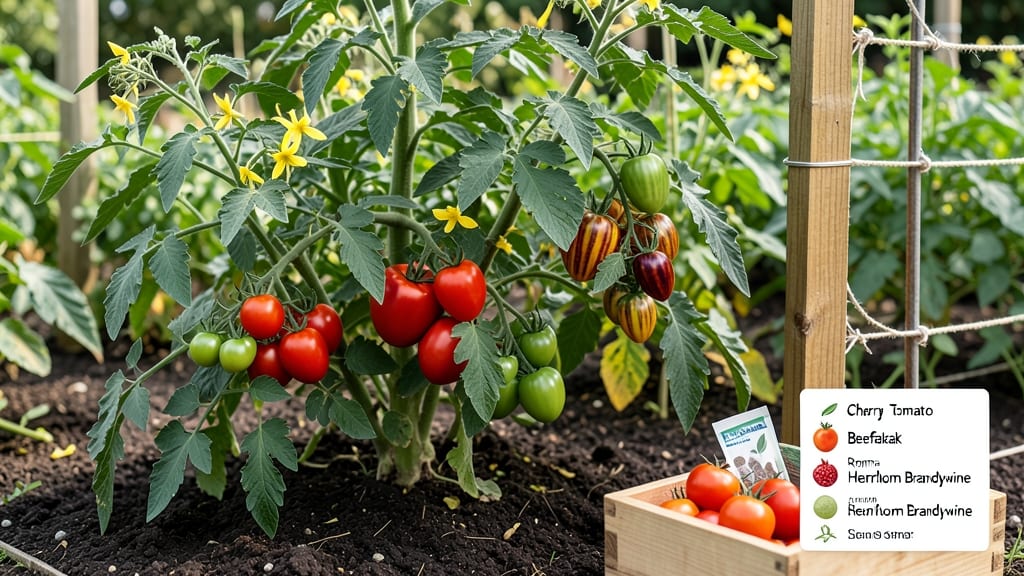
Choosing the best tomato varieties to grow starts with matching your goals to flavor profiles, disease resistance, and your local climate. Sweet cherry types like 'Sungold' shine in warm regions, while heirloom 'Brandywine' delivers rich, beefy texture. For tough conditions, 'Celebrity' and 'Mountain Merit' resist common diseases and produce consistently.
Your garden's success hinges on understanding these three factors working together. 🌱 For example, 'Sungold' thrives in full sun but struggles in humid climates without proper spacing, while 'Brandywine' needs staking due to its sprawling vines.
Disease-resistant varieties like 'Mountain Merit' are my go-to for northern gardens where late blight is a constant threat—they keep producing even when other plants fail. The key is testing a few types each season to discover what works best in your microclimate.
Pro tip: Start with one disease-resistant variety as your "insurance plant" alongside your flavor favorites. This way, you'll always have tomatoes to harvest, even if pests strike. Many nurseries now offer "disease package" seed mixes that combine resistance traits with proven performers.
💡 In This Article
- Tomato Variety Traits: Flavor, Size, and Growth Habits
- Disease-Resistant Tomato Selection Guide by Region
Tomato variety traits: flavor, size, and growth habits
Tomato flavor varies wildly based on genetic makeup and growing conditions. Sweet varieties like 'Sungold' (a cherry tomato) contain 10-15% more natural sugars than standard slicers, thanks to their high lycopene content.
The flavor difference is dramatic—'Sungold' tastes like a cross between a grape and a tomato, with a Brix rating of 8-10 (a measure of sugar content), while 'Better Boy' (a beefsteak) typically scores 5-7 Brix.
Heirlooms like 'Brandywine' develop complex, almost wine-like flavors when fully ripened, thanks to their higher acidity levels (pH 4.2-4.5) compared to modern hybrids.
Size matters too, but not just for visual appeal. Cherry tomatoes (1-2 inches diameter) ripen faster and produce more fruit per plant, but their thin skins make them prone to cracking in heavy rain.
Beefsteaks (6-12 ounces each) have thick flesh perfect for sandwiches, while Roma varieties (2-3 inches) are prized for sauces due to their 2-3% lower moisture content than slicing tomatoes.
Growth habits also impact yield—determinate varieties like 'Celebrity' grow to 3-4 feet tall and produce all their fruit in one burst, while indeterminate types like 'Solar Fire' keep growing and fruiting all season, reaching 6-8 feet without support.
Your climate dictates which traits to prioritize. In hot, dry regions, look for varieties with thick skins and high heat tolerance, like 'Heatmaster' or 'Solar Fire'. These tomatoes maintain firmness even when temperatures exceed 95°F during the day.
In cooler climates (50-60°F night temps), early-maturing varieties like 'Stupice' (a Czech heirloom) or 'Mountain Merit' thrive, producing fruit in just 60-70 days from transplant. The key is matching your local growing season length to the variety's days-to-maturity—planting a 90-day tomato in a 60-day season guarantees disappointment.
Growth patterns also affect your planting strategy. Determinate plants form a compact bush, ideal for container growing or small spaces, while indeterminate vines need strong trellises to support their weight.
I've found that indeterminate varieties like 'Black Krim' produce 30-50% more fruit per square foot than determinate types when properly staked, but they require weekly pruning to remove suckers and improve air circulation. The trade-off?
Indeterminate plants keep producing until frost, while determinate plants offer a single massive harvest all at once.
Don't overlook the science of tomato ripening. Varieties with high ethylene production (like 'Beefmaster') ripen faster off the vine but require 2-3 weeks of post-harvest ripening at room temperature. Others, like 'Early Girl', produce ethylene more slowly, making them better for green tomato dishes or pickling.
The color difference isn't just cosmetic—red tomatoes have 10x more lycopene than green ones, while yellow varieties like 'Lemon Boy' contain more beta-carotene. This is why 'Sungold' (orange-red) offers that unique sweet-tart balance—it's a perfect middle ground between sugar and acidity.
For maximum flavor development, consider planting varieties that match your cooking style. Paste tomatoes like 'San Marzano' (a Roma type) have 1.5-2% less water than slicing tomatoes, making them ideal for sauces where you want concentrated flavor.
Meanwhile, slicing types like 'Big Beef' have thicker cell walls that hold up better to slicing and sandwich-making. The best approach? Plant a mix—one disease-resistant workhorse, one flavor showstopper, and one that excels in your specific climate conditions.