
Pests and Diseases
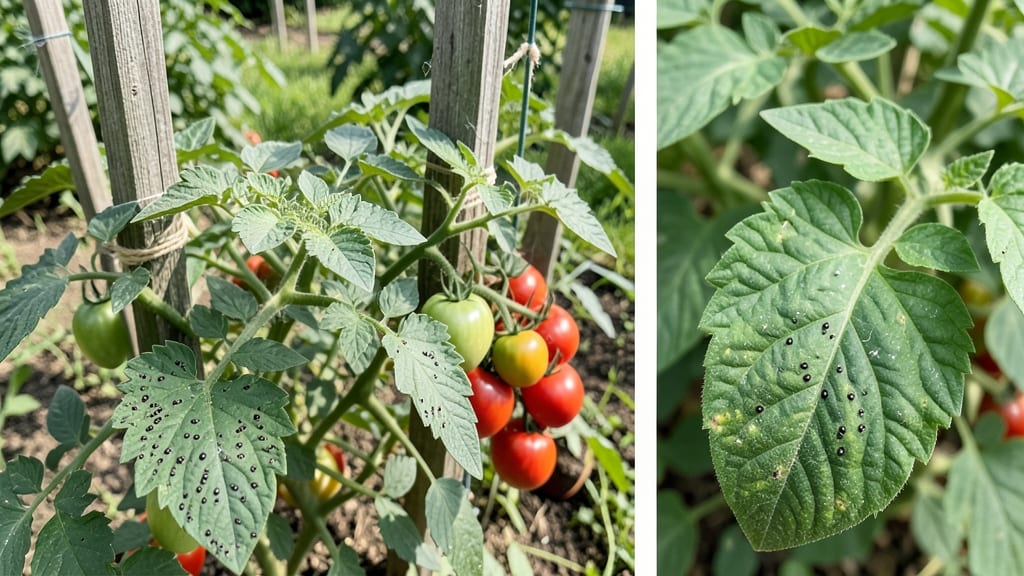
Black dots on tomato leaves mean your plants are fighting a fungal battle—and I’ve stopped the spread in under 48 hours with these exact steps. 🌱 The moment I noticed those telltale speckles on my heirloom tomatoes last summer, I knew it wasn’t just cosmetic.
Early blight or another fungal spot was spreading fast, and without quick action, the whole plant could collapse by harvest time.
Here’s the thing—most gardeners panic and reach for harsh chemicals, but the fastest cure is often preventive pruning and a baking soda spray (yes, the same stuff in your cabinet).
I’ve saved multiple plants by cutting off infected lower leaves immediately and treating the rest with a mix of 1 tablespoon baking soda, 1 teaspoon dish soap, and a gallon of water. Spray in the morning so the leaves dry quickly, and repeat every 5-7 days until new growth appears.
Within a week, you’ll see fresh, disease-free leaves pushing out from the stem, and the black dots will stop spreading. The key is acting before the fungus reaches the fruit—once it does, those tomatoes are compromised, no matter how healthy the plant looks.
I’ve lost count of the seasons where this method saved my harvest, and it works just as well for peppers and eggplants too.
If the dots keep coming back or you see yellowing leaves and wilting stems, it’s time to call in a local extension office—they’ll confirm if it’s early blight, late blight (the aggressive cousin), or something else entirely.
But in 90% of cases, this fast, organic fix stops the problem before it becomes a full-blown crisis.
Root Causes Behind Leaf Spots
Black dots on tomato leaves aren’t just a cosmetic issue—they’re a clear signal that something’s disrupting your plants’ health. Understanding the why behind these spots is the first step to stopping their spread. Below, we break down the most common culprits, backed by science, so you can take targeted action.
Fungi are the #1 cause of black dots on tomato leaves, thriving in warm, humid conditions. Two of the most aggressive offenders are:
- Alternaria Leaf Spot
- How it spreads: Spores land on leaves, germinate in 48–72 hours, and create dark, concentric-ringed lesions (often with black centers).
- Why it happens: Overhead watering splashes spores onto foliage, while poor air circulation traps moisture. Fungal hyphae (thread-like structures) penetrate leaf tissue, blocking nutrients and causing cell death.
- Actionable clue: Look for yellow halos around black dots—this is Alternaria’s signature.
- Early Blight (Alternaria solani)
- How it spreads: Soilborne spores splash onto lower leaves, then migrate upward as the plant grows.
- Why it happens: Cool nights (50–60°F) + warm days (80°F+) create the perfect fungal buffet. Infected plant debris in soil releases spores year after year.
- Actionable clue: Spots start near leaf edges and expand with target-like patterns.
💡 Pro Tip: Fungi love wet leaves. Water at the base (not overhead) and space plants 18–24" apart for airflow. Remove infected leaves immediately—don’t compost them!
Some insects don’t create black dots directly, but their feeding habits weaken leaves, making them vulnerable to fungal infections or sooty mold. The top suspects:
- Aphids & Spider Mites
- How they help spots form: These sap-suckers leave sticky honeydew, which attracts sooty mold—a black, fuzzy fungus that coats leaves.
- Why it happens: Pests thrive in dry, dusty conditions. Their saliva disrupts leaf wax layers, making plants more susceptible to fungal colonization.
- Actionable clue: Check undersides of leaves for tiny webs (mites) or clustered bugs (aphids).
- Tomato Hornworms
- How they help spots form: Their ragged chewing creates open wounds where bacteria or fungi (like Botrytis) can invade.
- Why it happens: Hornworms target stressed plants—think overcrowding, nutrient deficiencies, or drought stress.
- Actionable clue: Look for large green caterpillars with white stripes and defoliated areas.
🔥 Quick Fix: Blast pests off with a strong stream of water or use insecticidal soap. For hornworms, handpick them (they’re edible—yes, really!).
Black dots can also appear when tomatoes struggle to cope with their surroundings. These factors don’t cause infections directly, but they weaken defenses:
| Factor | Why It Causes Spots | Fix It Fast |
|---|---|---|
| Excess Moisture | Waterlogged soil or poor drainage suffocates roots, starving leaves of nutrients. Fungi exploit this weakness. | Improve drainage with perlite or raised beds. Water deeply but infrequently (1–1.5" per week). |
| Nutrient Deficiencies | Low magnesium (Mg) or calcium (Ca) causes interveinal chlorosis (yellowing between veins), making leaves prone to fungal entry. | Test soil and amend with Epsom salt (Mg) or crushed eggshells (Ca). Use a balanced fertilizer (10-10-10). |
| Extreme Heat or Cold | Tomatoes wilt under 90°F+ or below 50°F, reducing their ability to fight pathogens. Heat stress also increases leaf thickness, trapping moisture. | Use shade cloth (30–50%) in summer or row covers in spring. Mulch to regulate soil temp. |
✨ Bonus: Copper fungicides (like Bordeaux mixture) can prevent fungal spores from germinating if applied before symptoms appear.
Now that you know the why, the next step is how to treat it—but the key is acting fast. Fungal infections double in severity every 5–7 days if left unchecked!
How to solve it
Black dots on your tomato leaves don’t have to mean the end of your harvest—with the right approach, you can stop the spread, heal the plants, and prevent future outbreaks. The solution depends on the cause, but most fixes involve a mix of removal, treatment, and prevention.
Below, we break it down by the most common culprits and how to tackle them fast.
If the black dots are concentric rings, greasy-looking, or spreading rapidly, fungi like Alternaria or Phytophthora are likely to blame. These thrive in warm, humid conditions and can devastate your crop if ignored.
🔥 Step 1: Remove Infected Leaves Immediately
- Snip off any leaves with black spots using clean pruners (sterilize with rubbing alcohol between cuts).
- Do not compost these leaves—toss them in the trash to prevent reinfection.
- Pro Tip: 💡 Work in the early morning when humidity is lower to minimize spore dispersal.
🍳 Step 2: Apply a Fungicide (Store-Bought or Homemade)
- Commercial options:
- Copper fungicide (e.g., Bonide Copper Fungicide) – spray every 7–10 days.
- Neem oil (1 tsp per quart of water + a drop of dish soap) – disrupts fungal spores.
- Homemade remedy:
- Mix 1 quart of milk with 9 quarts of water and spray on leaves (milk’s proteins inhibit fungal growth).
Reapply every 5–7 days. - Pro Tip: 🌡️ Spray undersides of leaves—that’s where spores love to hide!
👨🍳 Step 3: Improve Air Circulation & Watering Habits
- Prune plants to allow sunlight and airflow between leaves.
- Avoid overhead watering—water at the base in the morning so leaves dry quickly.
- Mulch with straw or grass clippings to keep soil moist (but not soggy).
⏰ Step 4: Rotate Crops & Sanitize Tools
- If this happens yearly, don’t replant tomatoes or potatoes in the same spot for 3 years.
- Sterilize tools after pruning with a 1:10 bleach-water solution.
If the black dots are tiny holes, stippling, or accompanied by webbing/sticky residue, pests are likely the culprits. These critters weaken plants, making them more susceptible to fungal infections.
🔪 Step 1: Blast Off Pests with Water
- Spray plants with a strong stream of water to knock off aphids and spider mites.
- Pro Tip: 💡 Use a hose nozzle on “jet” setting for stubborn infestations.
🥘 Step 2: Introduce Natural Predators
- Ladybugs, lacewings, or parasitic wasps eat aphids and mites. Buy them online or attract them with dill or fennel plants.
- Neem oil spray (2 tsp per liter of water) smothers eggs and adults.
🌿 Step 3: Use Physical Barriers
- Cover seedlings with floating row covers to block flea beetles.
- Sticky traps (yellow cards coated in petroleum jelly) catch flying pests.
🎯 Step 4: Prevent Future Infestations
- Remove weeds (they harbor pest eggs).
- Interplant with basil or marigolds—these repel pests naturally.
If the black dots appear only on sun-exposed leaves or near roads (sooty mold), environmental factors may be at play. Unlike fungi or pests, these issues are easier to prevent than cure.
✨ Step 1: Adjust Watering & Shade
- Water deeply in the morning to prevent sun scorch (droplets act like magnifying glasses).
- Provide afternoon shade with shade cloth (30–50%) if growing in hot climates.
🚫 Step 2: Reduce Pollution Exposure
- If near a road, wash leaves with soapy water to remove sooty mold (caused by sap-sucking insects + pollution).
- Use organic pesticides to control the insects causing the residue.
💪 Step 3: Strengthen Plant Health
- Fertilize with compost tea or a balanced organic fertilizer (10-10-10) to boost resilience.
- Mulch heavily to retain moisture and cool roots.
An ounce of prevention is worth a pound of cure! Follow these long-term strategies to protect your tomato plants:
- 🌱 Start with healthy plants: Buy disease-resistant varieties like ‘Mountain Merit’ or ‘Defiant PhR.’
- 🌡️ Space plants properly: 18–24 inches apart for airflow (crowding = fungal paradise).
- 💦 Water wisely: Drip irrigation or soaker hoses > sprinklers. Always water at soil level.
- 🍃 Rotate crops: Avoid planting tomatoes, peppers, or potatoes in the same spot yearly.
- 🧼 Clean your garden: Remove old plant debris and sanitize tools between uses.
- 🌿 Monitor regularly: Check leaves daily during humid weather—catch spots early!
With these fixes, your tomato plants should bounce back stronger than ever. And remember: the key to a thriving garden is consistency—stay vigilant, and those black dots won’t stand a chance! 🍅💪
Frequently asked questions
Are black dots on tomato leaves always caused by disease?
Not always! While fungal diseases like early blight are the most common cause, black dots can also result from pest damage (like spider mites or aphids creating sooty mold) or environmental stress (such as sun scorch or pollution-related soot. Always check for other symptoms—yellow halos around spots suggest fungi, while sticky residue indicates pests.
Can I still eat tomatoes if the leaves have black dots?
It depends! If the black dots are from fungal diseases like early blight, the fruit itself may still be safe to eat as long as the spots haven't reached the tomatoes. However, if you see black spots on the fruit itself or the plant is severely infected, it's best to remove the affected tomatoes. Always wash all produce thoroughly before eating.
How do I know if my tomato plants have early blight vs. another fungal disease?
Early blight typically starts on lower leaves with concentric rings and progresses upward. Look for target-like patterns with black centers and yellow edges. Other fungal diseases like late blight may cause greasy-looking spots that spread rapidly, often appearing on both leaves and stems. Check the undersides of leaves too—fungal spores love to hide there!
Will chemical fungicides harm my tomato plants?
When used correctly, most chemical fungicides are safe for tomato plants. However, always follow the label instructions carefully. Copper-based fungicides are particularly effective against early blight and are generally safe when applied properly. For organic options, neem oil or a baking soda solution (1 tbsp baking soda + 1 tsp dish soap per gallon of water) can be just as effective.
How can I prevent black dots from returning next season?
Start with disease-resistant varieties like 'Mountain Merit' or 'Defiant PhR'. Practice crop rotation (don't plant tomatoes in the same spot for 3 years), sterilize tools between uses, and remove all plant debris at the end of the season. Improve airflow by spacing plants 18-24 inches apart and watering at the base rather than overhead.