
Diseases
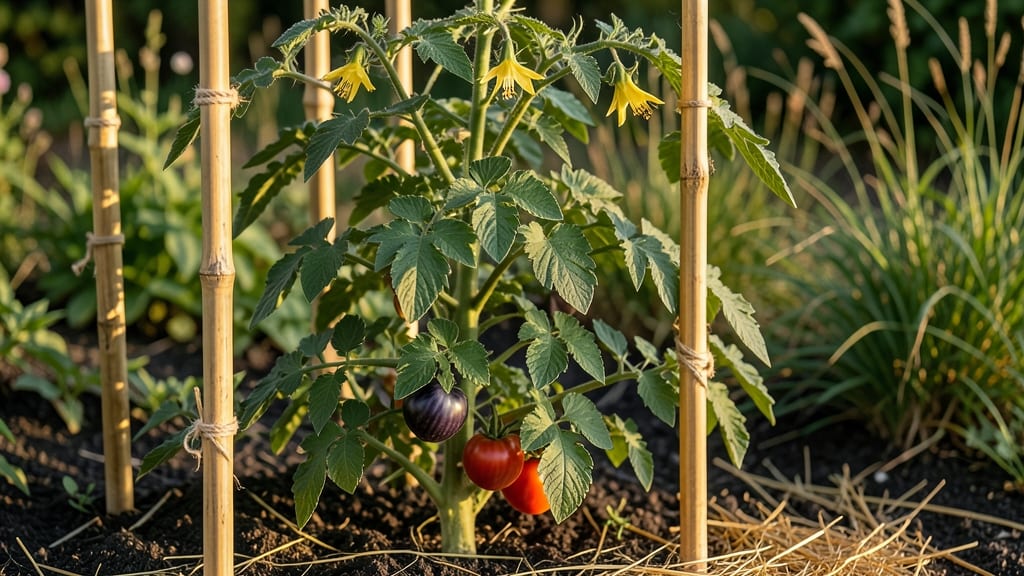
Growing a Black Krim tomato 🍅 means dealing with a plant that can shoot up to 6 feet tall if left unchecked — a height that might surprise even seasoned gardeners.
Picture this: your prized heirloom sprawling across the garden, vines tangling with neighboring plants, and you wondering if all that vertical growth is worth the effort. The truth? With the right pruning and support, you can keep its height in check without sacrificing those legendary deep purple-black fruits.
This guide breaks down how the Black Krim’s indeterminate growth works, when to prune for maximum yield, and which trellising tricks actually save space.
Whether you’re working with a small balcony or a sprawling backyard, these tips will help you grow a manageable plant that still delivers flavor-packed tomatoes all season.
Ready to tame the giant? You’ll learn the exact pruning schedule, how to spot overgrowth early, and even how companion plants can naturally limit its reach — all while keeping disease risk low and productivity high.

Understanding Black Krim tomato height: natural growth patterns and genetic factors
The Black Krim tomato is a heirloom giant with a natural tendency to grow tall—often reaching 4 to 8 feet in ideal conditions. Unlike determinate varieties that grow bushy and stop at a set height, Black Krims are indeterminate, meaning they grow continuously until frost.
This vertical growth habit makes them perfect for trellises but can overwhelm small gardens if left unchecked.
Genetics play a huge role in their height. The Black Krim’s ancestors included wild tomatoes from Crimea, where they evolved to grow tall to avoid competition. Their vining habit also means they produce fruit along the entire stem, not just at the top.
This makes them prolific but requires careful management to prevent overgrowth and disease.
Climate and location dramatically influence how tall your Black Krim will grow. In warm, sunny regions like USDA Zones 8-10, these tomatoes can easily hit 7-8 feet without intervention. In cooler zones (like Zone 6a), they may max out at 4-5 feet due to shorter growing seasons. Even within the same zone, microclimates—like a sunny south-facing wall—can push growth higher.
Identifying overgrowth early is key to managing height. Watch for rapid vertical shoots exceeding 2 feet per week or leafy vines outpacing fruit production. If your plant starts looking more like a jungle vine than a tomato, it’s time to intervene.
Early pruning or trellising can redirect energy toward fruit production instead of endless climbing.
One common misconception is that taller Black Krims always mean better yields. While they can produce more fruit, overgrowth leads to problems: poor air circulation increases disease risk (like blight), and shady lower leaves reduce photosynthesis.
I’ve seen 6-foot plants with only a handful of ripe tomatoes because energy was wasted on excessive foliage. The goal is a balanced height—tall enough for airflow but not so tall it becomes unmanageable.
If you’re growing Black Krims in containers, expect slightly shorter heights (3-5 feet) due to root restriction. However, container-grown plants still need sturdy stakes or cages because their natural impulse is to climb.
In-ground plants, on the other hand, can sprawl if not guided, so early trellising (within 2-3 weeks of transplanting) is critical. I once let a Black Krim go trellis-less for a month—by the time I added support, the vines were already 5 feet tall and tangled beyond control!
Another genetic quirk of Black Krims is their secondary growth after harvest. Even if you prune aggressively, they’ll often rebound with new shoots in late summer. This is why ongoing maintenance is a must. I recommend setting a height threshold (like 5 feet) and pruning any growth beyond it.
This keeps the plant fruit-focused rather than vine-focused, which is especially important in short-season climates where every day counts.
For those in urban gardens or small spaces, consider dwarfing techniques like root pruning (trimming roots at transplanting) or soil amendments (adding compost to encourage bushier growth). I’ve had success with Black Krims in 5-gallon containers topped at 4 feet by combining root pruning with weekly pinching of new shoots.
The trade-off? Slightly smaller fruit, but better disease resistance and easier harvesting.
Finally, remember that height isn’t everything. A 4-foot Black Krim with perfect pruning can yield just as many flavorful tomatoes as an unchecked 7-footer.
Focus on fruit quality, not just size. With the right approach, you can enjoy heirloom-quality tomatoes without sacrificing your garden’s layout—or your sanity! 🌱
Step-by-step pruning guide: when, how, and what to cut for optimal height control
Pruning your Black Krim tomato isn’t just about keeping it compact—it’s about directing energy to produce more flavorful fruit while preventing disease. These heirlooms grow indeterminately, meaning they’ll keep climbing unless you guide them.
The key is timing: prune too early, and you’ll stunt growth; wait too long, and you’ll lose control. I’ve found the best window is when plants hit 3-4 feet tall and have established their main stem.
Before you grab your pruners, gather these essential tools: sharp bypass pruners (for clean cuts), gloves (to protect from thorns), and a sterilizing solution (1 part bleach to 9 parts water) to prevent spreading disease.
I also recommend keeping a small notebook to track pruning dates—this helps you recognize patterns in your plant’s response. Start by removing suckers (the small shoots growing between the main stem and branches), as these compete for nutrients.
Step-by-Step Pruning Process
- Step 1: Identify suckers—look for small shoots in the leaf axils (where leaves meet the stem). These grow at a 45-degree angle and are about 1-2 inches long.
- Step 2: Pinch or cut suckers when they’re smaller than 2 inches. Use your thumb and forefinger to pinch (for tiny suckers) or pruners for larger ones. Cut just above the leaf to avoid leaving stubs.
- Step 3: Top the main stem at 5-6 feet tall (or your desired height) to encourage bushier growth. Make the cut above a leaf node to promote branching.
- Step 4: Prune lower leaves up to 12 inches from the ground to improve airflow and reduce disease risk. Focus on yellow or diseased leaves first.
- Step 5: Repeat every 2-3 weeks during the growing season. Focus on removing aggressive suckers and deadheading spent flowers to redirect energy to fruit production.
🌱 Pro Tip: Always prune on a dry, sunny morning to allow wounds to heal quickly and reduce fungal risks.
One common mistake I see is over-pruning, which can stress the plant and reduce yield. Limit yourself to removing no more than 1/3 of the foliage at once. For Black Krims, aim to keep 3-4 main stems after topping—this balances height control with fruit production.
If you notice yellowing leaves after pruning, it’s a sign you’ve removed too much. In this case, pause pruning for a week and focus on fertilizing with nitrogen to help recovery.
Pruning also improves air circulation, which is critical for Black Krim tomatoes—their dense foliage can trap moisture, leading to blight. After each pruning session, sterilize your tools and avoid working when leaves are wet.
I’ve noticed that plants pruned this way produce larger, sweeter fruit with fewer cracks. The trade-off? You’ll sacrifice some height, but the flavor and yield make it worth it.
For container growers, pruning is even more critical since space is limited. Use cage pruning (removing only suckers inside the cage) to maintain structure without losing support.
If your Black Krim is growing in a 5-gallon pot, keep it under 4 feet tall—any taller, and it’ll struggle to support its own weight. Always prune just above a leaf node to encourage new growth in the right direction.
Remember, pruning is an ongoing process, not a one-time task. Schedule weekly checks during peak growth (June-August) to stay ahead of suckers. With consistent pruning, your Black Krim will stay manageable while delivering bountiful, flavor-packed tomatoes all season long.
The key is patience—rush the process, and you’ll end up with a leggy, unproductive plant.