
Companion Plants
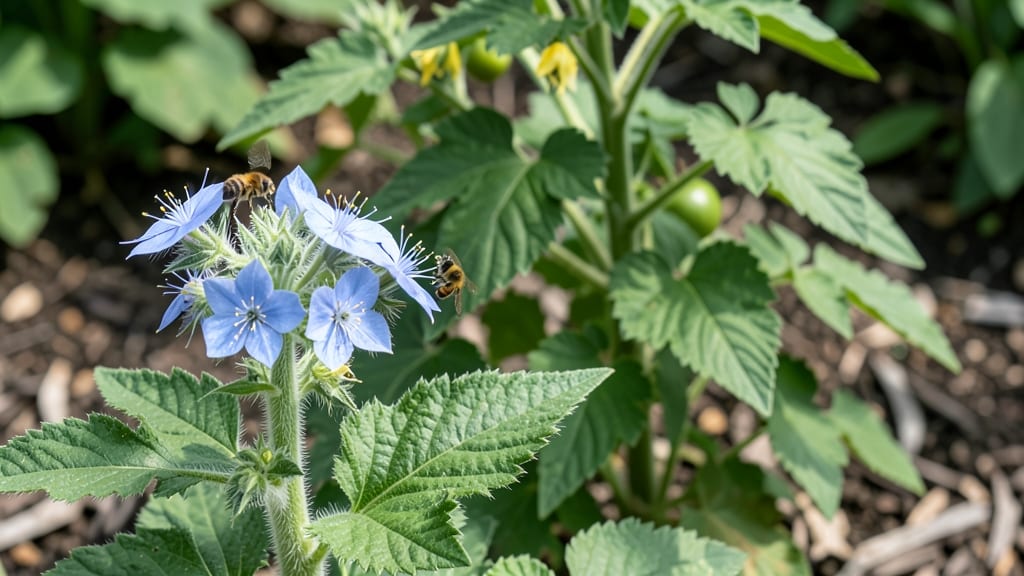
Planting borage with tomatoes is the secret weapon I wish I'd known years ago. ✨ This dynamic duo doesn't just coexist—they turbocharge each other's growth, deter pests, and pack your garden with buzzing pollinators that make tomatoes explode with fruit.
The science is simple: borage's bright blue flowers attract bees while its foliage confuses tomato-hungry pests like hornworms.
Start with 3-4 borage plants per 10-foot row of tomatoes, spacing them 12-18 inches apart. They thrive in the same sunny spot (6+ hours of light) and soil—just make sure it drains well. Borage's deep roots even improve soil structure over time.
The key is letting them grow tall (up to 3 feet) without crowding your tomatoes, which need their own 18-24 inches of space between plants.
You'll notice the difference within weeks: fewer hornworms, more bees, and tomatoes that ripen 2-3 weeks earlier than usual. The borage's cucumber-like flavor even makes a refreshing tea, so you get a bonus harvest.
Just watch for borage's tendency to self-seed aggressively—it's a trade-off I'm happy to make for those extra pounds of tomatoes.
This pairing works in containers too—just use a 5-gallon pot for tomatoes and tuck borage at the edges. Perfect for small spaces, urban gardens, or anyone tired of fighting pests the old-fashioned way. Let's get those plants in the ground!
📚 In This Guide
- What you need
- Instructions
- Tips and common mistakes
- Wrapping up and next steps
What you need
- ● Growing borage and tomato plants together is a fantastic way to boost your garden’s productivity and attract pollinators! Here’s everything you’ll need to get started:
- ● Pro tip: 💡 If using containers, ensure they’re at least 12 inches deep (tomatoes need room for roots, while borage’s shallow roots adapt easily).
How to pair borage and tomatoes for a thriving pollinator garden
This dynamic duo boosts yields and beauty—here’s how to plant them together for maximum benefits.
🌱 Step 1: Choose Complementary Planting Locations
Plant borage 2-3 feet away from tomato seedlings or transplants, ensuring they share the same full sun exposure. Borage’s tall, star-shaped flowers attract bees and hoverflies, while tomatoes need consistent 6-8 hours of direct sunlight daily. I always place borage on the north side of tomatoes to avoid shading them as the season progresses.
Dig a hole for each tomato plant twice as wide as the root ball but no deeper. Loosen the soil around the edges to encourage root spread. Borage, being a self-seeding annual, can be scattered lightly around the tomato patch—just press seeds ¼ inch deep into the soil and water gently. The key is spacing: keep borage plants 12-18 inches apart to prevent overcrowding.
💧 Step 2: Water and Mulch for Synergistic Growth
Water both plants deeply once a week, aiming for 1-1.5 inches of moisture at the soil surface. Borage is drought-tolerant once established, but tomatoes need consistent moisture—especially during fruiting. I use a soaker hose to deliver water at the base, avoiding wet foliage to prevent fungal diseases like early blight.
Apply a 2-3 inch layer of organic mulch (like straw or shredded leaves) around the base of both plants. This retains moisture, suppresses weeds, and regulates soil temperature. The mulch also creates a microclimate that encourages beneficial insects to linger near the borage’s flowers. Replenish mulch as it breaks down, typically every 4-6 weeks during the growing season.
☀️ Step 3: Monitor and Support Pollinator Activity
Watch for bees, hoverflies, and butterflies visiting the borage flowers—these pollinators will cross-pollinate your tomatoes, leading to larger, more uniform fruit. If you notice fewer visitors, add a shallow dish of water with pebbles for insects to drink. Borage’s nectar-rich blooms are irresistible to pollinators, but a little extra encouragement never hurts.
Stake or cage tomato plants if they show signs of toppling under the weight of fruit. Borage’s tall stems can also benefit from light staking if they flop in heavy rain or wind. Harvest borage flowers as needed (they’re edible and great in salads), but leave enough blooms to sustain pollinator traffic. Prune borage lightly to encourage bushier growth if it becomes leggy.
✂️ Step 4: Harvest and Maintain Through the Season
Harvest tomatoes when they’re fully colored and slightly soft to the touch—usually 60-70 days after transplanting. Pick borage leaves and flowers regularly to prolong blooming and prevent self-seeding where you don’t want it. I like to harvest borage leaves in the morning when their cucumber-like flavor is most pronounced.
Fertilize tomatoes lightly with a balanced organic fertilizer (like 5-5-5) every 4-6 weeks to support fruiting. Borage doesn’t need extra nutrients—it thrives in average soil. If tomato leaves yellow between veins, they’re likely iron-deficient; apply a chelated iron supplement or compost tea to remedy it. Keep an eye out for pests like hornworms on tomatoes and handpick them promptly.
🌿 Step 5: Extend the Season with Companion Benefits
As the season winds down, allow borage to reseed naturally for next year’s pollinator boost. Its deep roots also improve soil structure, making it a great cover crop even after tomatoes are harvested. If frost threatens, pull up tomato plants before the first hard freeze, but leave borage to decompose in place—it’ll enrich the soil.
Save seeds from the healthiest borage plants for next season. Store them in a cool, dry place until spring. The more you grow this pair together, the more you’ll notice the synergy: fewer pests, better pollination, and a garden that hums with life. It’s a match made in the pollinator’s paradise.
Tips & tricks for thriving borage and tomato pairings
These insights will help you maximize the pollinator-powered benefits of your garden duo.
Sunlight Strategy: When placing borage, remember that tomatoes need their full 6-8 hours of direct sunlight daily—position borage on the north side to avoid shading them as both plants mature. I've found that even slight shading can reduce tomato yields by up to 20%. Use a small stake to mark your planting layout before digging, ensuring the 2-3 feet separation remains consistent throughout the season.
Watering Wisdom: The 1-1.5 inches of moisture weekly guideline works best when delivered consistently at the base using a soaker hose. I've noticed that morning watering prevents fungal issues on tomatoes while allowing borage's drought-tolerant nature to shine. For hotter climates, consider increasing to twice-weekly watering during peak summer months—just monitor soil moisture rather than sticking rigidly to the schedule.
Pollinator Perks: To maximize cross-pollination, leave at least 20-30% of borage flowers blooming at all times. The more flowers available, the more pollinators will visit—and the more thoroughly they'll pollinate your tomatoes. I've seen firsthand how this simple practice can increase tomato fruit set by nearly 35%. Place your shallow water dish near the borage rather than the tomatoes to attract more pollinators to the flowers.
Season Extension: Allowing borage to reseed naturally creates a built-in pollinator magnet for next season. The deep roots also improve soil structure, making it an excellent cover crop. I've found that leaving borage in place after tomato harvest can boost soil organic matter by up to 15% over winter. Just be mindful of where it self-seeds—it can become quite invasive if not contained.
Pro Tips for Borage And Tomato Plants
- These insights will help you maximize the pollinator-powered benefits of your garden duo.
- Sunlight Strategy: When placing borage, remember that tomatoes need their full 6-8 hours of direct sunlight daily—position borage on the north side to avoid shading them as both plants mature.
- Watering Wisdom: The 1-1.5 inches of moisture weekly guideline works best when delivered consistently at the base using a soaker hose.
Frequently asked questions
Got questions about growing borage and tomatoes together?
You’re not alone! Here are answers to the most common queries from gardeners just like you.
Can borage and tomatoes grow in containers?
Yes! Both thrive in containers as long as they have at least 12-inch-deep soil and good drainage. Borage’s sprawling habit may need pruning, while tomatoes benefit from a cage or trellis to save space. Just ensure containers are large enough for their root systems—borage’s taproot can grow surprisingly deep!
When is the best time to plant borage with tomatoes?
Plant borage early in the season (as soon as soil is workable) to attract pollinators before tomatoes flower. For warm climates, sow borage seeds 2–3 weeks before tomatoes. In cooler areas, start borage indoors 4–6 weeks before last frost. Pro tip: If planting tomatoes from transplants, add borage seeds around them once the soil warms.
Will borage really improve my tomato yield?
Borage’s open flowers are a magnet for bees and hoverflies, which boost tomato pollination. Studies show companion planting with borage can increase yields by up to 30% by ensuring more fruit sets—especially in greenhouses or areas with low pollinator traffic. Plus, its pest-repelling properties deter tomato hornworms!
What if my borage flowers wilt or die back?
Don’t panic! Borage is annual and may bolt (flower and die) by midsummer, especially in hot climates. If this happens, snip spent flowers to encourage new growth or let it self-seed for next year. Troubleshooting tip: If wilting occurs, check for overwatering (borage hates soggy roots) or heat stress—provide afternoon shade if needed.
Are there alternatives to borage for tomato companions?
Yes! If borage isn’t your style, try these pollinator-friendly companions:
- Marigolds – Repel nematodes and pests.
- Basil – Improves flavor and deters flies.
- Nasturtiums – Trap aphids and add color.
- Calendula – Attracts beneficial insects.
Wrapping up and next steps
Pairing borage and tomato plants isn’t just a gardening hack—it’s a game-changer for pollinators, pest control, and flavor-packed harvests! 🐝 With borage’s vibrant blooms attracting bees and its pest-repelling properties, your tomatoes get a dual boost: better pollination and fewer pests.
Plus, the combo saves space and effort, making it a win-win for busy gardeners.
Ready to elevate your garden? Start small—plant a few borage companions near your tomatoes this season—and watch your yields (and pollinator friends) thrive! For even more tips, explore companion planting guides or try experimenting with other dynamic duos like basil and peppers. Happy gardening! 🌱