
Planting
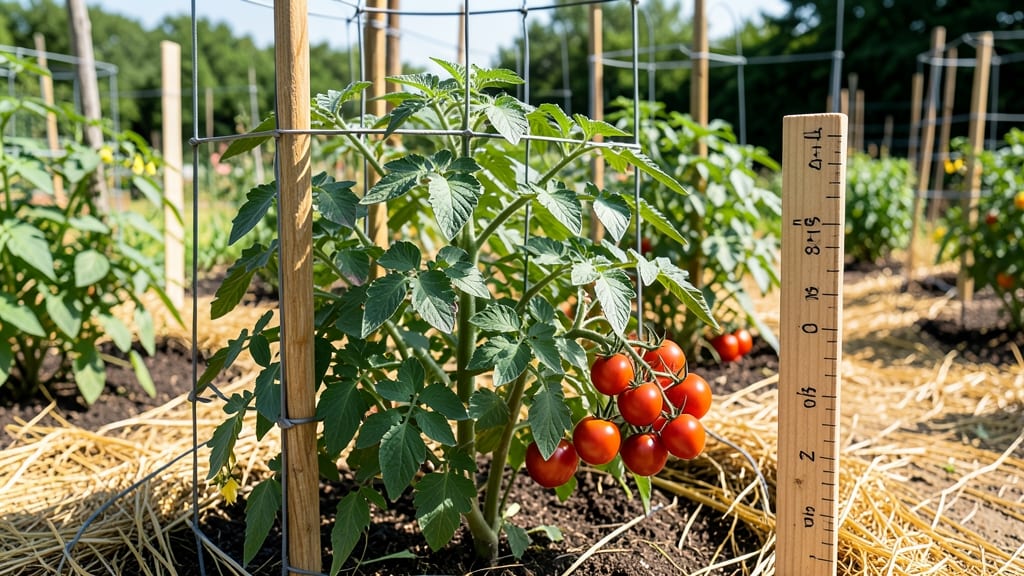
Determinate tomato plant spacing needs to be 18-24 inches apart in rows spaced 24-36 inches apart—this isn’t just a number, it’s the difference between a thriving bush and a disease magnet. I learned that the hard way when my crowded plants developed blight faster than I could spray. The right spacing gives each plant room to breathe, so air circulates and sunlight reaches all sides, keeping foliage dry and reducing fungal risks.
This spacing works for in-ground gardens, but containers and raised beds need adjustments. In 5-gallon pots, one plant per container is ideal, while raised beds can fit two rows with 18 inches between plants and 24 inches between rows.
The goal is the same: maximize airflow and sunlight exposure to prevent crowded, leggy plants that struggle to set fruit. Too close, and you’ll end up with weak stems and poor yields.
What you’ll get is stronger plants with fewer diseases, more consistent fruit production, and easier harvesting. Determinate tomatoes grow in compact bushes, so proper spacing ensures every plant gets its share of nutrients and light.
The result? A neat, productive grid that makes your garden look like a well-oiled machine—and your tomatoes taste like they’re from a market, not a crowded backyard.
For those with limited space, try vertical trellising or staggered planting—both work well with determinate varieties. Just remember: less is more when it comes to spacing these plants. The more room they have, the better they perform, and the less work you’ll have to do keeping them healthy.
📚 In This Guide
- What you need
- Instructions
- Tips and common mistakes
- Wrapping up and next steps
What you need
- ● Determinate tomato seedlings or seeds: 2–4 plants per square foot (or 18–24 inches apart in rows). Choose disease-resistant varieties like Roma or Celebrity for best results.
- ● Garden soil or potting mix: Well-draining, nutrient-rich blend (aim for 10–12 inches deep). Add compost or aged manure for extra fertility.
- ○ Garden stakes or cages: 5–6 feet tall, 1–2 per plant (optional but highly recommended for support).
- ● Measuring tape or ruler: For precise spacing (18–24 inches between plants, 24–36 inches between rows).
- ● Garden twine or clips: To secure stakes/cages to plants.
- ● Watering can or hose with a gentle nozzle: Avoid blasting soil to prevent erosion.
- ● Mulch (straw, grass clippings, or shredded leaves): 2–3 inches thick to retain moisture and suppress weeds.
- ● Drip irrigation system: For consistent moisture without overwatering.
- ● Tomato plant food (balanced 10-10-10 or organic options): Apply every 2–3 weeks after transplanting.
- ● Row covers or shade cloth: Protect young plants from pests or extreme heat.
- ● Pruning shears: To trim suckers (though determinate varieties need minimal pruning).
- ● Garden journal: Track plant progress, spacing tweaks, and yield notes!
Step-by-Step instructions for determinate tomato plant spacing
Precision spacing is the foundation for healthy, productive determinate tomato plants—here's how to create the ideal grid.
Calculate Your Planting Area and Grid Dimensions
Determinate tomatoes thrive with 18-24 inches between plants in rows spaced 24-36 inches apart. For a 4-plant setup, a 3-foot by 4-foot grid (36" x 48") works perfectly. Sketch your layout first—I always mark the perimeter with stakes to visualize the space before digging.
Measure twice to ensure accuracy. If your garden bed is irregular, use a string line stretched between stakes to create straight rows. The goal is even spacing that allows airflow while maximizing sunlight exposure. For raised beds, maintain the same spacing but reduce row distance to 18-24 inches to fit more plants.
Prepare the Soil and Mark Planting Spots
Loosen the soil to a depth of 12 inches in your marked grid area. Work in a light compost mix (about 1 gallon per plant) to improve drainage and nutrient availability. Determinate tomatoes hate soggy roots, so avoid heavy clay by amending with sand or perlite if needed.
Use a trowel or garden marker to create small holes at each grid intersection. The hole should be just deep enough to accommodate the root ball without bending stems. For transplants, dig a hole twice as wide as the root ball to encourage outward root growth. Water each hole lightly before planting to settle the soil.
Plant Transplants at Precise Spacing
Gently remove each transplant from its container, keeping the root ball intact. Place it in the marked hole so the top of the root ball sits just below soil level—never bury the stem deeper than it grew in the pot. This prevents rot while encouraging strong root development.
Space plants 24 inches apart in rows 36 inches apart for optimal airflow. If your space is tight, reduce to 18 inches between plants but keep rows 24 inches apart. Firm the soil lightly around the base to eliminate air pockets. Water deeply immediately after planting to help roots establish contact with the surrounding soil.
Mulch and Monitor for Even Growth
Apply a 2-3 inch layer of organic mulch (straw or shredded leaves) around each plant, keeping it 6 inches away from stems to prevent moisture buildup. Mulch conserves water, suppresses weeds, and keeps soil temperatures stable—critical for determinate tomatoes that produce all at once.
Check spacing weekly as plants grow. If foliage begins to touch, prune suckers and lower leaves to maintain airflow. You’ll know you’ve succeeded when plants fill the grid without crowding, and leaves show uniform green color with no yellowing from poor circulation.
Tips & tricks for perfect determinate tomato plant spacing
Here's what nobody tells you about creating the perfect grid that'll give your determinate tomatoes the airflow and sunlight they need to thrive.
Grid Layout Precision: When sketching your 3-foot by 4-foot grid for that 4-plant setup, use graph paper to visualize the exact 24-inch spacing between plants in rows 36 inches apart. This visual aid prevents the common mistake of eyeballing measurements, which can lead to uneven spacing. I've seen gardeners accidentally create diamond patterns instead of perfect squares—don't make that mistake! The key is maintaining those straight lines using your string line technique from Step 1.
Soil Preparation Secret: In Step 2, when loosening soil to 12 inches deep, focus on breaking up any compacted layers—determinate tomatoes need that deep root zone to access nutrients. I like to use a broad fork rather than a shovel to avoid compressing the soil further. This is especially important if you're working with heavy clay soil, where the sand or perlite amendment becomes absolutely critical for preventing root rot.
Planting Depth Technique: The most critical part of Step 3 is getting that root ball depth just right—never bury the stem deeper than it grew in the pot. Here's my trick: After placing the plant, gently press the soil around the base and look for the soil line where the pot met the plant. That's your target depth. This small detail prevents stem rot while encouraging strong root development at the soil interface.
Mulch Application Strategy: When applying that 2-3 inch layer of organic mulch in Step 4, create a small berm around each plant stem to keep mulch 6 inches away. This prevents moisture buildup at the stem base where diseases like blight thrive. I've found that straw works better than leaves because it breaks down more slowly, maintaining that crucial mulch barrier for the entire growing season.
Pro Tips for Determinate Tomato Plant Spacing
- Here's what nobody tells you about creating the perfect grid that'll give your determinate tomatoes the airflow and sunlight they need to thrive.
- Grid Layout Precision: When sketching your 3-foot by 4-foot grid for that 4-plant setup, use graph paper to visualize the exact 24-inch spacing between plants in rows 36 inches apart.
- Soil Preparation Secret: In Step 2, when loosening soil to 12 inches deep, focus on breaking up any compacted layers—determinate tomatoes need that deep root zone to access nutrients.
Frequently asked questions
Got questions about spacing your determinate tomato plants like a pro? You’re in the right place! Here are answers to the most common queries—so you can avoid overcrowding, boost airflow, and harvest like a champion.
What’s the ideal spacing for determinate tomato plants in containers vs. in-ground gardens?
For containers, aim for 1 plant per 12–18-inch pot (5–7 gallons minimum). In-ground, space them 2–3 feet apart in rows 3–4 feet apart to prevent disease and encourage airflow. Pro tip: If growing in tight spaces, opt for bush varieties like ‘Patio’ or ‘Tiny Tim’!
Can I plant determinate tomatoes too close together if I prune heavily?
Pruning helps, but spacing is non-negotiable—even with determinate varieties. Crowding stresses plants, inviting blight, pests, and poor fruit set. Prune to remove suckers and improve airflow, but never sacrifice spacing. Think of it like a dance: plants need room to sway without bumping elbows!
How does spacing change if I’m growing determinate tomatoes in hot or humid climates?
In hot/humid zones, increase spacing to 3–4 feet to reduce moisture retention and fungal risks. Use mulch (straw or black plastic) to keep soil cool and dry. Bonus: Elevate plants with cages or stakes to speed drying after rain. Humidity + tomatoes = a recipe for disaster if airflow’s lacking!
What if my determinate tomatoes are already planted too close? Can I fix it?
Yes, but act fast! Thin seedlings early (keep the healthiest 2–3 plants per spot) or transplant mature plants to a new location before fruiting. If roots are tangled, gently separate and replant with extra compost. Warning: Transplanting later can shock plants—prioritize spacing from day one!
Are there determinate tomato varieties that tolerate closer spacing?
Some compact determinate varieties handle tighter spaces better, like:
- ‘Tiny Tim’ (18–24" tall, 18" spacing)
- ‘Patio’ (bushy, 2–3 ft apart)
- ‘Roma’ (slightly larger but disease-resistant)
Still, never go below 18" spacing—even for these! Pro tip: Pair with companion plants (basil, marigolds) to maximize space and flavor!
Wrapping up and next steps
Mastering determinate tomato plant spacing isn’t just about following rules—it’s about unlocking the full potential of your harvest! By spacing plants 18–24 inches apart in a precision grid, you’ll ensure bushy growth, optimal airflow, and fewer disease risks.
Whether you’re a backyard gardener or a small-scale farmer, these small adjustments can lead to bigger, healthier tomatoes and a thriving garden. 🌱
Ready to put your newfound knowledge into action? Start sketching your garden layout today—grab a notepad, measure your space, and plan your grid! With the right spacing, you’re one step closer to a bountiful, low-maintenance tomato harvest. Happy planting! 🍅✨