
Companion Plants
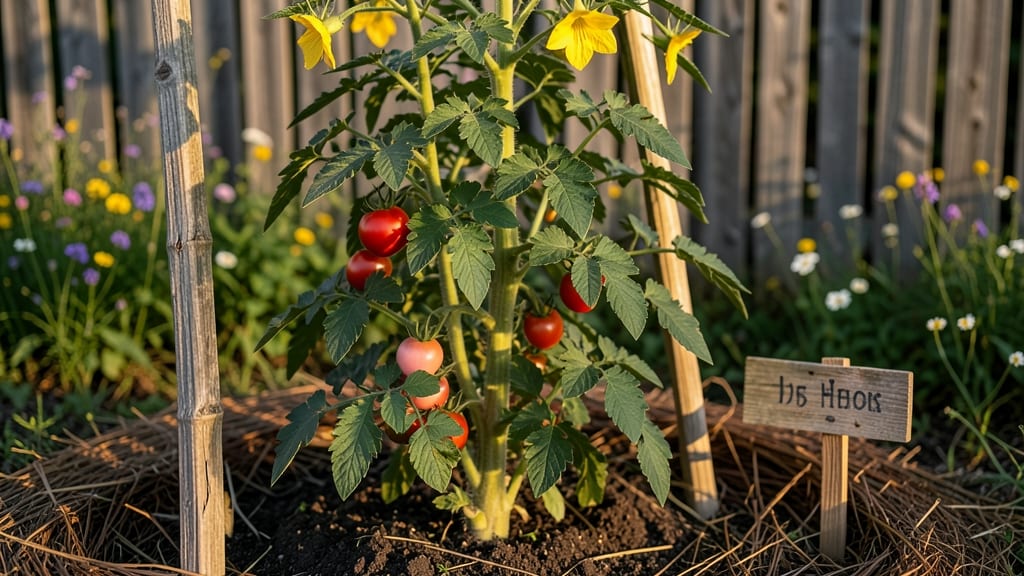
Whether tomato plants come back each year depends on your climate—most die after fruiting, but in frost-free zones (USDA 10+), they can persist as perennials with care, though replanting is usually needed for strong growth.
Tomatoes are classified as annuals because they allocate most of their energy to producing fruit rather than surviving winter. 🌱 In colder regions, frost kills them off completely, but in warm climates, some varieties like 'Cherokee Purple' or 'Black Krim' may regrow with heavy mulching or greenhouse protection.
The key difference lies in how they handle temperature shifts—perennial tomatoes prioritize root systems over fruit, which is why they rarely match the productivity of replanted annuals.
If you're in a mild zone, try overwintering by covering plants with straw mulch (6+ inches) or moving potted tomatoes indoors. However, even in these conditions, most gardeners replant each spring for better yields. The trade-off? Perennial tomatoes save time, while annuals guarantee vigorous growth and higher fruit production.
💡 In This Article
- Why Tomato Plants Are Usually Annuals
- How to Grow Tomatoes Year-Round in Your Climate
Why tomato plants are usually annuals
Tomato plants are biologically wired as annuals because their primary energy focus is fruit production, not long-term survival. When temperatures drop below 40°F, their cellular structure begins to break down—proteins denature and cell membranes rupture, leading to irreversible damage.
This cold sensitivity explains why most varieties collapse after frost, even if they appear healthy earlier in the season. 🌱 The plant's entire lifecycle is geared toward maximizing fruit yield in a single growing season, leaving little energy for winter resilience.
The science behind this involves photoperiodism—the plant's response to daylight changes. As days shorten in autumn, tomatoes shift from vegetative growth to reproductive mode, diverting resources to flowers and fruit at the expense of root and stem hardening.
This physiological shift is why even well-established plants can't withstand freezing temperatures. In contrast, true perennials like asparagus or rhubarb allocate energy to underground storage organs (rhizomes, tubers) that survive winter dormancy.
Climate zones play a critical role in determining whether tomatoes can persist. In USDA zones 7-9, mild winters may allow some regrowth, but the plants often emerge weak and produce sparse fruit. True perennial behavior only becomes possible in USDA 10+ zones where frost never occurs.
Here, the lack of temperature stress allows plants to maintain active growth year-round, though they still face challenges like disease pressure and nutrient depletion without proper care.
Consider the energy trade-off: a tomato plant invests 80% of its photosynthetic output into fruit development during peak season. This leaves minimal reserves for winter survival. Even in frost-free climates, perennial tomatoes typically produce 30-50% fewer fruits than annuals because their energy is split between maintaining growth and fruit production.
The result? Most gardeners opt for annual replanting to guarantee robust harvests.
There's an interesting exception with certain heirloom varieties like 'Cherokee Purple' or 'Black Krim', which show slightly better perennial potential due to their thicker stems and deeper root systems. These traits allow them to store more carbohydrates in their roots, giving them a slight survival advantage in marginal climates.
However, even these varieties rarely match the productivity of fresh annual plants the following spring. 🌿
The key takeaway is that tomatoes are fundamentally designed for seasonal productivity rather than longevity. Their annual lifecycle is an evolutionary adaptation to maximize fruit output in warm, growing seasons—a strategy that works beautifully for gardeners in temperate climates but creates challenges for those attempting perennial growth.
Understanding this biological reality helps explain why most gardening guides recommend annual replanting, even in mild climates.