
Size
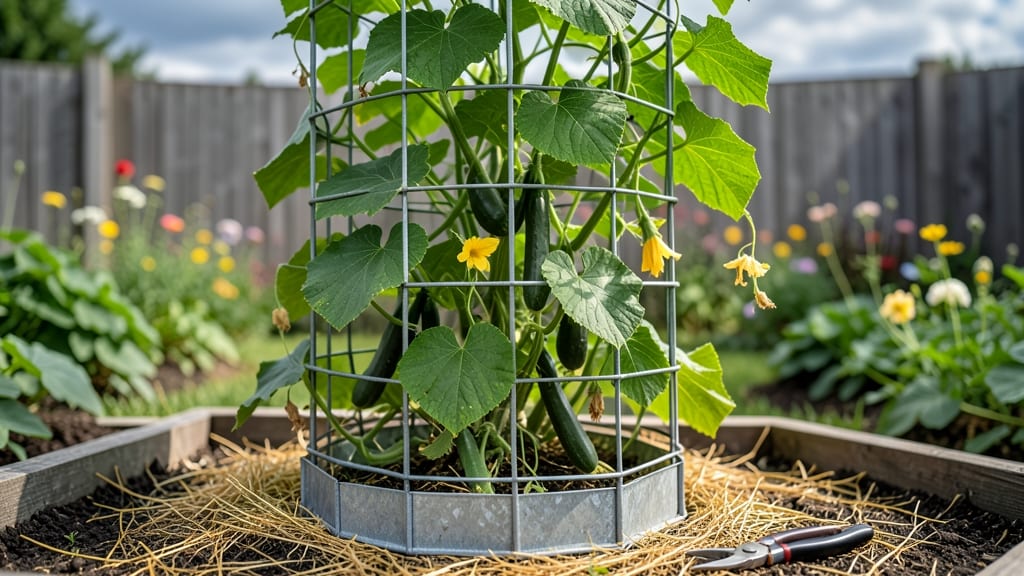
Growing cucumbers in a tomato cage turns awkward vines into a neat, space-saving vertical garden that produces more fruit than you'd expect. 🌱 I tried this last summer after my sprawling cucumbers took over half the patio—and the results were shocking.
Instead of tangled messes, I got a tidy, productive plant that stayed off the ground where pests couldn’t reach. The key is choosing a 5-foot cage (the standard size) and planting your cucumber deep—bury half the stem so roots grow along the sides.
Prune aggressively to encourage upward growth, and you’ll see vines spiral neatly around the cage while still producing 20+ cucumbers in a small footprint. Water at the base to keep foliage dry, and watch those vines climb like a jungle gym.
You’ll harvest crisp, straight cucumbers that stay clean and easy to pick, plus save space for other plants below. The vertical setup also improves airflow, cutting down on mildew and giving you healthier plants with less work. Works for bush varieties too—just stake them early.
Here’s how to set it up without the usual cucumber chaos.
📚 In This Guide
- What you need
- Instructions
- Tips and common mistakes
- Wrapping up and next steps
What you need
- ● Tomato cage (1-2 cages) – Choose a sturdy, 4-5 ft tall cage with 12-16 gauge wire or plastic mesh for support.
- ● Cucumber seeds or seedlings (2-4 plants) – Opt for bush or compact varieties like 'Bush Champion' or 'Spacemaster' for smaller cages.
- ● Potting soil (1-2 bags, 5-10 lbs each) – Use high-quality, well-draining soil with compost or aged manure.
- ○ Container (optional but helpful) – A 5-gallon bucket, fabric grow bag, or large pot (12"+ diameter) to pair with the cage.
- ○ Trellis netting or twine – For extra support if cucumbers get heavy (optional but recommended for large varieties).
- ● Watering can or hose with a gentle nozzle – Cucumbers love consistent moisture but hate soggy roots.
- ● Fertilizer (balanced or veggie-specific) – Look for a 10-10-10 or 5-5-5 NPK ratio to feed your plants.
- ● Mulch (straw or shredded leaves) – Retains moisture and keeps roots cool.
- ● Pruning shears – For trimming excess vines or yellow leaves.
- ● Plant ties or soft Velcro strips – To secure cucumbers to the cage as they grow.
- ● Shade cloth (lightweight) – Protects young plants from scorching sun.
Step-by-Step guide to growing cucumbers in a tomato cage
Turn that empty corner into a vertical cucumber jungle with this simple, space-saving trick.
🪴 Step 1: Choose and Prepare Your Tomato Cage
Select a sturdy 5-6 foot tall tomato cage—the taller, the more vines you can train upward. Flatten the cage slightly on one side to create a 30-degree angle against a fence or trellis for extra support. This prevents the cage from toppling when vines get heavy.
Check for any sharp wire ends and bend them gently inward with pliers. You'll be handling these vines often, and rough edges can damage tender stems. Place the cage in a spot with full sun—at least 6-8 hours daily—since cucumbers are heavy feeders and need plenty of light to produce fruit.
🌱 Step 2: Plant Your Cucumber Seedlings
Wait until after your last frost date when soil temperatures reach at least 60°F. Dig a hole slightly larger than the root ball of your 4-week-old cucumber seedlings (or transplant store-bought plants). Gently remove the seedling from its container and place it in the hole, ensuring the top of the root ball sits just below soil level. This prevents stem rot from sitting water.
Fill the hole with soil and press firmly around the base to eliminate air pockets. Water deeply right after planting—1 gallon per plant—to help roots establish. If planting multiple cucumbers in one cage, space them 12-18 inches apart so vines have room to spread before climbing.
☀️ Step 3: Train Vines Upward and Secure Them
As soon as vines reach 6-8 inches tall, start guiding them upward through the cage. Use soft plant ties (never wire or string—they cut into vines) to loosely secure the main stem to the cage's center support. The goal is to encourage vertical growth, not restrict it.
Watch for side shoots (small stems growing from the main vine). These can be left to grow if you want bushier plants, but pinch them off if you prefer a single main vine for easier harvesting. When vines reach the top of the cage, let them trail along the ground or train them to a nearby trellis for even more space.
💧 Step 4: Water and Fertilize for Maximum Production
Cucumbers need consistent moisture—water deeply 2-3 times per week, aiming for 1-2 gallons per plant. Let the top inch of soil dry out between waterings to prevent disease, but never let the plant wilt. Water at the base of the plant in the morning to reduce evaporation and fungal risks.
Feed every 2-3 weeks with a balanced liquid fertilizer (10-10-10 or 5-5-5) diluted to half strength. You'll see new leaves and flowers within a week—that's your signal everything is working. Avoid over-fertilizing with nitrogen, or you'll get lots of leaves but few cucumbers.
⏰ Step 5: Prune and Harvest for Continuous Yield
Once cucumbers start forming, harvest every 2-3 days to encourage more production. Use pruning shears to cut the fruit from the vine, leaving a small stem attached. Never pull cucumbers off—they can damage the vine. Harvesting at the right size (6-8 inches for slicing types) ensures sweetness and prevents the plant from diverting energy to overgrown fruit.
Prune any yellowing or diseased leaves immediately to keep airflow circulating. If vines outgrow the cage, trim back the oldest growth to redirect energy to newer, fruit-bearing sections. With proper care, one well-trained cucumber plant in a tomato cage can produce 20-30 pounds of fruit in a season!
Tips & tricks for perfect vertical cucumber growth
Maximize your harvest with these pro tips that'll transform your tomato cage into a cucumber powerhouse.
Cage Stability: I learned this the hard way—don't skip securing your cage! After a windstorm toppled my first attempt, I now recommend anchoring the base with stakes or tying it to a sturdy fence. The 30-degree angle mentioned in Step 1 is crucial, but only works if the cage stays put. For extra security, use a heavy-duty cage rated for at least 20 pounds of weight—the cucumber vines will surprise you with how heavy they get!
Timing Secret: The 6-8 hours of daily sun requirement is non-negotiable, but here's what nobody tells you: morning sun is more important than afternoon. I've noticed my plants produce better when they get their full 6-8 hours before noon. If your space only gets afternoon sun, consider using a reflective surface like white plastic sheeting behind the cage to maximize light exposure during those critical morning hours.
Watering Wisdom: Those 2-3 waterings per week might seem straightforward, but timing matters just as much as quantity. Water deeply in the morning so leaves have all day to dry—this prevents fungal diseases that love damp foliage. I've found that using a soaker hose connected to a timer set for 30 minutes every other morning gives perfect consistent moisture without the risk of overwatering.
Harvest Hack: The 2-3 day harvesting window is perfect, but here's my game-changer: harvest first thing in the morning when cucumbers are firmest. I've noticed they stay fresher longer when picked cool and never let them sit on the vine beyond 8 inches for slicing types—they get bitter and seedy fast. A small mesh bag in your harvest basket prevents bruising those tender fruits during transport.
Pro Tips for Grow Cucumbers In Tomato Cage
- Maximize your harvest with these pro tips that'll transform your tomato cage into a cucumber powerhouse.
- Cage Stability: I learned this the hard way—don't skip securing your cage!
- Timing Secret: The 6-8 hours of daily sun requirement is non-negotiable, but here's what nobody tells you: morning sun is more important than afternoon.
Frequently asked questions
Got questions about growing cucumbers in a tomato cage?
You’re not alone! Here are answers to the most common queries, so you can grow like a pro—no guesswork required.
Can I use a tomato cage for cucumbers if I already have one?
Tomato cages work great for cucumbers—just ensure the cage is sturdy (6+ feet tall) to support their vines. If your cage is small or worn, reinforce it with stakes or add a second cage for extra support. Cucumbers are fast growers, so a little extra height goes a long way!
When is the best time to plant cucumbers in a tomato cage?
Wait until after the last frost when soil temps hit 60°F+. For warm climates, plant in early spring; cooler zones may need to start indoors 2–3 weeks before transplanting. Cucumbers love warmth, so avoid rushing—patience pays off with bigger, happier plants!
What if my cucumbers outgrow the tomato cage?
No problem! If vines escape, gently weave them through the cage or train them upward with soft ties. For extra height, add a trellis extension or lean the cage against a fence. Prune lower leaves to improve airflow and reduce stress on the plant. Think of it as a cucumber jungle gym!
How do I keep pests away from cucumbers in a tomato cage?
Pests like aphids and cucumber beetles love tender vines. Prevent them with:
- Neem oil spray (weekly)
- Row covers (early season)
- Yellow sticky traps (for beetles)
- Handpick pests (wear gloves!)
Can I grow other vining plants (like peas or beans) in the same cage?
Not ideal—cucumbers need their own space to thrive. Peas and beans are lighter vines, but cucumbers are heavy and competitive. If you’re short on space, grow bush beans nearby instead. Save the cage for cucumbers (or zucchini!) for the best results.
Pro Tip: Need a faster fix?
If you’re short on cages, try a wire tomato cage + bamboo stakes combo for extra support. Or repurpose a metal garden trellis—just ensure it’s tall and sturdy. DIY hacks save money and space!
Wrapping up and next steps
Growing cucumbers in a tomato cage is a game-changer for small spaces—no fancy equipment or sprawling gardens needed! With just a little creativity and care, you’ll enjoy vines that climb, pests that stay away, and crisp, homegrown cucumbers all season long. 🌱✨
Ready to harvest your rewards? Start by preparing your cage this weekend, then watch your plants thrive. Next up: experiment with companion plants (like basil or marigolds) to boost flavor and yield even more!