
Planting
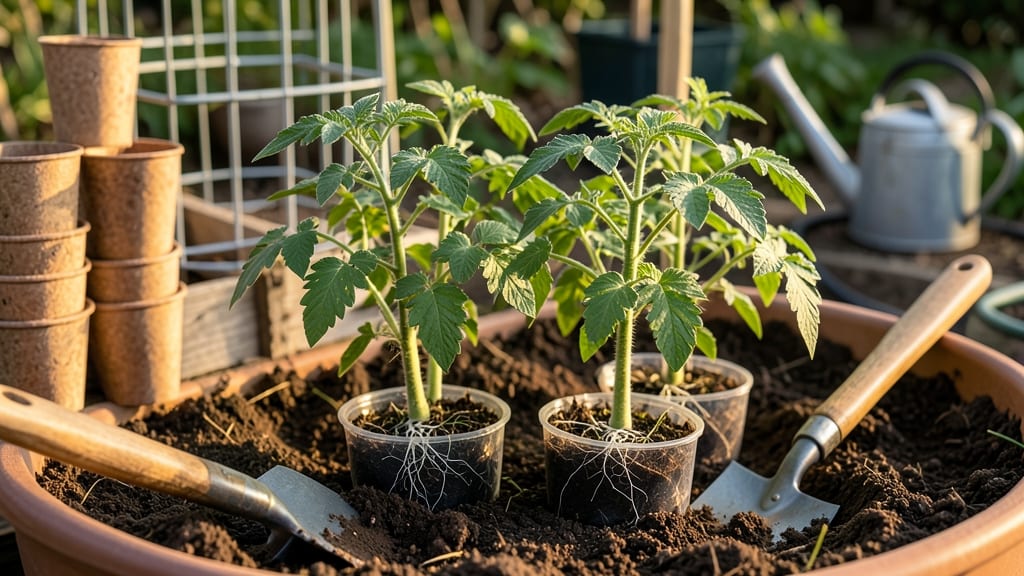
Before transplanting, how big should tomato seedlings be? The magic number is four inches tall with sturdy stems and 4-6 true leaves—any smaller and they’ll struggle to recover from shock. 🌱 I’ve learned the hard way that rushing this step means leggy, weak plants that bolt or fail to fruit, while waiting too long risks overcrowded flats and stunted growth. The goal is seedlings that look like miniature trees, not floppy sticks.
Look for thick, dark-green stems (about pencil-thick) and roots growing through drainage holes—that’s your sign they’re ready. Seedlings should be 4-6 weeks old (depending on your climate) and have 2-3 sets of true leaves (ignore the first pair, those are "seed leaves").
Hardening off—gradually exposing them to outdoor conditions—starts 7-10 days before transplanting to toughen them up.
Once planted, these robust seedlings establish faster, resist pests better, and start flowering in 6-8 weeks (instead of the 10+ weeks you’d get with underdeveloped plants). The payoff? Heavier fruit, earlier harvests, and fewer "what went wrong?" moments.
Just avoid the common mistake of transplanting when night temps dip below 50°F—tomatoes hate the cold.
For a visual guide, snap a photo of your seedlings next to a ruler and compare to the 4-inch mark—that’s your target. If they’re smaller, give them 1-2 more weeks indoors with strong light.
Overgrown? Trim the lower leaves to reduce stress during transplanting. The goal is balance: big enough to thrive, but not so tall they topple over.
📚 In This Guide
- What you need
- Instructions
- Tips and common mistakes
- Wrapping up and next steps
What you need
- ● Tomato seedlings: 4–6 inches tall (look for 2–3 sets of true leaves and a sturdy stem).
- ● Transplanting pots or containers: 5–7 inches in diameter (or larger for indeterminate varieties). Use drainage holes!
- ● High-quality potting mix: Lightweight, well-draining blend (avoid garden soil—it’s too dense!). Aim for 10–20 quarts depending on your setup.
- ● Fertilizer: Balanced, water-soluble fertilizer (e.g., 10-10-10 or 5-5-5) or a tomato-specific feed.
- ● Watering can or hose with a gentle nozzle: Avoid blasting seedlings—aim for slow, deep watering.
- ● Pruners or scissors: Sharp and clean (sterilize with rubbing alcohol if reusing).
- ○ Support system (optional but recommended): Stakes (5–6 feet tall for indeterminate varieties) or cages (5–6 feet high).
- ● Twine or plant ties (for staking).
- ● Mulch: Straw, shredded leaves, or black plastic to retain moisture and suppress weeds.
- ● Epsom salt: 1 tablespoon per gallon of water (for magnesium boost, especially in yellowing leaves).
- ● Grow lights or shade cloth: If transplanting outdoors in hot or cold weather.
- ● Compost or worm castings: Mix into the soil for extra nutrients.
- ● Plant markers: Labels to track varieties (especially useful if growing multiple types!).
Step-by-Step guide to transplanting healthy tomato seedlings
Here's how to tell when your seedlings are ready for the garden—and how to prepare them for success.
🌱 Step 1: Identify the Right Size for Transplanting
Tomato seedlings should be 4-6 inches tall with 4-6 true leaves (not counting the first two seed leaves). You'll see these as larger, more mature leaves that look like miniature versions of the adult plant. At this stage, the stem should be ¼-inch thick or thicker—thin, spindly seedlings won't support fruit.
Check the roots by gently squeezing the pot. If roots fill the container and grow through drainage holes, they're ready. If you see hair-like root growth at the surface, transplant immediately—roots will suffocate in crowded conditions. I always tap the pot gently to loosen the root ball before removing it; this prevents root damage.
🌿 Step 2: Strengthen Seedlings for Outdoor Conditions
Start hardening off 10-14 days before transplanting. Move seedlings outside to a shaded, sheltered spot for 1-2 hours the first day, gradually increasing time by 1 hour daily. Watch for wilting or leaf scorch—these are signs they're not ready yet. If leaves turn yellow or crispy, they need more time.
I like to place seedlings on a porch or under a tree where they get dappled sunlight. This mimics the gradual transition they'll experience in the garden. Avoid full sun during this period—it can cause transplant shock. You'll know they're ready when they bounce back quickly after a full day outside.
☀️ Step 3: Prepare the Garden Bed for Transplanting
Choose a spot with 6-8 hours of direct sunlight and well-draining soil. Amend the bed with 2-3 inches of compost mixed into the top 6 inches of soil. Tomatoes need nutrients to support heavy fruit, so don't skip this step. I dig holes twice as wide as the root ball but only as deep as the container—planting too deep can cause stem rot.
Gently remove seedlings from their containers, shaking off excess soil to check for root health. If roots look white and firm, they're ready. If they're dark, mushy, or tangled in a dense mass, they may have been overwatered. Plant seedlings 1 inch deeper than they grew in containers to encourage strong root growth, but never bury the stem above the first true leaves.
💧 Step 4: Transplant and Water for Immediate Support
Place seedlings in the prepared holes, spacing them 18-24 inches apart for determinate varieties and 24-36 inches apart for indeterminate types. Fill the hole with soil, pressing gently to eliminate air pockets. Water deeply right after transplanting—this helps settle the soil and reduces transplant shock. You'll see water bead up on the leaves, but don't worry; it won't harm the plants.
Mulch around the base with 2-3 inches of organic mulch to retain moisture and suppress weeds. Avoid piling mulch against the stem—this can cause rot. Over the next week, keep the soil consistently moist but not soggy. You'll know you're doing it right when new leaves emerge within 7-10 days—this is your sign the seedlings have taken root.
Tips & tricks for transplanting tomato seedlings
Transplanting tomato seedlings successfully starts with knowing exactly what to look for—and how to handle them like a pro. These details make all the difference between thriving plants and struggling ones.
Seedling Size Matters: The 4-6 inch height guideline is non-negotiable, but what you won't see in the instructions is how to check stem strength. Press the stem gently between your thumb and forefinger—it should feel firm and resilient, not hollow or brittle. I've learned the hard way that even 6-inch seedlings with weak stems will flop under tomato fruit weight. The ¼-inch thickness is your minimum threshold for structural integrity.
Root Health Check: When you see those hair-like roots growing through drainage holes (Step 1), that's your body telling you "transplant now!" But here's what nobody tells you—if roots are circling tightly around the container, gently score the root ball with your finger before planting. This encourages outward growth instead of continuing the circular pattern. I use a butter knife to make 2-3 shallow cuts around the root ball before transplanting.
Hardening Off Hack: The 10-14 day hardening off period (Step 2) is crucial, but timing is everything. Start when nighttime temperatures consistently stay above 50°F. I've found that moving seedlings to a spot with morning sun and afternoon shade gives them the best transition. Watch for leaves that perk up quickly after wilting—that's your sign they're ready for full sun exposure.
Transplanting Depth: Planting 1 inch deeper than container height (Step 3) might seem counterintuitive, but it creates a stronger stem base. What I do differently is make a small trench around each seedling after planting—this encourages roots to grow outward rather than staying concentrated in one spot. Just be careful not to bury any leaves above the soil line, as this can cause rot.
Pro Tips for How Big Should Tomato Seedlings Be Before Transplanting
- Transplanting tomato seedlings successfully starts with knowing exactly what to look for—and how to handle them like a pro.
- Seedling Size Matters: The 4-6 inch height guideline is non-negotiable, but what you won't see in the instructions is how to check stem strength.
- Root Health Check: When you see those hair-like roots growing through drainage holes (Step 1), that's your body telling you "transplant now!"
Frequently asked questions
Got questions about transplanting tomato seedlings? You’re not alone—here are some of the most common concerns and quick answers to get you growing with confidence!
What’s the ideal size for tomato seedlings before transplanting?
Tomato seedlings should be 4–6 inches tall with 2–4 true leaves and a sturdy stem. Look for a thick, dark green base (not leggy or pale) and a well-developed root system. Transplanting too early risks shock; too late may stunt growth.
Can I transplant tomato seedlings too early or too late?
Transplanting too early (before 4 inches) stresses seedlings, while too late (past 6 inches) can cause root-bound issues. Aim for after the last frost when soil is at least 60°F. If seedlings outgrow containers, they’ll struggle to recover—act fast!
What if my seedlings are leggy or weak before transplanting?
Leggy seedlings need more light (move them to a sunny spot or use grow lights). If they’re weak, harden them off for 5–7 days before transplanting: place them outside in shade for a few hours daily, gradually increasing exposure. Avoid fertilizing weak seedlings—focus on light and water.
Should I pinch off flowers before transplanting?
Yes! Pinch off any flowers or fruit on seedlings before transplanting to redirect energy to root and stem growth. This helps them establish stronger before producing. Once transplanted and thriving (after 2–3 weeks), they’ll reward you with a bountiful harvest!
What if I don’t have enough space for individual pots?
If seedlings are crowded, thin them to the strongest 2–3 per pot or transplant them into larger containers (like 4-inch pots) temporarily. Avoid overcrowding—they’ll compete for nutrients and light. If space is tight, consider succession planting (sowing new seeds every 2 weeks).
Wrapping up and next steps
Transplanting tomato seedlings at the right size—around 4 inches tall with a sturdy stem and well-developed roots—sets the stage for a bountiful harvest. 🌱 Don’t rush the process; patience ensures stronger plants that thrive in their new home.
Once you’ve prepped your garden and seedlings, take the leap—your future juicy tomatoes will thank you!
Next step: Mark your calendar for transplanting day, harden off your seedlings, and get ready to watch them grow into robust, fruit-bearing plants! 🌿