
Planting
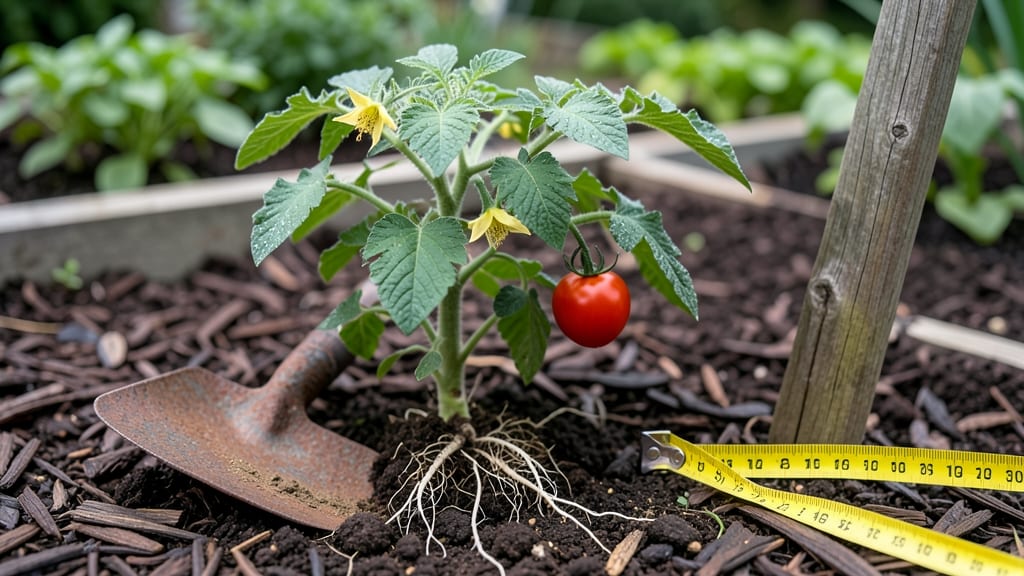
To grow strong, productive tomato plants 🍅, you need to plant them at the right depth—too shallow or too deep can ruin your harvest before it even starts.
Planting tomatoes too shallow or too deep can stunt growth, weaken roots, and even kill your harvest—so getting the hole depth just right is one of the most overlooked secrets to bountiful tomato plants.
Most gardeners focus on soil type or sunlight, but the depth of the planting hole determines how well your tomato roots spread and anchor the plant for healthier growth and bigger yields.
In this guide, I’ll break down the ideal planting depth for seedling vs. mature plants, how to adjust for different soil types, and the simple fixes for common mistakes that leave your tomatoes struggling.

The ideal hole depth for tomato plants by root type and growth stage
Getting the hole depth right when planting tomatoes isn't just about burying the seedling—it's about creating an environment where roots can thrive. Too shallow, and your plant struggles to anchor; too deep, and you risk stem rot or stunted growth.
The ideal depth depends on your tomato variety, root system, and even your soil type. Let’s break it down so you can plant with confidence.
For most tomato seedlings, the general rule is to plant them at the same depth they grew in their seedling pot. This ensures the root flare (where roots meet the stem) sits just above soil level.
However, this baseline changes when you factor in determinate vs indeterminate varieties or adjust for staking vs cage support. Let’s explore the specifics to avoid common pitfalls.
| Tomato Type | Root System | Seedling Depth | Mature Plant Depth | Soil Adjustment |
|---|---|---|---|---|
| Determinate (Bush) | Shallow, compact | Same as pot depth (1-2 inches) | No deeper than 12 inches | Loamy soil: standard depth Sandy soil: 1 inch deeper Clay soil: 1 inch shallower |
| Indeterminate (Vining) | Deep, sprawling | Same as pot depth (1-2 inches) | Up to 18 inches for staked varieties | Loamy soil: standard depth Sandy soil: 2 inches deeper Clay soil: 1 inch shallower |
| Cherry Tomatoes | Moderate, bushy | Same as pot depth (1 inch) | No deeper than 10 inches | All soil types: standard depth (compact roots) |
| Heirloom Varieties | Deep, vigorous | Same as pot depth (1-2 inches) | Up to 24 inches for tall types | Loamy soil: standard depth Sandy soil: 2-3 inches deeper Clay soil: 1-2 inches shallower |
If you’re planting in sandy soil, which drains quickly, you’ll want to dig holes 1-2 inches deeper than the standard depth. This gives roots more soil to grip and retain moisture.
Conversely, clay soil, which compacts easily, requires shallower holes—about 1 inch less than the recommended depth—to prevent root suffocation.
For indeterminate varieties like 'Sungold' or 'Brandywine', which grow 6+ feet tall, deeper planting (up to 18 inches) can help stabilize the plant, especially if you’re using stakes or cages.
Bury the stem deeper than usual to encourage stronger root development along the buried portion. Just avoid burying the lower leaves, as this can promote disease.
When using cage support, you can plant slightly deeper (up to 2 inches deeper) to create a more stable base, but avoid exceeding 12 inches for most varieties. The cage’s structure will support the plant, but deeper roots still need room to spread.
For staked tomatoes, like 'Early Girl', dig a hole deep enough to bury 1/3 of the stem—this encourages roots to form along the buried section, creating a stronger anchor.
One of the biggest mistakes gardeners make is burying the stem too deep, which can lead to stem rot or weak growth above the soil line. Always check for the root flare—the bulge where roots meet the stem—and ensure it sits just above the soil surface.
If your seedling has a thick stem, you can even trim the lower leaves before planting to reduce disease risk from buried foliage.
For container-grown tomatoes, the hole depth follows the same rules, but your container’s size limits how deep you can go. If your pot is shallow (under 12 inches deep), opt for determinate varieties or dwarf types like 'Tiny Tim'.
For deeper containers (18+ inches), indeterminate varieties thrive with deeper planting to match their root needs.
Pro tip: If you’re planting in cool climates or late in the season, you can use the deeper planting technique to warm the soil faster and protect roots from temperature swings. Just avoid planting deeper than 12 inches unless your variety is specifically bred for tall growth, like 'Super Steak'.
Finally, always loosen the soil at the bottom of the hole to encourage root penetration. Mix in a handful of compost or aged manure to boost nutrient availability, especially for heavy feeders like heirloom tomatoes.
With the right depth and soil prep, your tomato plants will establish strong roots and reward you with a bountiful harvest all season long. 🌱
Common mistakes that kill tomato plants (and how to fix them)
Even experienced gardeners sometimes struggle with tomato planting depth, and small mistakes can have big consequences. Planting too shallow leaves roots exposed, while burying stems too deep suffocates the plant. Both scenarios lead to weak stems, poor fruit production, and even plant death if left unchecked.
The key is understanding how root development and stem health interact with planting depth. For example, indeterminate varieties need extra care since they grow continuously, while determinate types have different needs. Let's explore the most common depth-related mistakes and how to correct them before it's too late.
Seedlings: Bury up to ⅔ of the stem (roots + 1-2 inches of stem below soil)
Mature plants: Keep 1-2 inches of stem above soil
Danger zone: Never bury more than 3 inches of stem—this causes stem rot and root suffocation
One of the most destructive mistakes is planting tomatoes too shallow, which exposes the root ball and lower stem to drying winds and temperature swings. When roots dry out, the plant struggles to absorb water and nutrients, leading to yellowing leaves and stunted growth.
You'll often see this in seedlings that were transplanted without enough soil around their roots.
To fix shallow planting, gently loosen the soil around the base of your tomato plant and add 2-3 inches of fresh soil to cover the exposed roots. Water deeply afterward to help the soil settle and encourage root expansion.
For container-grown tomatoes, ensure the pot has at least 12 inches of depth—shallow containers are a common culprit for poor root development.
On the opposite end, burying tomato stems too deep creates a second set of problems. When stems are submerged, they can't photosynthesize, leading to weak stems that snap easily under fruit weight.
You'll notice this when stems turn pale or develop a swollen, girdling base—a sign of stem rot. This mistake is especially common with tall indeterminate varieties that grow continuously.
If you've already planted too deep, don't panic. Carefully dig around the base and gently remove excess soil to expose 1-2 inches of stem. Add a mulch ring (2-3 inches thick) around the base to protect the newly exposed stem from temperature fluctuations.
For severe cases, you may need to stake the plant immediately to provide support while it recovers.
Remember, the goal is to create a stable base while keeping the stem's natural growth zone above soil level. With these fixes, your tomato plants will have the strong foundation they need to produce healthy fruit all season long. 🌱