
Companion Plants
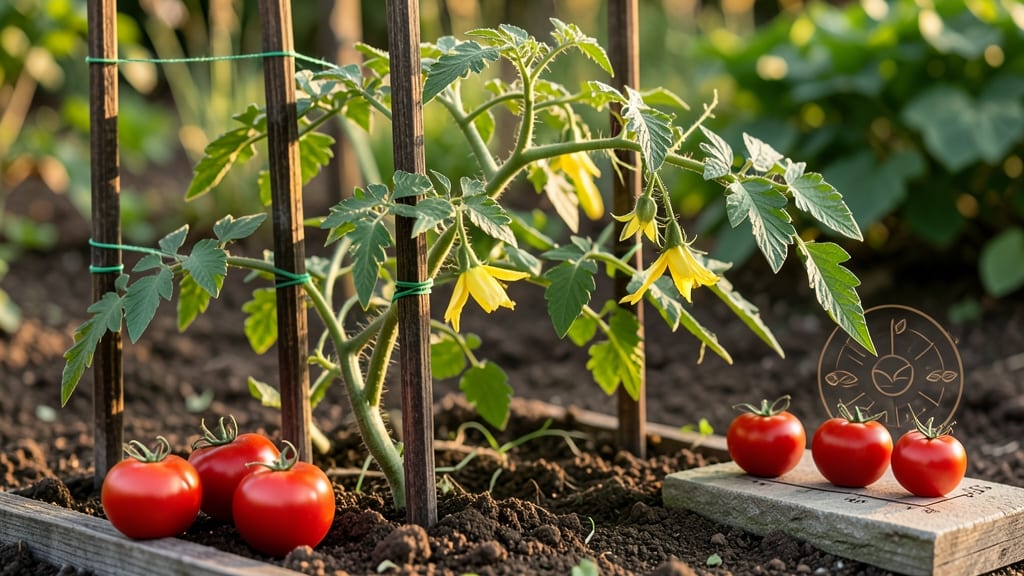
How long before tomato plants produce fruit depends on the variety and growing conditions, but most take 60 to 90 days from transplanting to yield. The timeline can shift dramatically depending on your care, climate, and variety.
Wondering why your tomato plants seem to take forever to produce fruit? The answer lies in understanding their growth stages—and how to speed them up—so you can enjoy homegrown tomatoes sooner than you think!
From the first green shoot to that first ripe 🍅, tomatoes follow a predictable (but adjustable) schedule. Too much shade, inconsistent water, or nutrient gaps can stretch that timeline by weeks, while the right tricks—like strategic pruning or a boost of phosphorus—can cut it down.
Here’s how to read your plant’s signals, tweak the conditions for faster results, and avoid the three biggest mistakes that turn 60-day tomatoes into 120-day disappointments.
Tomato plant growth stages: how long each phase takes before fruit production
If you're impatiently waiting for your tomato plants to produce fruit, understanding their growth stages is key. From seedling to harvest, tomatoes go through four distinct phases—each with its own timeframe and care requirements.
In warm climates, this process can take as little as 60-70 days, while cool-season growers may wait 80-90 days or longer. Let’s break down each stage so you can spot delays and optimize your harvest timeline.
First, there’s the seedling stage, which lasts 2-4 weeks from seed germination. During this phase, your tiny tomato seedlings focus on developing roots and a few true leaves. This stage is critical—overwatering or poor light here can stunt future growth.
If you’re starting with transplants, skip this phase and move straight to the vegetative stage, which begins when your plant has 4-6 true leaves.
Next comes the vegetative stage, where your plant shifts energy to leaf and stem growth.
This phase typically lasts 3-6 weeks, depending on variety and conditions. Determinate varieties (like Roma tomatoes) grow bushier and may enter flowering sooner, while indeterminate types (like Sungold cherry tomatoes) keep growing taller.
During this time, ensure your plants get 6-8 hours of sunlight daily and consistent moisture to avoid stress.
Here’s where things get exciting: the flowering stage begins when you spot those yellow blossoms! This phase usually lasts 2-4 weeks, but temperature plays a huge role. Tomatoes need daytime temps between 70-85°F to pollinate successfully.
If nights dip below 55°F, flowers may drop off. Hand-pollinating with a small brush can help in greenhouse setups or cool climates.
Finally, the fruiting stage is when your patience pays off. After pollination, tiny tomatoes appear and grow over 3-8 weeks, depending on variety and conditions. Cherry tomatoes like Sweet 100 may ripen in 50-60 days, while heirloom beefsteaks can take 80-90 days.
Watch for color changes—green turning pink, then red (or yellow, purple, etc., depending on the variety)—and slight softness when gently squeezed.
| Growth Stage | Duration (Days) | Key Signs | Climate Adjustments |
|---|---|---|---|
| Seedling | 14-28 | First true leaves appear | Slower in cool soil (<60°F) |
| Vegetative | 21-42 | Rapid stem/leaf growth | Faster in warm climates (75°F+) |
| Flowering | 14-28 | Yellow blossoms appear | Flowers drop below 55°F |
| Fruiting | 21-56 | Tomatoes change color | Slower in cloudy weather |
| Total (Fastest) | 60-70 | Warm climate, ideal care | Cherry tomatoes |
| Total (Slowest) | 80-90+ | Cool climate, stress | Heirloom varieties |
Now that you know the timeline, here’s how to speed up production. Start by choosing early-maturing varieties like Early Girl or Stupice, which can produce fruit in as few as 55 days.
If your plants seem stuck in the vegetative stage, they might need more phosphorus-rich fertilizer (like bone meal) to encourage flowering. For indeterminate varieties, prune suckers regularly to redirect energy to fruit production.
Another pro tip: mulch around your plants to keep soil temps stable and retain moisture. This helps prevent blossom end rot (a common issue caused by calcium deficiency) and ensures steady growth.
If you’re in a cool climate, use row covers or black plastic mulch to warm the soil faster. Conversely, in hot climates, provide afternoon shade to protect flowers from wilting.
Finally, don’t forget to hand-pollinate if you notice flowers aren’t setting fruit. Simply use a small paintbrush or cotton swab to transfer pollen from one blossom to another. This is especially helpful in greenhouses or during rainy weather, when natural pollinators like bees are less active.
With these strategies, you can shave weeks off the tomato production timeline and enjoy fresh fruit sooner!
🌱
5 Proven tricks to speed up tomato fruit production in your garden
If you're eagerly waiting for your tomato plants to produce fruit, you're not alone! The good news is that with the right techniques, you can accelerate flowering and fruiting by up to 30% faster.
Understanding how to optimize your plants' environment and care can make all the difference between a slow season and a bountiful harvest.
One of the biggest misconceptions is that bigger plants mean faster fruit production. In reality, it’s about balancing light exposure, nutrient availability, and climate control. By focusing on these key areas, you can push your plants into fruiting mode sooner, regardless of your growing conditions.
🌱 Speed Up Tomato Fruit Production With These Tricks
- Prune Strategically – Remove suckers (side shoots) to redirect energy to flowering and fruit. Focus on the first 6-8 inches of the main stem for best results.
- Boost Pollination – Gently shake plants or use a handheld fan near flowers to improve pollination rates. Bees alone may not be enough in cooler climates.
- Optimize Light – Ensure 6-8+ hours of direct sunlight daily. Use reflective surfaces (like white walls) to bounce extra light onto plants.
- Feed the Right Nutrients – Switch to a low-nitrogen, high-phosphorus fertilizer (like 5-10-10) once flowers appear to encourage fruit development.
- Control the Climate – Use row covers for early-season warmth or shade cloth in hot climates to prevent stress. Ideal temps for fruiting: 70-85°F.
Let’s start with pruning strategies, one of the most effective ways to speed up fruit production. Many gardeners avoid pruning because they fear it will reduce yield, but the opposite is true.
By removing suckers—those small shoots that grow between the main stem and branches—you encourage the plant to focus its energy on developing larger, healthier fruit.
Next, don’t underestimate the power of pollination hacks. Tomatoes are self-pollinating, but sometimes they need a little help, especially in cool or windless conditions. A simple trick is to gently shake the plants in the morning when flowers are open.
For indoor or greenhouse growers, a small handheld fan on low speed can work wonders by mimicking natural wind.
Light optimization is another game-changer. Tomatoes thrive in full sun, but if your garden is shaded, you can still improve production. Try placing a white sheet or reflective mulch behind your plants to bounce extra light onto the leaves.
Even an extra 1-2 hours of sunlight can make a noticeable difference in flowering speed.
Finally, pay close attention to your soil nutrients and climate control. Once your plants start flowering, switch to a phosphorus-heavy fertilizer to support fruit development. And if your climate is unpredictable, use row covers in early spring or shade cloth during heatwaves to keep conditions ideal for fruiting.