
Companion Plants
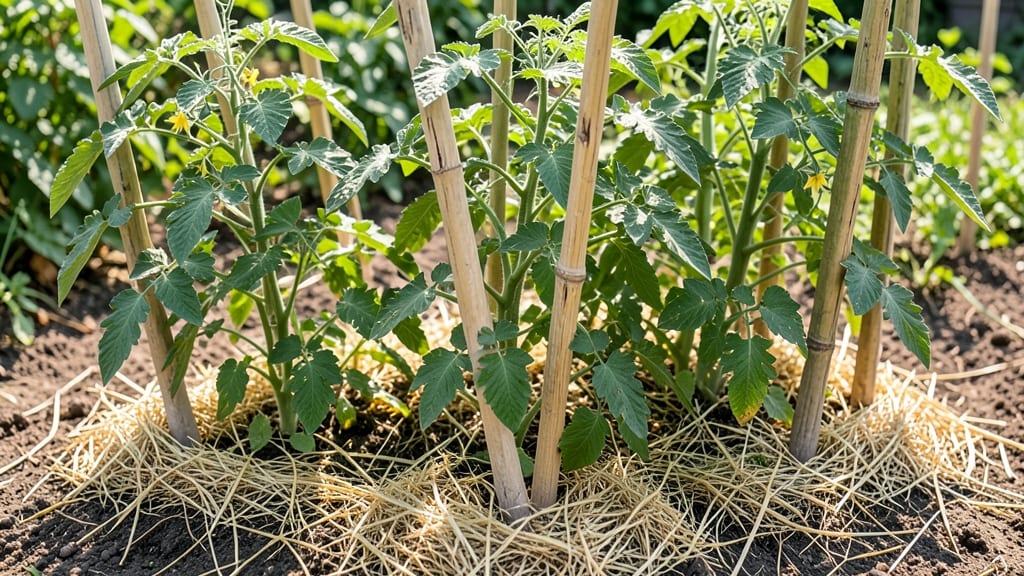
For a family of 4, planting 4 to 6 tomato plants ensures a steady harvest of fresh tomatoes for salads, sauces, and snacks throughout the growing season, with 2 plants of each variety balancing yield and space efficiency.
Tomatoes are one of the most versatile garden crops, but the right number depends on how you plan to use them. 🌱 Determinate varieties like Roma or cherry tomatoes produce smaller, concentrated harvests perfect for sauces and snacks, while indeterminate types like beefsteak yield fewer but larger fruits ideal for slicing.
I've found that mixing 2-3 plants of each type gives you the best of both worlds—enough for daily meals without overwhelming your garden space.
Here's the key: spacing matters just as much as quantity. Larger varieties need at least 18 inches between plants, while compact types can thrive in 12-inch gaps. This spacing prevents disease spread and ensures each plant gets enough sunlight to maximize fruit production.
For container gardening, 2-3 plants per large pot works well, but you'll need to prune more aggressively to maintain yield.
💡 In This Article
- Tomato Variety Yield Differences and Space Needs
- Maximizing Tomato Harvests: Planting and Maintenance Tips
Tomato variety yield differences and space needs
Tomato plants vary dramatically in size and productivity, which directly impacts how many you need for a family of 4. Determinate varieties like Roma or Bush Early Girl produce compact, bush-like plants that yield 10-20 pounds of fruit per season in a concentrated 2-3 week harvest.
These are perfect for sauces and canning, but their limited production means you'll need more plants if you want fresh tomatoes all summer. Indeterminate varieties like Better Boy or Sungold, on the other hand, grow continuously until frost, producing 20-30 pounds over 6-8 weeks but with fewer fruits per cluster.
The space requirements reflect these differences. Determinate tomatoes need 18-24 inches between plants to prevent overcrowding, while indeterminate types require 24-36 inches due to their sprawling vines. In a 10x10-foot garden, you could fit 4-5 indeterminate plants or up to 8 determinate plants. The trade-off?
Indeterminate varieties give you continuous harvests with fewer plants, while determinate types require more space but excel in concentrated production. 🌱 For example, a single Sungold cherry tomato plant can produce 20 pounds of sweet, bite-sized fruits—enough for snacks and salads—whereas a beefsteak plant might yield only 10 pounds but with larger, slicing-sized tomatoes.
Here's where variety selection becomes strategic: if your family loves sauces and salsa, prioritize 2-3 determinate plants like Roma or San Marzano. For fresh slicing tomatoes, 1-2 indeterminate varieties like Brandywine or Cherokee Purple will provide fewer but larger fruits.
The key is balancing your family's consumption habits with the plant's natural tendencies. For instance, cherry tomatoes are prolific but small—you might need 3 plants to match the yield of 1 beefsteak plant in terms of volume, even though the beefsteak gives you fewer but larger tomatoes.
Don't overlook the role of plant health in yield calculations. Proper spacing isn't just about room to grow—it's about airflow. Crowded plants develop fungal diseases like early blight more easily, which can reduce yields by 30-50%.
I've seen gardeners cram too many plants into tight spaces, only to watch their harvests dwindle mid-season. The solution? Follow spacing guidelines religiously and consider vertical trellising for indeterminate varieties to save space without sacrificing yield.
A well-spaced plant will also ripen fruits more evenly, giving you a more consistent harvest throughout the season.
Consider this real-world example: A family that eats 1 pound of tomatoes per week (about 4 pounds per month) could get by with just 2 plants—one determinate for sauces and one indeterminate for slicing.
But if they love fresh tomatoes daily, they'd need 4-6 plants to avoid running out. The difference comes down to how quickly you consume the harvest and how many varieties you want to grow.
For instance, growing 2 Roma plants might give you enough sauce tomatoes for the year, while 2 beefsteak plants could provide slicing tomatoes for summer meals.
One final consideration: container gardening changes the equation entirely. In 5-gallon pots, you can fit 1-2 tomato plants per container, but the yield drops by 20-30% compared to in-ground planting.
If you're limited to containers, focus on compact varieties like Tiny Tim or Patio Princess, which yield 5-10 pounds per season but thrive in small spaces. The trade-off is worth it if you're short on garden real estate, but expect to supplement with store-bought tomatoes during peak demand.
Ultimately, the "right" number of tomato plants depends on your family's appetite, storage capacity, and willingness to preserve excess tomatoes. Start with 4-6 plants as a baseline, then adjust based on what you actually harvest and consume.
The beauty of tomatoes is their versatility—you can always add more plants the next season if you find yourself wanting extra!