
How To
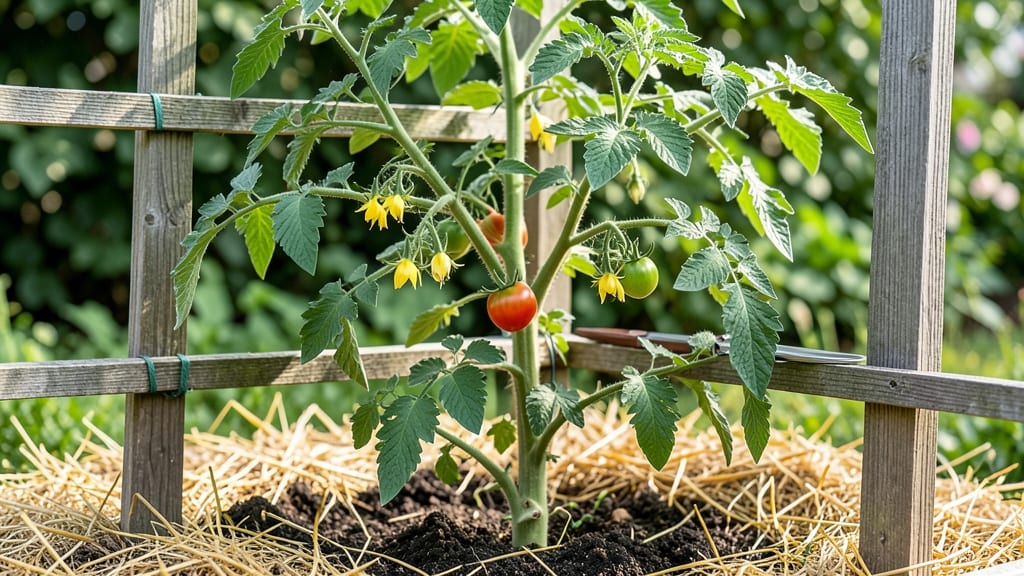
Growing tall tomato plants means reaching for the sky—literally. 🌿 These sun-loving giants need the right variety, sturdy support, and consistent care to grow 10+ feet tall while producing pounds of fruit. I’ve turned my backyard into a tomato jungle by choosing indeterminate varieties and mastering the staking game.
Start with heirloom or hybrid indeterminate tomatoes like ‘Sungold’ or ‘Brandywine’—they keep growing until frost. Plant deep in well-draining soil, stake them early with 6-foot bamboo or metal cages, and prune suckers to direct energy upward.
Water at the base daily and fertilize lightly every 2 weeks to avoid weak stems.
📚 In This Guide
- What you need
- Instructions
- Tips and common mistakes
- Wrapping up and next steps
What you need
- ● Tomato Seeds or Seedlings: Choose tall varieties like 'Sungold,' 'Cherokee Purple,' or 'Big Beef.' Start with 3-5 seeds or 1-2 seedlings per plant.
- ● Containers or Garden Beds: Containers: 5-gallon pots or larger (minimum 12-18 inches deep) with drainage holes.
- ● Garden Beds: Well-draining soil, at least 12 inches deep, with full sun exposure (6+ hours/day).
- ● High-Quality Potting Soil: A mix rich in organic matter (e.g., 50% compost, 30% peat moss, 20% perlite).
- ● Staking or Trellising System: Bamboo stakes: 6-8 feet tall (1 per plant).
- ● Tomato cages: 5-6 feet tall (sturdy, wire mesh).
- ● Trellis: A-frame or A-shaped (for heavy varieties).
- ● Supporting Supplies: Soft plant ties: 3-4 feet long (avoid wire or plastic that can damage stems).
- ● Clips or Velcro straps: For securing vines to stakes.
- ● Fertilizer: Balanced fertilizer (10-10-10) or compost: Apply at planting and every 4-6 weeks.
- ● Tomato-specific fertilizer: High in potassium and phosphorus (e.g., 5-10-10).
- ● Watering Supplies: Drip irrigation or soaker hose: For consistent moisture.
- ● Watering can with a rose attachment: For gentle watering (avoid wetting leaves).
- ● Mulch: Straw or shredded leaves to retain moisture and suppress weeds.
- ● Pruning Shears: For trimming suckers and shaping plants.
- ● Epsom Salt: 1 tablespoon per plant monthly for magnesium boost.
- ● Row Covers: Lightweight fabric to protect seedlings from pests or cold snaps.
- ● Growth Regulator: (e.g., Seaweed extract) to encourage stronger stems.
Step-by-Step guide to growing towering tomato plants
Here’s how to coax those sun-starved vines into sturdy, sky-reaching giants—no genetic tricks required.
🌱 Step 1: Select and Prepare the Right Variety
Start with indeterminate tomato varieties like 'Sungold,' 'Brandywine,' or 'Cherokee Purple,' which grow continuously until frost. These are the only types that will reach 6-10 feet with proper support. Avoid determinate varieties—they top out at 4-5 feet no matter how much you stake them.
Sow seeds 6-8 weeks before your last frost date indoors under grow lights (a south-facing window won’t cut it). Use biodegradable peat pots to avoid root disturbance later. Keep soil consistently moist but not soggy—65-75°F is ideal for germination. You’ll see sprouts in 5-10 days—that’s your cue to start the light show.
☀️ Step 2: Provide Maximum Light and Airflow
Tomatoes demand full sun (8+ hours daily) to grow tall and strong. If your garden gets less, supplement with a 1000-watt LED grow light positioned 4-6 inches above the plants. Raise it as they grow to prevent legginess. You’ll know you’ve got it right when leaves stay deep green and stems thicken—no pale, stretched-out seedlings.
Once seedlings develop true leaves (not just the first cotyledons), harden them off by moving them outside for 2-3 hours daily over 7-10 days. This toughens stems so they can support 5-10 pounds of fruit per vine. Plant outdoors after the last frost, spacing them 18-24 inches apart in rows 3 feet apart for airflow.
🪴 Step 3: Install Sturdy Support Early
Drive 6-foot bamboo stakes or metal cages into the ground 3-4 inches from each plant at planting time. Tomatoes grow fast—waiting to stake them will lead to broken stems when the first heavy clusters form. For extra stability, tie the main stem to the stake with soft plant ties every 12 inches as it grows.
If you’re using a trellis or floppy system, weave vines through it gently to avoid snapping tender stems. Prune suckers (the shoots that grow between the main stem and branches) weekly to redirect energy upward. You’ll see faster vertical growth and fewer horizontal branches competing for nutrients.
💧 Step 4: Water Deeply and Fertilize Strategically
Water deeply at the base every 2-3 days (more in 90°F+ heat) to encourage deep root growth. Shallow watering leads to weak stems that can’t support the weight. Mulch with 2-3 inches of straw to retain moisture and prevent soil-borne diseases. You’ll know you’re doing it right when the soil stays evenly moist 2 inches down but not waterlogged.
Feed with a balanced 10-10-10 fertilizer every 2 weeks once flowers appear. Switch to low-nitrogen, high-phosphorus (5-10-10) when fruit sets to boost sugar development. Over-fertilizing with nitrogen will give you leafy monsters instead of towering vines with heavy fruit loads.
✂️ Step 5: Prune and Train for Maximum Height
Prune the top set of leaves above the first flower cluster once it’s 1 foot tall. This forces the plant to focus on vertical growth rather than bushy side branches. Remove any suckers (the shoots in the leaf axils) weekly—they drain energy from the main stem. You’ll see straighter, stronger growth and fewer sprawling vines.
When the main stem reaches 6 feet, pinch off the top bud to stop excessive height (unless you’re going for record-breaking vines). Harvest fruit every 2-3 days to prevent weight from bending stems. If a branch sags under fruit, prop it up with soft twine tied to the stake—this prevents stem breakage and keeps the plant upright.
Tips & tricks for towering tomato growth
Here's what nobody tells you about growing tomatoes that reach for the sky—lessons I learned after watching my first plants collapse under their own weight.
Lighting is Everything: Those 8+ hours of full sun aren't negotiable, but here's the secret: position your grow lights 4-6 inches above seedlings and raise them as plants grow. I learned this the hard way when my seedlings stretched like rubber bands toward a weak window. Use a timer for 14-16 hours daily—tomatoes are light-hungry giants that won't compromise on quality. The moment you see pale, elongated seedlings, you're already behind.
Staking Strategy: Don't wait until your plant is already toppling to install support. In Step 3, drive your 6-foot stakes or cages 3-4 inches from each plant at planting time—this prevents root damage later. The key is to tie the main stem every 12 inches as it grows, using soft plant ties that won't cut into the stem. I've seen tomato stems snap like twigs when they hit 5 pounds of fruit without proper support. Think of it like training a toddler to climb—constant gentle guidance prevents falls.
Pruning Pays Off: That weekly sucker removal in Step 5 isn't just busywork—it's how you get those straight, sturdy stems. When your plant hits 1 foot tall, prune the top set of leaves above the first flower cluster. This redirects energy upward instead of outward. I used to skip this step and ended up with bushy plants that produced fewer, smaller tomatoes. The trade-off is worth it: fewer suckers means more energy for vertical growth and bigger fruit clusters.
Fertilizer Timing: The switch from 10-10-10 to 5-10-10 fertilizer when fruit sets is critical. Too much nitrogen after flowering will give you lush foliage but tiny, underdeveloped tomatoes. I've had plants with leaves the size of dinner plates but only golf-ball-sized fruit. The moment you see flower buds forming, switch to that high-phosphorus formula. Think of it as shifting from growth mode to production mode—your plant needs phosphorus to develop those heavy fruit loads.
Pro Tips for Grow Tall Tomato Plants
- Here's what nobody tells you about growing tomatoes that reach for the sky—lessons I learned after watching my first plants collapse under their own weight.
- Lighting is Everything: Those 8+ hours of full sun aren't negotiable, but here's the secret: position your grow lights 4-6 inches above seedlings and raise them as plants grow.
- Staking Strategy: Don't wait until your plant is already toppling to install support.
Frequently asked questions
Got questions about growing towering tomato plants? You’re not alone—here are answers to the most common ones to help you cultivate sun-loving giants with confidence!
How tall can tomato plants really grow with proper staking?
With the right care—like strong stakes, pruning, and support—determinate varieties can reach 6–8 feet, while indeterminate types (like 'Sungold' or 'Brandywine') can soar 10–15 feet or more! The key is training vines upward and avoiding overcrowding. Think skyscrapers for your garden!
When is the best time to stake tomato plants?
Stake your plants early—as soon as they’re 6–12 inches tall and have 2–3 sets of true leaves. For seedlings, use a soft tie (like a strip of old T-shirt) to avoid damaging stems. If you wait too long, the plant may struggle to support its own weight. Pro tip: Bury stakes halfway into the soil for stability!
What if my tall tomato plant wilts or droops in hot weather?
Wilting in heat is normal, but don’t panic! First, check the soil—it might need water (1–1.5 inches per week). If the plant feels limp, it could be overheated. Provide afternoon shade with a row cover or mulch heavily to retain moisture. For severe cases, a light misting (early morning only) can help. Hydration is key!
Can I grow tall tomatoes in containers? What’s the best setup?
Use a large pot (at least 5 gallons) with drainage holes and a strong trellis or cage (like a tomato tower). Indeterminate varieties need deep containers (18+ inches) to support roots. Add compost-rich potting mix and fertilize regularly. Just ensure the container gets full sun (6–8+ hours daily). Container gardening = tall tomatoes without the yard space!
Why are my tall tomato leaves turning yellow? Is it a disease or nutrient issue?
Yellow leaves (chlorosis) usually mean overwatering, nitrogen deficiency, or fungal issues. Check the soil—it should be moist but not soggy. For nutrients, use a balanced fertilizer (10-10-10) or compost tea. If spots appear, it could be early blight—remove affected leaves and space plants for airflow. Prune lower foliage to improve air circulation!
Wrapping up and next steps
Growing tall, thriving tomato plants is all about sunlight, support, and a little patience! 🌱 With the right stakes, pruning, and care, you’ll soon be harvesting juicy, vine-ripened giants. Remember, consistency is key—whether you’re trellising, fertilizing, or protecting against pests.
Now that you’re armed with these tips, roll up your sleeves and get planting! 🌞 Start with a single plant or go all out—your garden (and taste buds) will thank you. Happy growing!