
Size
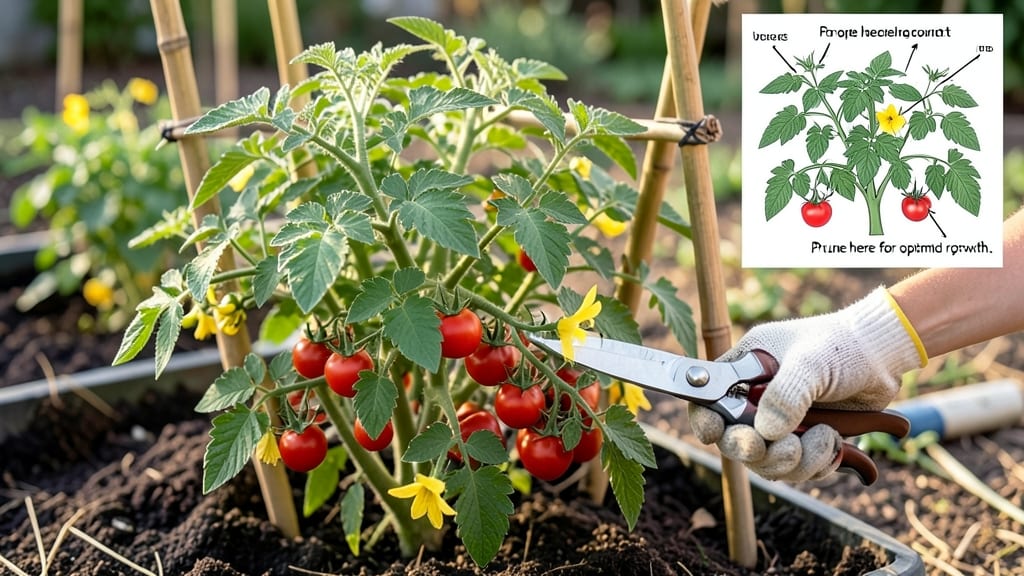
Last summer, I learned how to keep cherry tomato plants from getting too tall—transforming my leggy, wild vines into bushy, productive powerhouses with just a few simple pruning tricks. 🌱 The secret isn’t just cutting branches; it’s timing, technique, and knowing where to stop before you sacrifice those sweet little fruits.
I went from struggling with towering vines to harvesting pint-sized tomatoes all season long.
Start by pruning when plants hit 18-24 inches tall, always above leaf nodes where new branches form. Use clean shears to snip just above a leaf that faces outward—this encourages wider growth instead of vertical shoots.
For indeterminate varieties (the ones that keep growing), remove suckers (those little shoots in the leaf axils) weekly to keep energy in fruit production, not just height.
You’ll notice plants thicken up within 2-3 weeks, with more clusters of tomatoes forming along the stems. The key is balance: too much pruning stunts growth, but too little lets them get top-heavy.
Stake or cage your plants early to support the extra weight while keeping airflow open—this prevents disease and makes harvesting easier.
This method works for both backyard gardens and containers, and it’s especially helpful in small spaces where vertical growth becomes a problem. Once you master it, you’ll never let those cherry tomatoes grow out of control again. Let’s get those plants under control!
📚 In This Guide
- What you need
- Instructions
- Tips and common mistakes
- Wrapping up and next steps
What you need
- ● Pruning shears or scissors – Choose sharp, clean tools (bypass pruners work best) to avoid damaging stems. A small pair (4-6 inches) is ideal for precision.
- ● Gloves – Wear gardening gloves to protect your hands from thorns and dirt. Opt for nitrile-coated or breathable fabric for comfort.
- ● Disinfectant (70% isopropyl alcohol or bleach solution) – Clean tools before and after use to prevent disease spread. A small spray bottle or cotton swab works well.
- ○ Support structure (optional but helpful) – Cages (5-6 feet tall) – Pre-made tomato cages for indeterminate varieties.
- ● Trellis or stakes (6+ feet long) – Sturdy bamboo, wooden, or metal stakes for heavy plants.
- ● Soft plant ties or twine – 10-15 feet of jute or Velcro ties to secure vines without cutting into stems.
- ○ Garden twine or string (optional) – If using a trellis, 10-20 feet of twine for extra support.
- ● Plant growth regulator (if needed) – Products like Paclobutrazol (follow label instructions) to slow vertical growth in stubborn plants.
- ● Compost or mulch – 2-3 inches of organic mulch (straw, wood chips) to retain moisture and encourage bushier growth.
- ● Plant food (balanced fertilizer, 10-10-10 or organic) – A small bag (5-10 lbs) to boost root and foliage health post-pruning.
- ● Label markers – If growing multiple varieties, use waterproof tags to track pruning schedules.
Step-by-step guide to pruning cherry tomatoes for compact growth
Here’s how I keep my cherry tomatoes from towering over the garden—with stronger stems and more fruit.
✂️ Step 1: Identify the Main Stem and First Pruning Points
Cherry tomatoes grow indeterminately, meaning they keep climbing unless you guide them. Start by locating the main stem—the thickest vertical shoot—and the first flower cluster (usually 6–12 inches up). This is your first pruning zone. Use clean, sharp pruners to avoid tearing stems.
Remove any suckers (side shoots) that appear below the first flower cluster. These are the small shoots growing from the joint where a leaf meets the stem. Pinching them early directs energy to fruit production instead of vertical growth. Watch for new suckers weekly—they grow fast!
🌿 Step 2: Prune Suckers Regularly for Bushier Growth
Once your plant has 4–5 main stems (after the first pruning), focus on maintaining 2–3 strong branches. Remove any suckers that appear above the first flower cluster—these will compete with fruit production. Use your thumb and forefinger to snap them off cleanly (no tools needed for small shoots).
Prune on a dry morning to reduce disease risk. Avoid pruning after rain or when leaves are wet. You’ll know you’re doing it right when the plant starts filling out with more lateral branches and denser foliage—not just one tall stalk.
☀️ Step 3: Train Vines to a Support System
Guide the main stems along a cage or trellis (use the 4 tomato cages from your supplies) to encourage upward growth while keeping the plant contained. Tie stems gently with soft plant ties every 6–8 inches to prevent snapping. This also helps distribute weight and improves airflow.
If a stem grows too long between supports, prune it back to the last tie. You’ll see shorter, stockier plants with more fruit clusters along the stem. Avoid letting vines sprawl—this leads to leggy, weak growth and fewer harvests.
⏰ Step 4: Adjust Pruning as the Season Progresses
After 6–8 weeks, shift focus to fruit-bearing branches. Prune any suckers that appear above the lowest flower cluster—these won’t contribute to early harvests. Leave 1–2 leaves below each fruit cluster to support photosynthesis. You’ll notice smaller, bushier plants with more compact growth and heavier fruit loads.
In late summer, reduce pruning to only remove dead or diseased leaves. This lets the plant focus on ripening existing fruit. Stop pruning 4–6 weeks before your first frost to harden off the plant for storage or overwintering.
🌱 Step 5: Monitor for Over-Pruning Mistakes
If your plant looks too bare or stops producing flowers, you’ve pruned too aggressively. Cherry tomatoes need some foliage to photosynthesize. Aim to keep at least 3–4 main stems and 10–12 leaves per stem. You’ll see healthy green leaves and steady flower production—not just bare stems.
Over-pruned plants also struggle to support fruit weight. If branches sag or break, add more ties or reduce the number of fruit clusters per stem. The goal is balance: enough pruning to control height, but not so much that the plant can’t feed itself.
Tips & tricks for compact cherry tomato growth
These pruning secrets will transform your towering tomato plants into bushy, productive powerhouses—without sacrificing a single harvest.
Timing is Everything: The 6–12 inch mark for your first flower cluster is your golden zone. This is where you make the call between vertical growth and fruit production. I learned this the hard way—waiting too long to prune below that first cluster means you're letting energy go to unnecessary growth instead of tomatoes. Check your plants weekly, especially when they're young, because suckers can pop up faster than you think.
The Two-Stem Rule: After your initial pruning, aim to maintain 2–3 strong main stems. This might seem counterintuitive when you're used to seeing lanky tomato plants, but these extra stems create more points for fruit production. Think of it like adding more branches to a tree—each one has the potential for more fruit clusters. The key is balance: too few stems and you're back to towering growth, too many and you're overcrowding the plant.
Support System Secrets: Those 4 tomato cages aren't just decoration—they're your secret weapon. When you tie stems every 6–8 inches, you're not just preventing snapping, you're creating a scaffold that encourages the plant to grow outward rather than upward. I've seen plants that were 6 feet tall without supports become manageable 3-foot bushes with proper training. And don't forget to check those ties regularly—they can tighten as the plant grows.
Late-Season Strategy: That 4–6 week window before your first frost is critical. By this point, your plant should be focused on ripening existing fruit rather than producing new growth. This is when you switch from aggressive pruning to maintenance mode. I always make a final inspection at this stage, removing only dead or diseased leaves. It's amazing how much more fruit you'll get to harvest when the plant isn't wasting energy on new shoots.
Pro Tips for Keep Cherry Tomato Plants From Getting Too Tall
- These pruning secrets will transform your towering tomato plants into bushy, productive powerhouses—without sacrificing a single harvest.
- Timing is Everything: The 6–12 inch mark for your first flower cluster is your golden zone.
- The Two-Stem Rule: After your initial pruning, aim to maintain 2–3 strong main stems.
Frequently asked questions
Got questions about managing your cherry tomato plant height? You’re not alone! Here are some of the most common concerns—and straightforward answers to keep your plants happy and productive.
How often should I prune cherry tomato plants to control height?
Prune indeterminate cherry tomatoes weekly during the growing season to encourage bushiness. For determinate varieties (which stay compact naturally), minimal pruning is needed—just remove suckers or damaged leaves. Focus on consistency over frequency; over-pruning can stress plants.
Can I prune cherry tomatoes too late in the season?
Yes! Avoid heavy pruning in the last 4–6 weeks of the season, as it can reduce fruit production. Focus on light maintenance (removing dead leaves or small suckers) to let energy go toward ripening existing tomatoes. Pro tip: Harvest early and prune lightly to extend the season!
What’s the difference between pruning cherry tomatoes and regular tomatoes?
Cherry tomatoes (especially indeterminate types) benefit more from aggressive pruning to manage height and improve airflow. Regular tomatoes may need less pruning unless they’re sprawling. Key difference: Cherry tomatoes often have smaller leaves, so prune to open the canopy and prevent disease.
Will pruning make my cherry tomatoes stop producing fruit?
Not if done correctly! Pruning directs energy to existing fruit, not away from it. Over-pruning (removing too many leaves or stems) can reduce yields, but strategic cuts (like removing suckers or dead growth) actually boosts productivity by improving air circulation and sunlight exposure.
What should I do if my cherry tomato plant is already too tall?
Don’t panic! If your plant has shot up unexpectedly, trim back aggressively but leave at least 3–4 main stems for support. Use stakes or cages immediately to prevent flopping. For future seasons, start pruning early (when plants are 12–18 inches tall) to stay ahead.
Wrapping up and next steps
Keeping your cherry tomato plants compact and productive is all about timing, technique, and a little patience! 🌱 With the right pruning methods—like suckering, staking, or pinching—you’ll encourage bushier growth and bigger harvests without sacrificing strength.
Remember, consistency is key, so check your plants regularly and adjust as they grow.
Now that you’re armed with these pruning secrets, it’s time to roll up your sleeves and give your plants the care they deserve. Head to your garden, grab your shears, and watch those cherry tomatoes thrive! 🍅✨ (And don’t forget to share your progress—happy gardening!)