
Planting
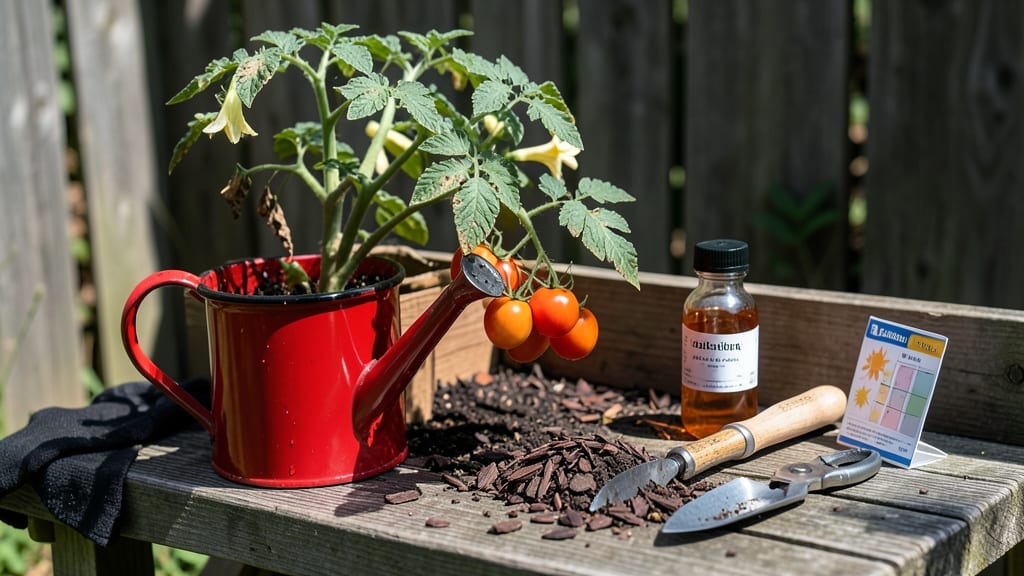
Your tomato plant might look done for, but reviving a tomato plant starts with a few simple checks—water stress, sunburn, or pests are often the culprits. 🌱 I’ve nursed back plants with crispy leaves and wilted stems, and the key is acting fast before the roots give out completely.
The first step? Look for the real problem: is it thirsty, overwatered, or fighting off bugs?
Start with water: deep soak the soil until it’s moist 6 inches down, then let it dry slightly between waterings. If leaves are yellowing, check for overwatering or nutrient issues—tomatoes need balanced fertilizer every 2-3 weeks.
Prune any damaged or diseased foliage with clean scissors, and move the plant to morning sun only if scorched leaves appear. These small fixes can turn a struggling plant around in just days.
By the end of the week, you’ll see new growth pushing through, and those once-wilted stems will firm up. The secret is consistency: water deeply but less often, shield from harsh afternoon sun, and keep an eye out for pests like aphids or hornworms.
With the right care, your tomato plant can bounce back stronger than ever—ready to produce fruit like nothing happened.
For long-term success, mulch around the base to retain moisture and prevent soil-borne diseases. And remember: prevention is easier than revival. Regular checks and proper spacing from the start save you from this headache next season. Let’s get that plant back on track!
📚 In This Guide
- What you need
- Instructions
- Tips and common mistakes
- Wrapping up and next steps
What you need
- ● Watering can or hose – A gentle spray nozzle helps avoid damaging delicate stems.
- ● Pruning shears or sharp scissors – Sterilize with rubbing alcohol to prevent disease spread.
- ● Well-draining potting mix or compost – Aim for a blend rich in organic matter (e.g., 60% compost, 30% peat moss, 10% perlite).
- ● Organic fertilizer (balanced or high in phosphorus) – Look for a 10-10-10 or 5-10-10 NPK ratio to boost root and foliage recovery.
- ● Mulch (straw, grass clippings, or wood chips) – Helps retain moisture and regulate soil temperature.
- ● Shade cloth (lightweight, 30-50% coverage) – Protects from harsh afternoon sun if your plant is sun-scorched.
- ○ Plant support (stakes, cages, or trellis) – Optional but helpful if your plant is leggy or weak.
- ● Epsom salt (magnesium sulfate) – A teaspoon dissolved in water can revive yellowing leaves.
- ● Neem oil or insecticidal soap – If pests are contributing to stress, these are gentle yet effective.
- ● pH testing kit – Tomatoes thrive in slightly acidic soil (pH 6.0–6.8). Adjust with lime or sulfur if needed.
- ● Drip irrigation system or soaker hose – Ensures consistent moisture without wetting the leaves.
Step-by-Step guide to reviving a stressed tomato plant
Here’s my go-to method for bringing a struggling tomato plant back to life—no fancy tools, just smart care.
💧 Step 1: Assess and Adjust Watering Immediately
First, check the soil by sticking your finger 2 inches deep. If it’s bone-dry, water deeply until moisture reaches 6 inches down—tomatoes hate shallow, frequent drinks. If the soil feels soggy, let it dry slightly before watering again. Overwatering drowns roots, while underwatering causes wilting.
Water at the base of the plant in the morning to prevent fungal issues. Avoid wetting leaves, especially in humid weather. You’ll know you’re doing it right when the soil feels damp but not saturated, and the plant perks up within 24 hours.
✂️ Step 2: Prune Damaged or Overcrowded Growth
Inspect the plant for yellow leaves, brown stems, or suckers (those little shoots in the leaf junctions). Snip them off with clean pruners just above a leaf node—this redirects energy to healthy growth. Focus on removing anything that looks diseased or dead.
Don’t over-prune! Leave the main stem and lower branches intact. Healthy tomatoes have 3-5 main stems with space between leaves for airflow. You’ll see new green growth within 3-5 days if the plant is salvageable.
☀️ Step 3: Shield From Harsh Sun and Wind
If your plant is scorched or wilting from afternoon sun, move it to a spot with morning sun and afternoon shade for a few days. Use a lightweight shade cloth (30-50%) if you can’t relocate it. Tomatoes need 6-8 hours of sun daily, but intense midday rays can stress them.
Check for wind damage—flapping leaves dry out faster. If your garden is exposed, stake the plant or add a small windbreak (like a cardboard barrier) on the windward side. You’ll notice leaves stop curling and regain their glossy sheen within a day or two.
🌿 Step 4: Feed and Support for Recovery
Give the plant a balanced fertilizer (10-10-10) mixed at half-strength. Focus on potassium (the last number) to help with stress recovery. Water it in well so the roots absorb the nutrients. Avoid nitrogen-heavy fertilizers—they promote leafy growth but weaken fruit production.
If the plant is top-heavy or leaning, add a stake or cage now to prevent further stress. Secure it loosely so you don’t damage stems. Within 1-2 weeks, you should see new leaves and possibly even flowers if the plant was only temporarily stressed.
⏰ Step 5: Monitor and Maintain Consistency
Keep a weekly check-in schedule: water deeply 2-3 times per week (adjust for rain), prune any new dead growth, and watch for pests like aphids or whiteflies. Early intervention is key—spray with neem oil if you spot bugs.
If the plant still looks weak after 2 weeks, it may be too far gone. But if it’s responding—new leaves, upright stems, and firm fruit—you’ve saved it! Keep up the care, and you’ll have a productive plant through the season.
Tips & tricks for reviving a stressed tomato plant
Real talk: I've nursed back more tomato plants than I can count, and these are the tricks that actually work when the instructions alone don't cut it.
Watering Wisdom: That 24-hour recovery window is your best friend—don't rush it! If your plant still looks droopy after that time, check the roots. Gently loosen compacted soil around the base with your fingers (just 1-2 inches deep) to help water penetrate better. I've seen plants perk up within hours after this simple aeration trick. The key is that "damp but not saturated" feeling—think of a well-wrung sponge.
Pruning Precision: When you're removing those suckers in Step 2, don't just grab and tug. Use clean pruners to make a clean cut just above a leaf node—this prevents disease entry points. Pro move: Disinfect your pruners with rubbing alcohol between cuts. I've saved plants that would've otherwise died from fungal infections just by keeping my tools clean. And remember, those 3-5 main stems should have space—aim for about 6 inches between leaves for proper airflow.
Sunlight Strategy: For that afternoon shade in Step 3, think quality over quantity. A simple white bedsheet draped over a hoop works just as well as fancy shade cloth. The goal is to reduce intensity by about 30-50%, not block all light. I test by seeing if my shadow is still visible through the fabric—if I can't see it clearly, it's too dark. This balance is what lets your plant recover while still getting the 6-8 hours of sun it needs daily.
Pro Tips for Revive A Tomato Plant
- Real talk: I've nursed back more tomato plants than I can count, and these are the tricks that actually work when the instructions alone don't cut it.
- Watering Wisdom: That 24-hour recovery window is your best friend—don't rush it!
- Pruning Precision: When you're removing those suckers in Step 2, don't just grab and tug.
Frequently asked questions
Got questions about saving your struggling tomato plant? You’re not alone! Here are some of the most common concerns—and practical solutions—to help you bring your tomato back to life.
Can I revive a tomato plant that’s completely wilted and brown?
Yes, but act fast! If the stems are still firm (not mushy) and the roots are intact, prune damaged leaves, move the plant to shade, and water deeply. Avoid overwatering—root rot can finish it off. If the plant is pasty or smells foul, it’s likely too late, but try propagating healthy stems in water as a backup!
How long does it take to revive a tomato plant?
Recovery time varies! With proper care (consistent watering, shade, and pruning), you might see improvement in 3–7 days. Full revival can take 2–4 weeks, depending on the damage. Monitor for new growth—small leaves or buds are a great sign. Patience is key, especially in extreme heat or drought.
Should I water a wilted tomato plant immediately?
Not always! First, check the soil—if it’s soggy, hold off to avoid root rot. If dry, water deeply but slowly at the base (not overhead) to encourage strong roots. Early morning is best to reduce evaporation. Pro tip: Use a moisture meter or stick your finger 1–2 inches into the soil to gauge when it’s time to hydrate.
What if my tomato plant is scorched by sun or heat?
Move it to partial shade (like a 30% shade cloth) and water early in the day to prevent stress. Trim severely damaged leaves, but leave some foliage to protect the fruit. Mulch around the base to retain moisture. If scorched leaves are crispy and black, prune them off—new growth will emerge once temperatures drop.
Can I save a tomato plant with no leaves?
It’s tough but possible! If the stems are still green and firm, prune all dead leaves, reduce watering slightly, and fertilize lightly with a balanced solution (like 10-10-10). Keep it in shade until new leaves sprout. If the stems are woody and bare, it may not recover, but you can still harvest any remaining fruit or propagate cuttings.
Wrapping up and next steps
Reviving a struggling tomato plant is totally doable with the right care—whether it’s pruning for strength, adjusting watering habits, or protecting it from scorching sun. Remember, even the toughest plants bounce back with patience and attention! 🌱
Now that you’re armed with these steps, head to your garden and give your tomato plant the TLC it deserves. Watch it thrive, and soon you’ll be harvesting juicy, homegrown tomatoes to enjoy all season long. Happy gardening! 🍅✨