
Size
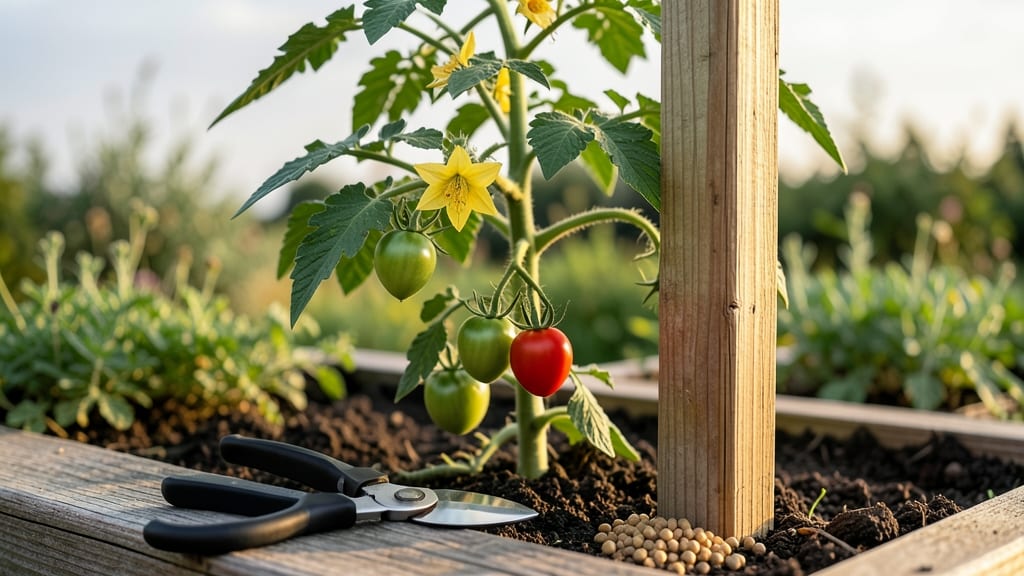
Your tomato plants are shooting up how to stop tomato plants growing too tall instead of producing juicy fruit. 🌱 The secret to halting that vertical takeover is pruning and training—techniques that redirect energy from skyward growth into bushier, more productive plants with heavier fruit loads.
I’ve turned my own leggy tomato disasters into compact, high-yielding bushes using these same methods, and the difference in harvests is night-and-day.
Start by pinching off suckers—those little shoots growing between the main stem and branches—when they’re about 2 inches long. Use clean, sharp pruners (sterilized with rubbing alcohol) to avoid disease, and focus on the lower half of the plant first.
For indeterminate varieties, keep pruning suckers all season, but for determinate types, let them grow naturally. The goal is to create a sturdy framework that supports fruit, not just height.
Pair pruning with the right support—stakes, cages, or trellises—to guide growth. Indeterminate tomatoes need strong stakes (4-6 feet tall) or sturdy cages to prevent snapping under fruit weight, while determinate types can handle smaller cages or even tomato clips.
When you prune, always leave a leaf or two below the cut to protect the plant from sunburn and pests.
Timing matters: prune early and often in the season, but avoid heavy cuts after mid-July—that’s when plants should focus on ripening fruit, not new growth. The result? Plants that stay manageable in size, produce more fruit per branch, and resist disease better.
Plus, you’ll save your back from wrestling with 8-foot-tall monsters by harvest time.
📚 In This Guide
- What you need
- Instructions
- Tips and common mistakes
- Wrapping up and next steps
What you need
- ● Pruning shears or sharp scissors: Clean, sterilized (70% isopropyl alcohol works), and sharp to avoid damaging stems.
- ● Gloves: Durable gardening gloves to protect your hands from thorns and dirt.
- ● Sturdy stakes or cages: 4–6 ft tall for indeterminate varieties, 2–3 ft for determinate. Choose 1–2 inches in diameter for stability.
- ● Twine or soft plant ties: 10–20 ft of biodegradable twine or Velcro-style ties (avoid plastic that can girdle stems).
- ○ Balanced fertilizer (optional but helpful): 5-10-10 or organic options like compost tea to support regrowth.
- ● Disinfectant (e.g., hydrogen peroxide or rubbing alcohol): For cleaning tools between cuts to prevent disease spread.
- ● Hand lens or magnifying glass: For spotting pests or disease early.
- ○ Pruning sealant (optional): Like tree wound dressing to cover large cuts and reduce rot risk.
- ● Spray bottle with water: To mist cuts and encourage faster healing.
- ● Notebook or app: For tracking pruning dates and plant progress!
Step-by-Step instructions for pruning and training tall tomato plants
Here's how to transform leggy tomato stems into sturdy, productive bushes—no special tools needed.
✂️ Step 1: Identify the Right Stems to Prune
Tomatoes grow tall through two main stems: the main trunk and the suckers that form in the leaf axils. The main trunk is the thick central stem you want to keep. Suckers are the small, side shoots that grow between the main stem and branches. These are where you'll focus your pruning.
Use your fingers to gently feel for these small shoots—you'll notice them as tiny bumps or buds in the leaf junctions. The key is to remove suckers when they're still small (about 1-2 inches long). Larger suckers will compete for energy and make your plant even taller. I like to prune in the morning when the plants are turgid and the cuts heal faster.
🌿 Step 2: Prune Suckers at the Right Angle
Never rip suckers off—always use clean, sharp pruners or your fingers to pinch them out at the base. The goal is to remove the entire sucker without leaving a stub. If you leave even a tiny piece of stem, it can regrow into a new sucker and undo all your work.
Make your pinch just above the leaf axil where the sucker meets the main stem. This ensures you're cutting through the vascular tissue completely. For larger suckers, I use small pruning shears dipped in rubbing alcohol to sterilize between cuts. Watch for the plant's natural growth pattern—you'll see how it wants to branch naturally, and you'll prune everything that doesn't fit that pattern.
☀️ Step 3: Train Main Stems for Compact Growth
After removing suckers, focus on training your main stems. For indeterminate varieties (the ones that keep growing), I limit the plant to 3-4 main stems. For determinate varieties (bush types), you'll want to prune more aggressively to encourage bushiness. Start by selecting the strongest, healthiest main stems and remove any weaker competing stems at their base.
As your plant grows, tie the main stems to your support structure (stake, cage, or trellis) every 12-18 inches. This prevents the plant from flopping over and encourages upward growth. The key is to tie loosely—tight bindings can damage the stem as it grows. I use soft plant ties or even old t-shirts cut into strips for this purpose.
💧 Step 4: Balance Pruning with Water and Fertilizer
Pruning creates new growth points, which means your plant will need extra nutrients and water to support this development. After a major pruning session, water deeply to help the plant recover. Then, feed with a balanced fertilizer (10-10-10 or similar) diluted to half strength. This gives the plant the energy it needs to produce new leaves and flowers rather than just tall stems.
Watch for signs of stress after pruning—yellowing leaves or wilting can indicate the plant is struggling. If you see this, reduce sunlight exposure slightly for a day or two and increase watering frequency. The goal is to keep the plant healthy enough to redirect its energy into producing more branches and flowers rather than just vertical growth.
⏰ Step 5: Monitor and Adjust Weekly
Tomato growth is dynamic, so you'll need to check your plants weekly for new suckers. The more frequently you prune, the bushier your plant will become. I schedule my pruning sessions for every 7-10 days during the growing season. This keeps the plant's energy focused on producing fruit rather than growing tall.
Pay attention to where flowers form—you want them to develop on the lower branches first, as these fruits will ripen earliest. If you see flowers forming too high up the plant, it's a sign you need to prune more aggressively lower down. The ultimate goal is a plant that looks like a bush with multiple branches bearing fruit at different heights, not a single tall stalk.
Tips & tricks for pruning tall tomato plants
Real talk: The difference between a leggy, fruitless tomato stalk and a bushy, productive plant often comes down to these simple pruning habits.
Timing is Everything: I can't stress enough how critical the morning is for pruning. Plants are most hydrated and resilient first thing, which means cleaner cuts and faster healing. If you absolutely must prune later in the day, wait until at least 2 hours before sunset to give the plant time to recover. The 1-2 inch sucker size guideline from Step 1 is non-negotiable—larger suckers will just compete with your main stems for energy, leaving you with fewer tomatoes.
The Technique That Changed Everything: Here's what nobody tells you—your pruning shears are your secret weapon. Sterilize them with rubbing alcohol between cuts to prevent disease transmission, especially when working with multiple plants. And always make your cuts just above the leaf axil (that's where the sucker meets the main stem). This ensures you're severing the vascular tissue completely, preventing those pesky regrowths that undo all your hard work. For stubborn suckers, I've even used a sharp knife wrapped in rubbing alcohol for precision cuts.
Growth Pattern Intelligence: Pay attention to your plant's natural branching tendencies. Indeterminate varieties (the ones that keep growing) typically want to develop 3-4 main stems, while determinate types (bush varieties) respond better to aggressive pruning to encourage bushiness. The 12-18 inch tying interval from Step 3 is your guide for maintaining structural integrity—any longer and your plant risks flopping over, any shorter and you might restrict natural growth patterns. I've found that using soft plant ties (or even old t-shirt strips) prevents stem damage that can occur with rigid bindings.
Post-Pruning Care: After a major pruning session, your plant will need extra TLC. That deep watering isn't just about hydration—it helps the plant recover from the stress of pruning. The half-strength fertilizer application is crucial too; it provides the nutrients needed for new growth without overwhelming the plant. Watch for yellowing leaves or wilting as red flags—they indicate your plant is struggling to redirect its energy. In my experience, reducing sunlight exposure slightly for a day or two after heavy pruning can make all the difference in preventing stress.
Pro Tips for Stop Tomato Plants Growing Too Tall
- Real talk: The difference between a leggy, fruitless tomato stalk and a bushy, productive plant often comes down to these simple pruning habits.
- Timing is Everything: I can't stress enough how critical the morning is for pruning.
- The Technique That Changed Everything: Here's what nobody tells you—your pruning shears are your secret weapon.
Frequently asked questions
Got questions about managing your tomato plant’s height?
You’re not alone—growing tomatoes can be tricky! Here are answers to the most common concerns to keep your plants productive and compact.
Why is my tomato plant growing so tall instead of bushy?
Tomato plants grow tall when they don’t get enough light, nutrients, or pruning. Indeterminate varieties (like cherry tomatoes) naturally climb, while determinate types (bush varieties) stay shorter. Without pruning, they focus energy on height instead of fruit production. Prune regularly to encourage bushier growth and better yields!
When is the best time to prune tomato plants to control height?
Prune your tomatoes throughout the growing season, but start early—once the plant reaches 12–18 inches tall. Remove suckers (side shoots) weekly to keep the plant manageable. Avoid heavy pruning late in the season (after flowering), as it can reduce harvests. Morning pruning helps wounds dry faster and prevents disease.
Can I use natural methods (like tying or staking) instead of pruning to stop tall growth?
Yes! While pruning is key, staking, caging, or trellising can also control height. Use bamboo stakes or tomato cages to guide growth upward, reducing sprawl. For indeterminate varieties, tie stems gently to a vertical support—this encourages bushiness by limiting horizontal spread. Combine methods for best results!
What should I do if my tomato plant is already too tall and leggy?
Don’t panic! If your plant is top-heavy, prune aggressively but strategically—cut back 1/3 of the height to balance it. Focus on removing the topmost leaves to redirect energy to lower branches (where most fruit forms). Add support immediately (like a sturdy stake) to prevent breakage. Water deeply afterward to help recovery.
Will pruning my tomato plant reduce my harvest?
Not if done correctly! Pruning increases fruit quality and quantity by improving airflow (reducing disease) and focusing energy on existing flowers/fruit. However, over-pruning (especially late in the season) can stress the plant. Stick to proper pruning tips—you’ll get more (and tastier!) tomatoes!
Wrapping up and next steps
With the right techniques, you can easily manage your tomato plants’ height and encourage a bushier, more productive harvest. Remember, pruning isn’t just about control—it’s about boosting flavor, airflow, and fruit yield. Start small, stay consistent, and soon you’ll have a thriving tomato garden that’s both manageable and rewarding!
Ready to transform your tomatoes? Grab your pruners and get growing—your future juicy, vine-ripened tomatoes are waiting! 🍅✨