
Companion Plants
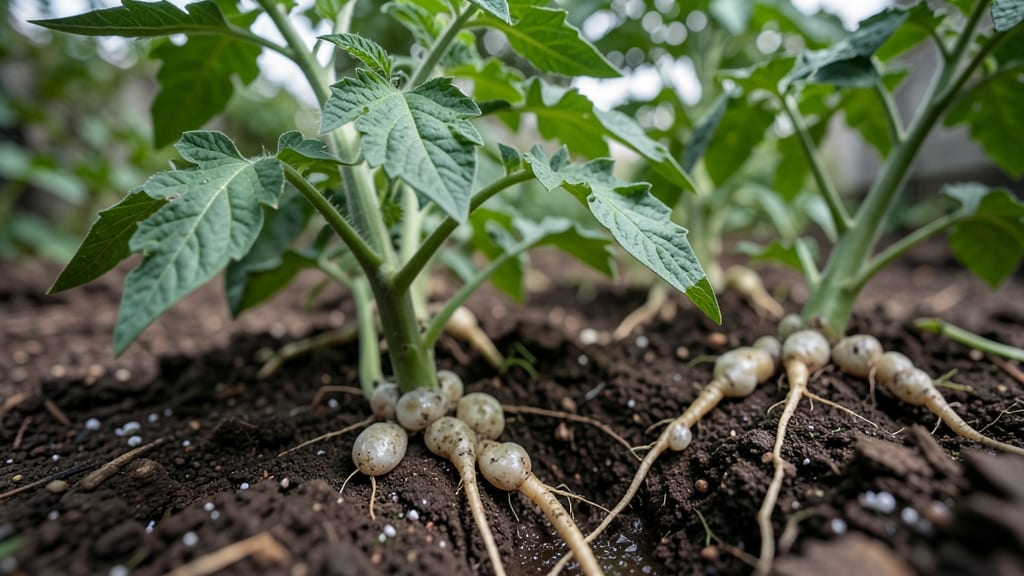
Struggling with pests on your tomato plants? These 10 common insects wreak havoc on yields, but the right companion plants can naturally deter them—without harsh chemicals. Discover which plants work best for each pest and how to implement them in your garden.
Aphids Devouring Tomato Leaves
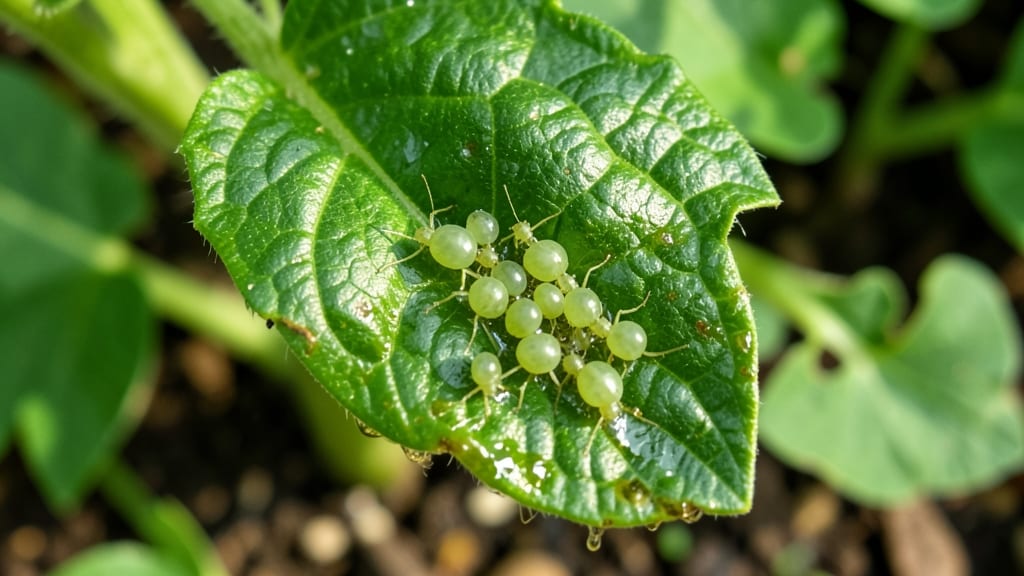
Those tiny green aphids clustered on your tomato leaves aren’t just annoying—they’re sucking the life out of your plants faster than you can say "harvest." These sap-sucking pests multiply rapidly on new growth, leaving behind sticky honeydew that attracts mold and weakens your plants before they even fruit.
Luckily, nature has a two-pronged solution: marigolds and nasturtiums. These flowers don’t just repel aphids with their strong scents—they also lure in ladybugs, the aphids’ natural predators. Plant marigolds at the edges of your tomato bed and nasturtiums nearby to create a protective barrier. For extra defense, spray your tomatoes with a soapy water solution (1 tsp mild soap per quart of water) to dislodge existing colonies while the companion plants take over long-term control.
This method works best for small to medium gardens where you can interplant flowers with tomatoes. Even beginners will see results within weeks—just watch those ladybugs move in like tiny, helpful neighbors! 🌱
Colorado Potato Beetles Chewing Foliage
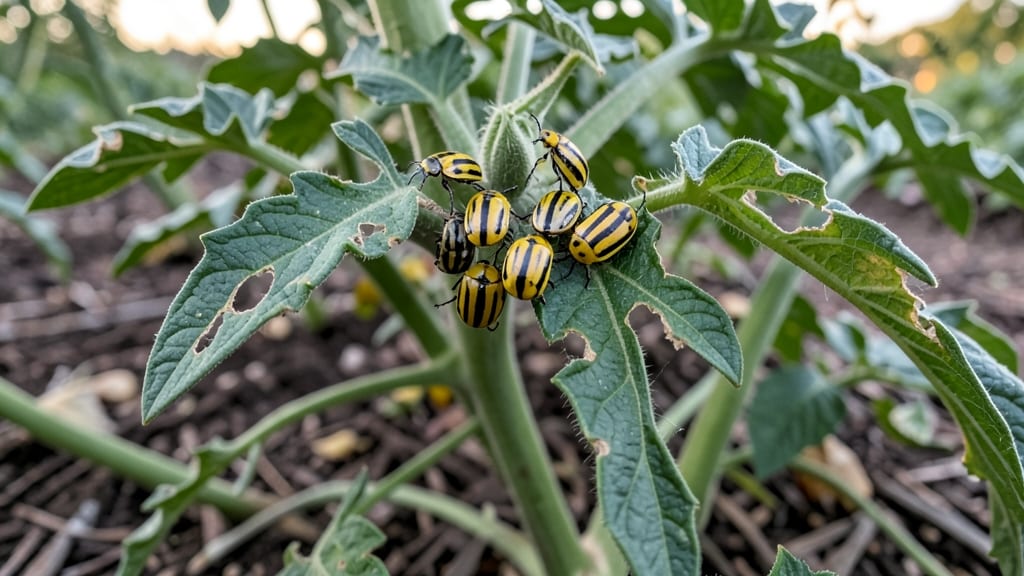
When you spot yellow-and-black striped beetles devouring your tomato leaves, you're likely dealing with Colorado potato beetles—one of the most aggressive tomato pests. These voracious feeders can strip a plant bare in days, leaving behind jagged, skeletonized foliage that stunts growth and reduces yields.
Break their feeding pattern by planting basil or horseradish nearby—their strong scents mask tomato odors and confuse the beetles' scent trails. Basil also doubles as a culinary herb, while horseradish acts as a natural repellent with minimal garden space required. For best results, interplant these companions every 12-18 inches around your tomato plants.
This strategy works best for home gardeners who prefer chemical-free solutions and want to protect both their tomatoes and companion plants. The key is consistency—plant these companions early in the season to establish a protective barrier before beetles arrive. 🌿
Hornworms Skewering Tomato Fruit
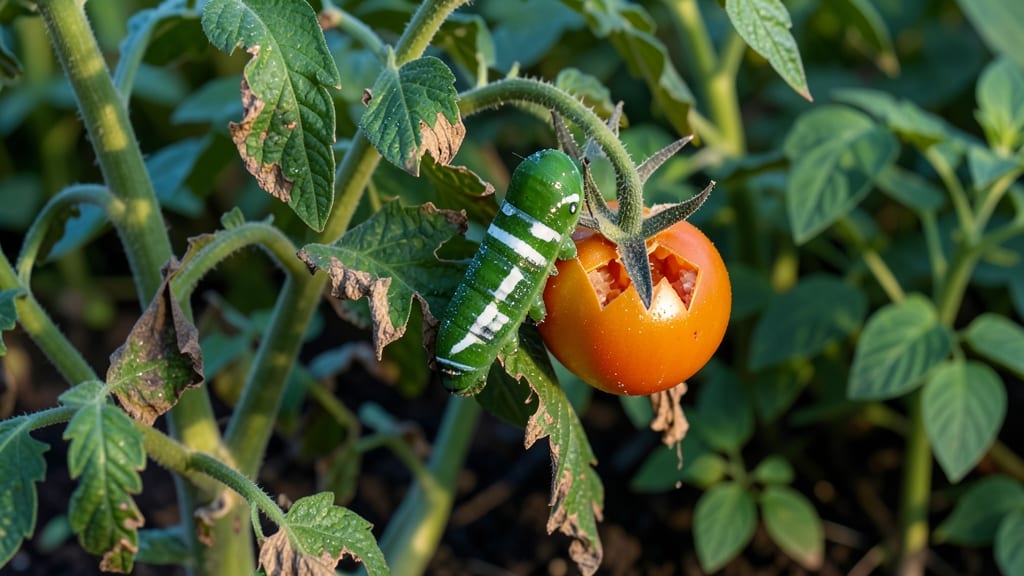
Waking up to half-eaten tomato plants overnight? Those large green hornworms with white stripes aren’t just a nuisance—they’re overnight defoliators that can strip your plants bare in hours. Their appetite isn’t limited to leaves; they’ll also skewer fruit, leaving behind unsightly damage and reducing your harvest.
Instead of reaching for pesticides, try borage or dill as companion plants. These herbs attract parasitic wasps—tiny but deadly allies—that specifically target hornworm larvae. The wasps lay eggs on the caterpillars, and their offspring devour the hornworms from the inside out, breaking the cycle naturally. Plant them near your tomatoes, and you’ll see fewer hornworms within weeks.
This method is perfect for organic gardeners who want to avoid chemicals while keeping their tomato plants thriving. 🌱
Whiteflies Clustered on Undersides
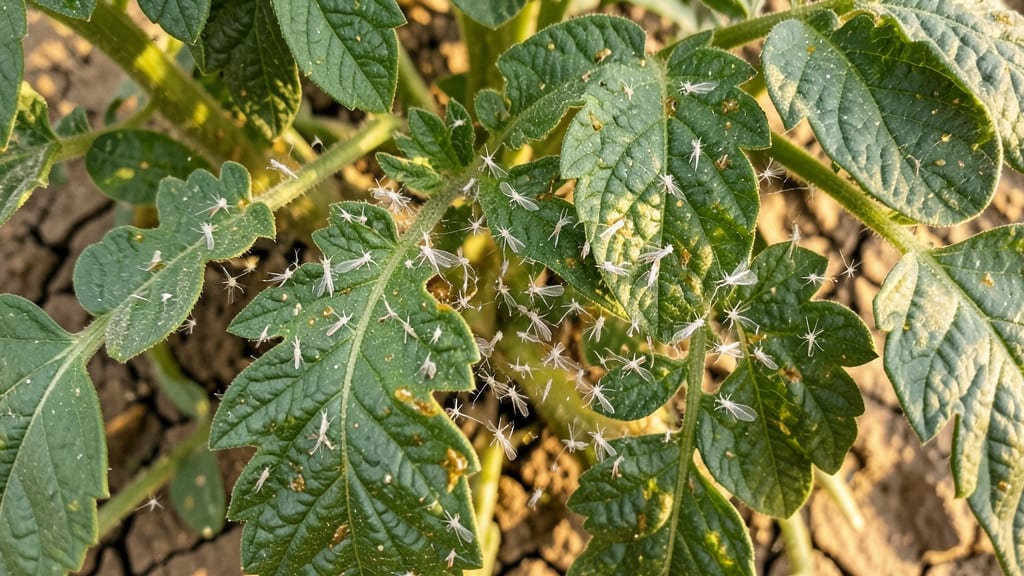
If you’ve noticed tiny white specks fluttering under your tomato leaves, those are whiteflies—sap-sucking pests that leave plants stunted and sticky with honeydew. Unlike other tomato pests, whiteflies thrive in warm, dry conditions, making them a persistent problem in summer gardens.
The good news? Garlic and chives are your secret weapons. When planted nearby, their sulfur-rich compounds create an invisible barrier that whiteflies can’t cross. For best results, tuck a row of chives along your tomato bed or scatter garlic cloves at the base of plants. You’ll also notice fewer pests on neighboring crops like peppers and eggplants.
This natural solution works especially well for container gardeners or those with limited space—just place a pot of garlic by your tomatoes. The scent deters whiteflies without chemicals, giving your plants a fighting chance. 💚
Tomato Fruitworms Boring Inside
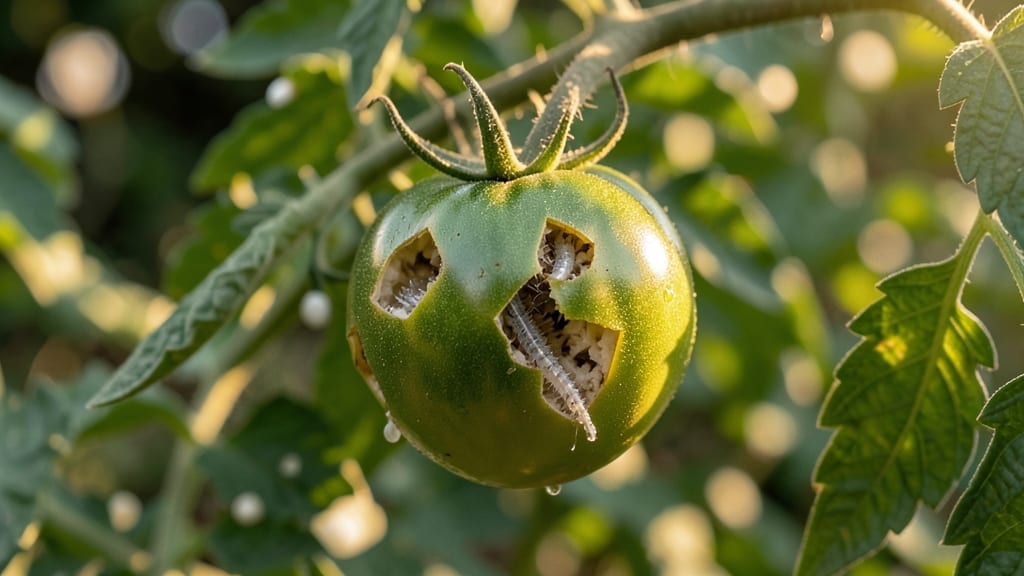
Discovering tiny holes in your tomatoes isn’t just frustrating—it’s a sign that fruitworms have tunneled inside, rendering your harvest inedible. These sneaky pests lay eggs on leaves, and once the larvae hatch, they burrow directly into developing fruit, leaving behind a trail of destruction.
The good news? Strong-smelling herbs like thyme or oregano planted nearby create a natural barrier. Their bold aromas mask the scent of tomatoes, confusing adult moths and reducing egg-laying. For best results, interplant these herbs in a 1:1 ratio around your tomato beds, ensuring they brush against the foliage.
This organic solution is perfect for container gardeners and those avoiding chemical sprays. A little prevention now saves you from wasted crops later—plus, you’ll enjoy fresh herbs for cooking! 🌱
Spider Mites Creating Webs
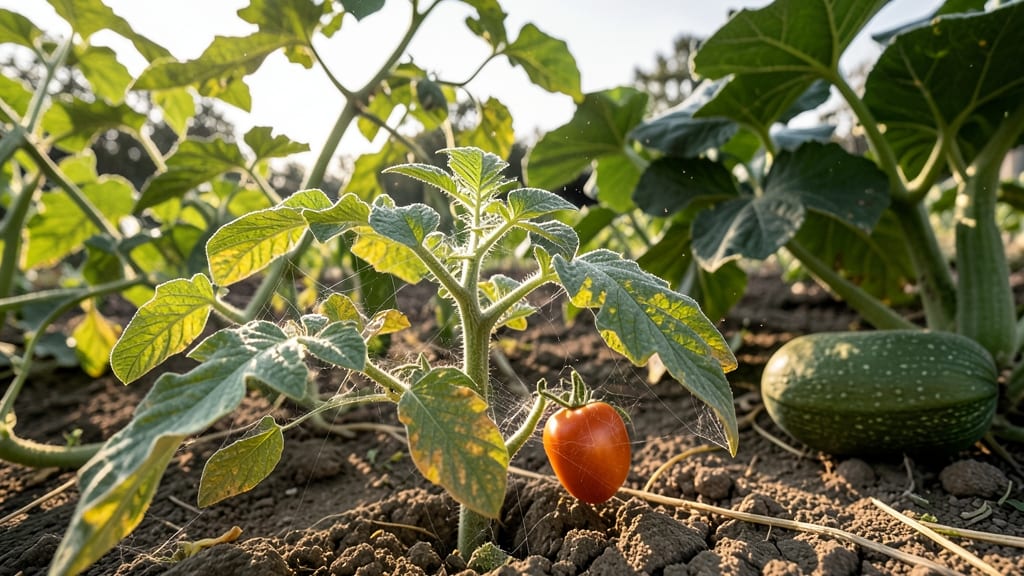
If you’ve noticed fine webbing on your tomato leaves, spider mites are likely the culprit—and they thrive in dry, hot conditions. These tiny pests drain plant sap, causing yellowing leaves and stunted growth, but a simple companion planting trick can turn the tide.
Plant cucumbers or squash nearby to boost humidity levels, which spider mites despise. These plants also attract predatory mites (like Phytoseiulus persimilis), which hunt and eat spider mites naturally. For extra protection, mist your tomato plants in the morning to deter mites and encourage beneficial predators to stay.
This solution is perfect for gardeners in hot, dry climates or those using greenhouses, where humidity control is key. With this approach, you’ll create a self-regulating ecosystem that keeps spider mites in check without chemicals. ✨
Stink Bugs Piercing Tomato Pods
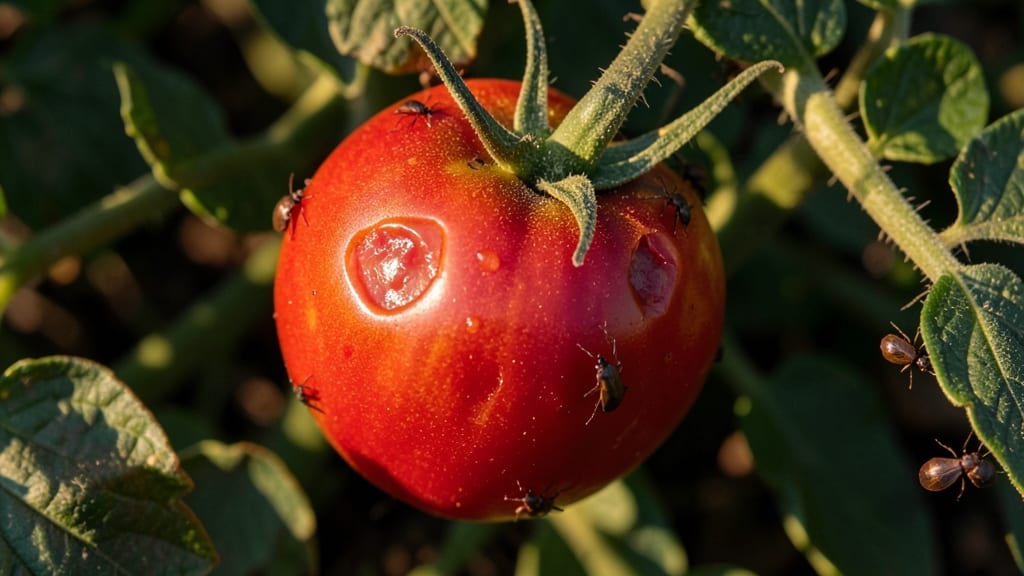
Notice those unsightly dimples on your tomato pods? Stink bugs are the culprits, piercing fruit to feed and leaving cosmetic damage that ruins market value—and worse, they transmit plant diseases like tomato mosaic virus.
While chemical sprays can work, a smarter solution is to let nature handle the problem. Planting sunflowers or cosmos nearby creates a buffet for predatory birds like robins and cardinals, which love snacking on stink bugs. These birds will patrol your garden regularly once they discover the easy meal source.
This method works best for gardeners who prefer organic solutions and want to support local wildlife. Just add a few sunflowers or cosmos to your tomato patch, and watch the bird population—and your tomato quality—improve. 🌻
Cutworms Severing Young Plants

Waking up to toppled tomato seedlings is heartbreaking—but cutworms are the sneaky culprits. These nocturnal caterpillars slice stems at soil level, leaving no trace of their crime until it’s too late. The good news? A simple companion planting trick can save your seedlings before they even sprout.
Onions and leeks release natural sulfur compounds that repel cutworms and disrupt their burrowing instincts. Plant them in a ring around your tomato bed or intersperse them every 12-18 inches for maximum protection. The strong aroma masks tomato scents, making your plants less appealing to these nighttime raiders.
This solution is perfect for beginner gardeners or anyone dealing with cutworm outbreaks—no chemicals required. Plus, onions and leeks add flavor to your kitchen while keeping your tomato plants standing tall. 🌱
Flea Beetles Creating Shot Holes
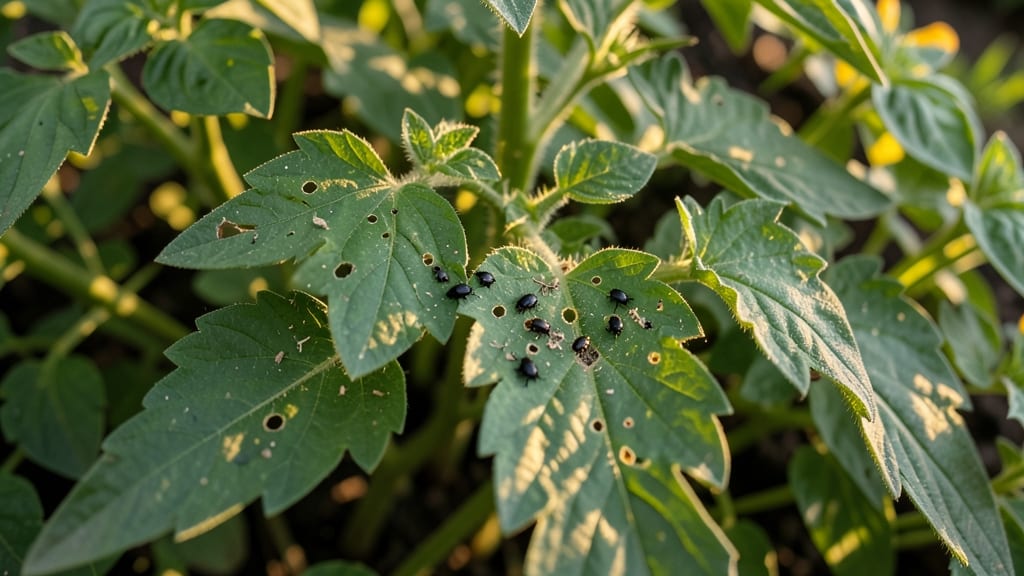
Those tiny, fast-moving flea beetles might look harmless, but their pepper-like shot holes in tomato leaves can weaken plants and reduce yields. Unlike larger pests, these beetles jump away when disturbed, making them tricky to control with traditional methods.
To break their life cycle, interplant radishes or alyssum near your tomatoes. These plants attract ground beetles and parasitic wasps, which prey on flea beetle larvae in the soil. For best results, sow radishes 3-4 weeks before transplanting tomatoes—they’ll mature quickly and provide early protection.
This strategy works especially well for container gardeners or those with limited space, as radishes and alyssum thrive in small pots alongside tomato plants. 🌱
Root-Knot Nematodes Damaging Roots

If your tomato plants look stunted despite proper watering and fertilization, root-knot nematodes—microscopic soil pests—might be the culprit. These invisible worms feed on roots, causing galls that disrupt nutrient uptake and stunt growth, often going unnoticed until plants wilt unexpectedly.
To break their life cycle naturally, interplant marigolds (especially French marigolds) or sow cover crops like clover around your tomatoes. These plants release compounds that deter nematodes and improve soil health. For existing infestations, rotate crops annually and avoid planting susceptible plants (like tomatoes, peppers, or eggplants) in the same spot for 3+ years.
This strategy is ideal for organic gardeners and those with heavy clay or sandy soils, where nematodes thrive. 💚