
Companion Plants
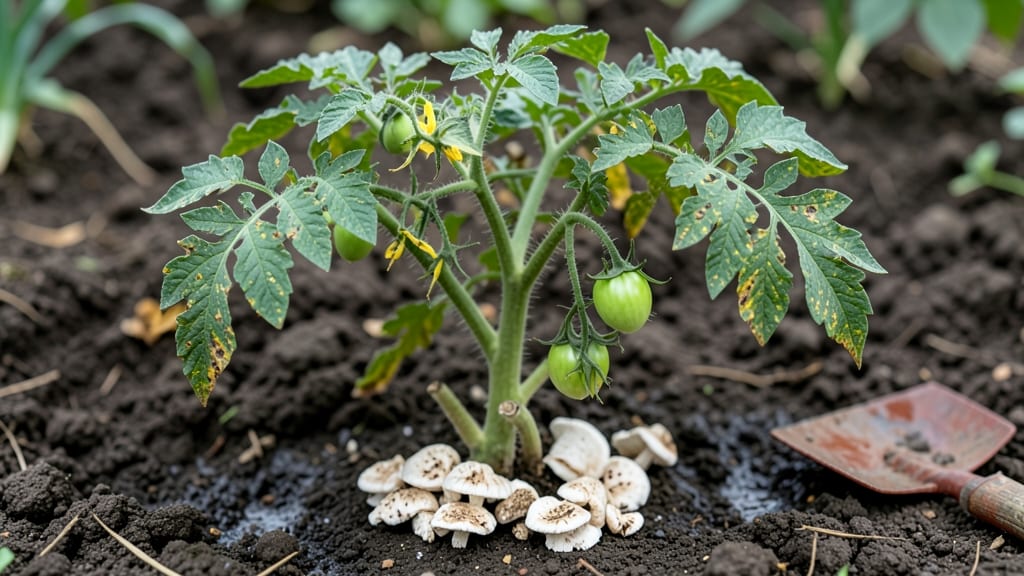
Finding mushrooms sprouting among your tomato plants might seem alarming, but it’s actually a sign your garden’s ecosystem is working—just not the way you expected. 🌿 These fungi, often Clitocybe or Agaricus species, thrive on decomposing organic matter, and while they’re harmless to tomatoes, they can signal drainage issues or overabundant mulch.
The good news? This isn’t a pest problem—it’s a fixable imbalance in your soil.
Most gardeners assume mushrooms mean disease, but they’re usually just nature’s way of recycling. Poor drainage or thick layers of mulch create the perfect damp, dark conditions for them to pop up. The key is to address the root cause—literally—without harming your tomato plants.
Start by improving airflow around the base of your plants and adjusting your watering routine to keep the soil evenly moist, not soggy.
To keep mushrooms from returning, focus on soil health rather than elimination. Spread a thin layer of fresh mulch (like straw) instead of piling it high, and consider adding compost to improve drainage.
If mushrooms persist, a light raking to expose them to sunlight will discourage regrowth. Your tomatoes won’t even notice the difference—just healthier soil and fewer surprises next season.
This isn’t just about mushrooms—it’s about tuning into your garden’s hidden signals. A few simple tweaks can turn this "problem" into a lesson about balance, proving that even the weirdest garden quirks can lead to stronger, more resilient plants.
Let’s get your tomatoes thriving and your soil working smarter, not harder.
Understanding The Fungal Mystery
When you spot what looks like mushrooms sprouting from your tomato plants, it’s natural to panic—but don’t toss those plants just yet! These growths are usually a sign of beneficial fungi (like mycorrhizae) or parasitic invaders (such as Rhizoctonia or Sclerotium).
Let’s break down the science behind why this happens and what’s really going on in your garden.
Your tomato plants aren’t alone—they’re in a symbiotic relationship with soil fungi. Here’s how it works:
- Mycorrhizal Fungi 🍄✨ These fungi form a network of threads (hyphae) around plant roots, helping tomatoes absorb water, nutrients (especially phosphorus), and minerals more efficiently. In exchange, the plant shares sugars from photosynthesis.
While they don’t look like mushrooms, some mycorrhizal species (like Amanita or Lactarius) can produce fruiting bodies near the soil surface—especially in moist, organic-rich soil.
Why it happens:
- High organic matter (compost, mulch) triggers fungal growth.
- Overwatering creates the perfect damp environment for spores to germinate.
- Disturbed soil (from planting or tilling) exposes fungal networks to air, prompting mushroom formation.
- Truffle-Like Fungi 🧀💨 Some fungi, like Tuber species (truffles), produce underground or near-surface fruiting bodies. While rare in home gardens, they can appear in well-drained, slightly acidic soil with plenty of organic debris.
Not all fungi are helpful—some are pathogens that weaken or kill tomato plants. Here’s how they take hold:
- Rhizoctonia Solani 🍅💀 This aggressive fungus causes damping-off (seedlings collapse) and root rot. It thrives in:
- Cool, wet soil (ideal for spore germination).
- Poor air circulation (dense plantings or thick mulch).
- Infected plant debris (old stems left in the soil).
Signs it’s parasitic:
- Mushrooms appear grayish-brown and leathery.
- Plants show dark, sunken lesions or wilting before mushroom growth.
- Sclerotium Rolfsii (Southern Blight) 🌡️🔥 This fungus produces white, cottony mycelium and hard, black sclerotia (resting bodies) that look like tiny mushrooms.
It loves: - Hot, humid climates (common in Southern U.S. gardens). - Fresh organic mulch (straw or grass clippings) as a food source. - Weakened plants (stressed by drought or over-fertilization).
Red flag:
- Mushrooms form after plants show sudden collapse (roots rot rapidly).
Fungi don’t appear out of nowhere—they’re opportunists waiting for the right conditions. Here’s what sets the stage:
| Factor | How It Helps Fungi Grow | How to Adjust |
|---|---|---|
| Excess Moisture | Spores need constant dampness to germinate. | Improve drainage; water at soil level. |
| Poor Airflow | Stagnant air traps humidity, fueling growth. | Prune plants; space them 18–24" apart. |
| High Organic Debris | Dead leaves/stems provide food and shelter. | Remove debris; use sterilized compost. |
| Temperature | Most fungi thrive in 60–80°F (cool nights speed growth). | Use row covers in damp climates. |
Sometimes, gardeners accidentally create the perfect fungal buffet.
Common culprits: - Over-mulching with untreated wood chips (can harbor Armillaria or Heterobasidion). - Planting too deep (buried stems encourage root-infecting fungi). - Ignoring soil pH (fungi like Rhizoctonia thrive in slightly acidic soil, pH 5.5–6.5). - Reusing contaminated soil (old garden beds may hold dormant spores).
| Type of Fungus | Appearance | Impact on Tomatoes | Action Needed |
|---|---|---|---|
| Mycorrhizal | Small, white, or brown mushrooms near roots | Beneficial (boosts growth) | Leave alone; add compost for balance. |
| Rhizoctonia | Grayish, leathery caps; black sclerotia | Destructive (root rot, damping-off) | Remove infected plants; sterilize soil. |
| Sclerotium | White fungal mat; black "mushroom-like" sclerotia | Aggressive (kills plants quickly) | Solarize soil; use copper fungicide. |
| Armillaria (Honey Fungus) | Honey-colored clusters at base | Devastating (spreads underground) | Dig out infected roots; avoid replanting. |
Pro Tip: 🔍 Test the soil—if mushrooms appear after planting, it’s likely beneficial. If they show up with wilting plants, act fast: remove affected plants, adjust watering, and improve airflow. Never assume—identify first! (Use a soil test kit or consult your local extension office.)
Quick Fixes for Tomato Plant Fungus
When you spot strange growths—like mushrooms—pushing up through your tomato plants, it’s a sign your soil or garden ecosystem needs a reset. The good news? You don’t need harsh chemicals to tackle the problem.
Instead, focus on removing the issue at its source while restoring balance to your garden. Below are practical, step-by-step solutions tailored to common causes, plus prevention tips to keep your tomatoes thriving.
Cause: Mushrooms (often Agaricus bisporus or Coprinus species) thrive in moist, decaying organic matter, like compost piles or buried plant debris. Fix:
- 🔪 Excavate the mushrooms – Use a trowel or small shovel to dig out the entire fungal mass, including the underground mycelium (the white, thread-like roots). Drop them in a sealed bag and toss them in the trash—do not compost them (they’ll just regrow).
- 🌱 Inspect the soil – If the mushrooms are growing near your tomato plants, check for rotting roots, old plant stems, or overly wet spots. Remove any decaying material and discard it.
- 💨 Improve airflow – Mushrooms love humidity. Thin out overcrowded tomato plants and prune lower leaves to reduce moisture buildup near the soil.
💡 Pro Tip: If mushrooms keep reappearing, your soil may be too rich in nitrogen (from compost or manure). Mix in sand or perlite to improve drainage, or top-dress with aged compost instead of fresh.
Cause: Overly wet soil (from poor drainage or excessive watering) creates the perfect breeding ground for fungal growth. Fix:
- ⏰ Water deeply but less often – Instead of daily light sprinkles, water once every 2–3 days (early morning) to let soil dry slightly between sessions.
- 🌱 Test your soil – Stick your finger 2 inches into the soil—if it’s damp, wait before watering. If it’s bone-dry, give it a thorough soak.
- 🚰 Fix drainage issues – If water pools around your tomato plants, raise beds with compost or mulch or create small trenches to redirect excess water.
💡 Pro Tip: Use a moisture meter (or a cheap DIY version with a wooden stick) to monitor soil dampness. Aim for 60–70% moisture—not soggy.
Cause: Healthy soil has natural predators (like nematodes, bacteria, and fungi) that outcompete mushroom-forming species. Fix:
- 🍄 Introduce mycorrhizal fungi – These beneficial fungi form partnerships with plant roots, crowding out unwanted mushrooms. Sprinkle mycorrhizal powder (available at garden centers) around tomato roots at planting time.
- 🐛 Encourage nematodes – Beneficial nematodes (Steinernema feltiae) eat fungal mycelium. Mix 1–2 pounds of nematode-rich compost into the soil or apply a liquid nematode spray.
- 🍂 Use compost tea – Brew aerobic compost tea (not anaerobic!) and spray it on soil and leaves. This boosts beneficial microbes that suppress harmful fungi.
💡 Pro Tip: Avoid fresh manure or unaged compost—these can introduce mushroom spores. Stick to well-aged compost (6+ months) or worm castings.
Once you’ve dealt with the mushrooms, keep them from returning with these long-term strategies:
| Problem | Solution | When to Do It |
|---|---|---|
| Compacted soil | Add perlite or coarse sand | Before planting or mid-season |
| Excess moisture | Mulch with straw or wood chips | After watering, before rain |
| Buried organic debris | Remove old plant stems, weeds | Early spring or fall cleanup |
| Overly rich soil | Mix in sand or peat moss | At planting or during transplant |
🌟 Bonus Prevention:
- Plant companion crops like garlic, marigolds, or basil near tomatoes—they repel fungal spores and improve soil health.
- Rotate crops—don’t plant tomatoes in the same spot year after year (fungal diseases and mushrooms can persist in the soil).
Final Thought: Mushrooms in tomato plants are usually a soil imbalance issue, not a tomato-specific problem. By drying out the soil, removing fungal sources, and boosting beneficial microbes, you’ll create an environment where tomatoes (and not mushrooms) take center stage. 🍅✨
Frequently asked questions
Are mushrooms growing in tomato plants harmful to my plants?
Most mushrooms in tomato plants are harmless—they're usually decomposing organic matter or beneficial mycorrhizal fungi. However, if you see grayish-brown mushrooms with wilting plants, it could signal Rhizoctonia or Sclerotium infections, which are destructive. Always check for plant stress symptoms first.
Why do mushrooms keep coming back after I remove them?
Mushrooms often return because their root systems (mycelium) remain in the soil. To prevent regrowth, improve drainage, reduce organic matter buildup, and introduce beneficial microbes like nematodes. Avoid overwatering and thick mulch layers that create damp conditions.
Can I use vinegar or hydrogen peroxide to kill mushrooms in my garden?
While vinegar (3% solution) or hydrogen peroxide (3%) can kill mushrooms, they won't reach the underground mycelium. For better results, focus on soil adjustments (drainage, airflow) and organic treatments like compost tea. These address the root cause without harming your tomatoes.
Will adding more compost make the mushroom problem worse?
Fresh compost can actually worsen the issue by providing more food for fungal growth. Use well-aged compost (6+ months) or worm castings instead. These break down slowly and improve soil structure without feeding mushrooms.
Are there any companion plants that help prevent mushrooms in tomato beds?
Yes! Planting garlic, marigolds, or basil near tomatoes helps deter fungal spores. These companions improve soil health, repel pests, and create better airflow—all of which make your garden less hospitable to mushroom growth.