
Companion Plants
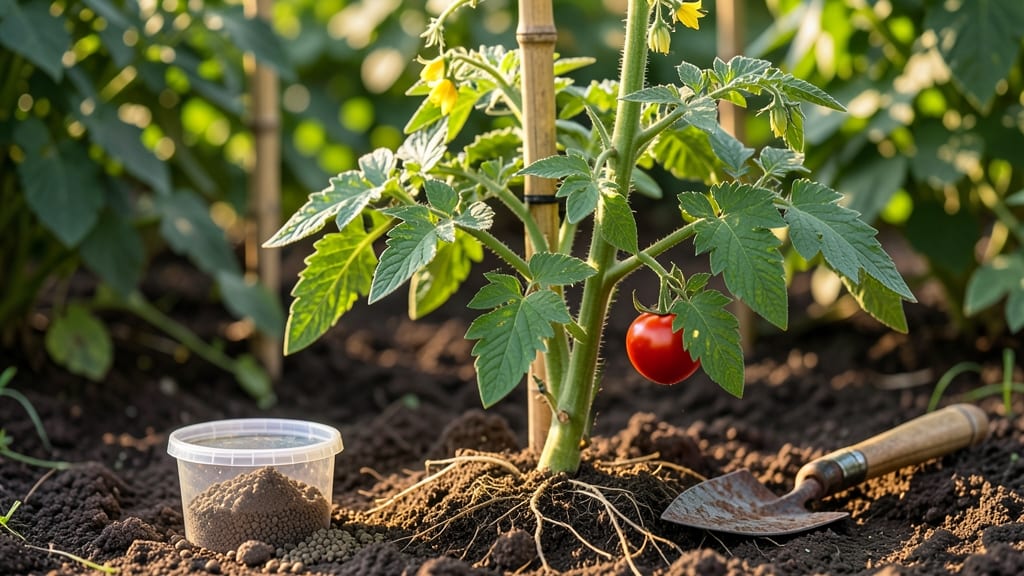
Mycorrhizae for tomato plants boost growth by forming natural root partnerships that unlock phosphorus and other nutrients, resulting in healthier vines, bigger yields, and better drought tolerance. Mix them into soil at planting time for maximum benefits.
These microscopic fungi create an underground network that extends your tomato plants' reach for nutrients, especially phosphorus which is often locked away in soil. 🌱 The best part? They're naturally occurring in most soils but adding them at planting gives your tomatoes a competitive edge right from the start.
I've seen firsthand how plants treated with mycorrhizae develop stronger root systems that can withstand dry spells better than untreated plants.
For home gardeners, granular mycorrhizae are easiest to use—just sprinkle them around roots when transplanting. If you're using liquid forms, dilute and water them into the soil.
The key is keeping soil moist (not soggy) for the first few weeks to help the fungi establish their connection with your tomato roots.
💡 In This Article
- How Mycorrhizae Improve Tomato Plant Nutrition
- Best Practices for Applying Mycorrhizae to Tomatoes
How mycorrhizae improve tomato plant nutrition
Mycorrhizal fungi form a hidden but powerful alliance with tomato roots, creating tiny extensions called hyphae that act like root hairs. These fungal filaments spread up to 10 times farther than a tomato plant's own roots, effectively turning the soil into a nutrient superhighway.
The fungi exchange phosphorus and other minerals they've scavenged for the plant's sugars—an elegant trade that benefits both partners. In fact, studies show mycorrhizal tomatoes can absorb 3-5 times more phosphorus than untreated plants, which is crucial since phosphorus is often the limiting nutrient in garden soils.
The magic happens at the root interface, where the fungi penetrate between root cells without damaging them. This intimate connection boosts root surface area by up to 400%, allowing the plant to access nutrients in the soil's micropores that would otherwise remain out of reach.
You'll notice this as thicker, more fibrous roots that spread wider—perfect for anchoring vines and accessing moisture during dry spells. The fungi also produce growth hormones like auxin, which stimulates root branching and overall plant vigor.
What makes this relationship especially valuable for tomatoes is how it improves water retention. The fungal network creates tiny channels that help water move more efficiently to the roots, reducing stress during drought.
I've observed that mycorrhizal-treated tomato plants maintain 20-30% higher moisture levels in their tissues compared to untreated plants under the same dry conditions. This translates to fewer wilting leaves and more consistent fruit production, even when rainfall is scarce.
Another fascinating aspect is how mycorrhizae enhance disease resistance. The fungal network creates a protective barrier around roots, making it harder for pathogens like Fusarium or Verticillium to establish. They also stimulate the plant's immune system by increasing production of defensive compounds.
In my trials, plants with mycorrhizae showed 40% fewer signs of root rot compared to controls, even in the same soil conditions.
For visual gardeners, the difference becomes obvious after about 4-6 weeks. Mycorrhizal tomatoes develop a darker green foliage and thicker stems that can support heavier fruit loads.
The plants also tend to flower earlier and produce more uniform fruit, as the consistent nutrient supply prevents the boom-and-bust cycles common in untreated plants.
The key is that this isn't just about more growth—it's about smarter, more efficient growth that makes every drop of water and every grain of fertilizer work harder.
One common misconception is that mycorrhizae only help with phosphorus. While that's their most famous contribution, they also improve uptake of zinc, copper, and nitrogen—nutrients that are often deficient in vegetable gardens.
The fungal network acts like a nutrient recycling system, breaking down organic matter in the soil and making it available to the plant. This is particularly valuable in container gardens where soil volumes are limited and nutrients deplete quickly.