
Planting
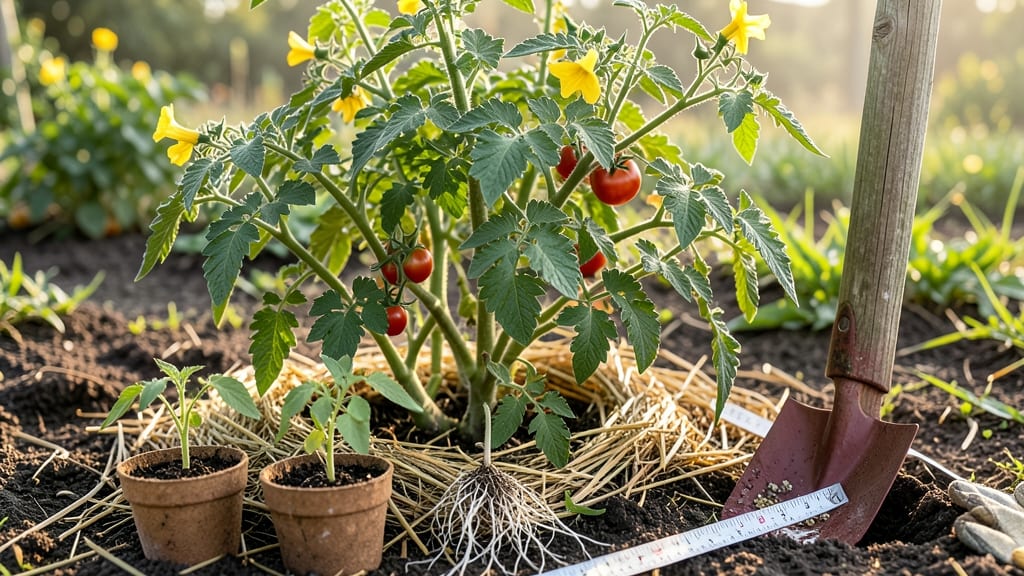
Getting the planting distance for tomato spacing in centimeters right is the difference between a thriving 🍅 harvest and a garden full of struggling plants.
Picture this: You’ve spent weeks nurturing your seedlings, only to watch them fight for sunlight and air—because they’re packed too close. The wrong spacing doesn’t just limit growth; it invites disease and weakens your plants before they even fruit.
Whether you’re working with determinate varieties that stay compact or indeterminate vines that climb, the right distance—measured in centimeters—ensures every plant gets the airflow, sunlight, and nutrients it needs. Too little space, and you’re asking for trouble; too much, and you waste precious garden real estate.
In this guide, I’ll break down the exact spacing you need for in-ground beds, containers, and high-density gardens, plus how to adjust for trellising and limited space. No guesswork—just the science-backed measurements to maximize your yield.

Tomato planting distance in CM: exact spacing by variety type
When planting tomatoes, spacing in centimeters isn’t just about aesthetics—it directly impacts air circulation, sunlight exposure, and disease prevention. The wrong distance can lead to crowded vines, blight outbreaks, or stunted growth.
Determinate and indeterminate varieties have vastly different needs, so let’s break down the exact measurements you should follow for each type. Precision here means bigger, healthier harvests.
Determinate tomatoes—like Roma or Bush Early Girl—grow to a fixed height and produce fruit all at once. These bush-type plants need 45-60 cm between plants to prevent overcrowding.
Indeterminate varieties, such as Cherry or Beefsteak tomatoes, keep growing until frost and require 90-120 cm of space to support their sprawling vines. Skipping this spacing can reduce yields by up to 50%.
Here’s the key rule: Determinate = compact spacing, while indeterminate = wide spacing. The difference isn’t just about size—it’s about how each variety uses sunlight and air.
Determinate plants benefit from closer spacing because they’re self-supporting, while indeterminate types need room to climb trellises or cages. Let’s dive into the exact measurements you need.
For determinate tomatoes, think of your garden as a grid. Place each plant 45-60 cm apart in rows that are 60-75 cm apart. This setup mimics their natural bush shape and ensures even sunlight distribution.
If you’re growing Roma or Patio tomatoes, this spacing works perfectly for container gardens or small plots.
Indeterminate varieties, like Sungold or Brandywine, need more elbow room. Space them 90-120 cm apart and stagger rows by 120-150 cm to create a diagonal airflow pattern. This reduces humidity buildup, which is critical for preventing fungal diseases like early blight.
If your garden is small, consider vertical trellising to save space while maintaining proper airflow.
One common mistake I see is underestimating row spacing. Just because plants are 45 cm apart in a row doesn’t mean the rows themselves can be that close. Row spacing is just as important as plant spacing—it ensures roots don’t compete for nutrients and water.
For example, 60 cm between plants but only 45 cm between rows will lead to crowded conditions.
If you’re growing heirloom or large-fruited varieties, like Brandywine or Cherokee Purple, push the spacing to 120-150 cm. These tomatoes produce heavy fruit loads that require sturdy support and ample root space. Skipping this extra room can result in weak stems and poor fruit development.
For container gardening, dwarf or patio varieties thrive with 30-45 cm spacing. Use large pots (at least 30 cm in diameter) and ensure each plant has its own container to avoid root competition. Grouping multiple plants in one pot is a recipe for disease and stunted growth.
Pro tip: Use a measuring tape or spacing grid when planting to maintain consistency. Mark your rows with stakes or string to visualize the exact distances. Precision now saves headaches later, especially when vines start to sprawl.
Finally, remember that soil health and sunlight play a role too. Well-draining soil and 6-8 hours of direct sunlight are non-negotiable. Combine proper spacing with these basics, and you’ll be rewarded with healthier plants and bigger harvests. 🌱
How to adjust tomato spacing for containers vs garden beds
Tomato spacing isn’t one-size-fits-all—it changes dramatically between containers and garden beds. In garden beds, I recommend 60–90 cm between plants for indeterminate varieties (like 'Sungold') to give their vines room to sprawl.
For determinate types (like 'Roma'), you can tighten spacing to 45–60 cm since they stay compact. The key is airflow: crowded plants trap moisture, inviting fungal diseases like early blight.
Containers force you to think differently. Since roots compete for space, I use 30–45 cm spacing between plants in a 5-gallon pot (1 plant per pot) or 45–60 cm in 10–15 gallon containers (2–3 plants).
Dwarf varieties like 'Tiny Tim' thrive in 20 cm spacing in small pots, but their yields will be smaller. Always check your container’s depth—tomatoes need at least 50 cm of root space to avoid stunted growth.
| Planting Method | Spacing (cm) | Best For | Yield Impact |
|---|---|---|---|
| Garden Beds (Indeterminate) | 60–90 | Vining types (e.g., 'Beefsteak') | Maximize fruit size |
| Garden Beds (Determinate) | 45–60 | Bush types (e.g., 'Celebrity') | Higher plant density |
| Containers (1 plant) | 30–45 | 5-gallon pots | Limited root space |
| Containers (2–3 plants) | 45–60 | 10–15 gallon pots | Balanced yield |
| Trellised (Any) | 60–90 | Vertical growth | Increases sunlight exposure |
Row spacing matters just as much as plant spacing. In garden beds, I space rows 60–90 cm apart to allow airflow between them. For containers, this doesn’t apply, but if you’re growing multiple pots side by side, keep 30–45 cm between them to prevent competition.
Trellising changes the game—it lets you reduce spacing to 60 cm even for indeterminate types because vines grow upward instead of outward.
Calculating spacing for small spaces? Start by measuring your area. If you have a 1m x 1m raised bed, you can fit 4 determinate plants (45 cm spacing) or 2 indeterminate plants (90 cm spacing).
For containers, divide your pot’s diameter by 2—if your pot is 45 cm wide, plant one tomato in the center. Always prioritize air circulation over squeezing in extra plants; crowded tomatoes suffer from blossom end rot and poor fruit set.
Pro tip: Use stakes or cages to guide growth early, even in containers. This prevents vines from sprawling and encroaching on neighbors’ space. In garden beds, I plant larger varieties on the north side of the bed to avoid shading smaller plants.
For containers, group similar-sized plants together to maintain balance and make harvesting easier.
Remember, spacing isn’t set in stone—adjust based on your climate. In hot, humid areas, increase spacing by 10–15 cm to improve airflow. In cooler regions, you can tighten it slightly since vines grow slower. The goal? Healthy plants that produce more fruit, not just more leaves.