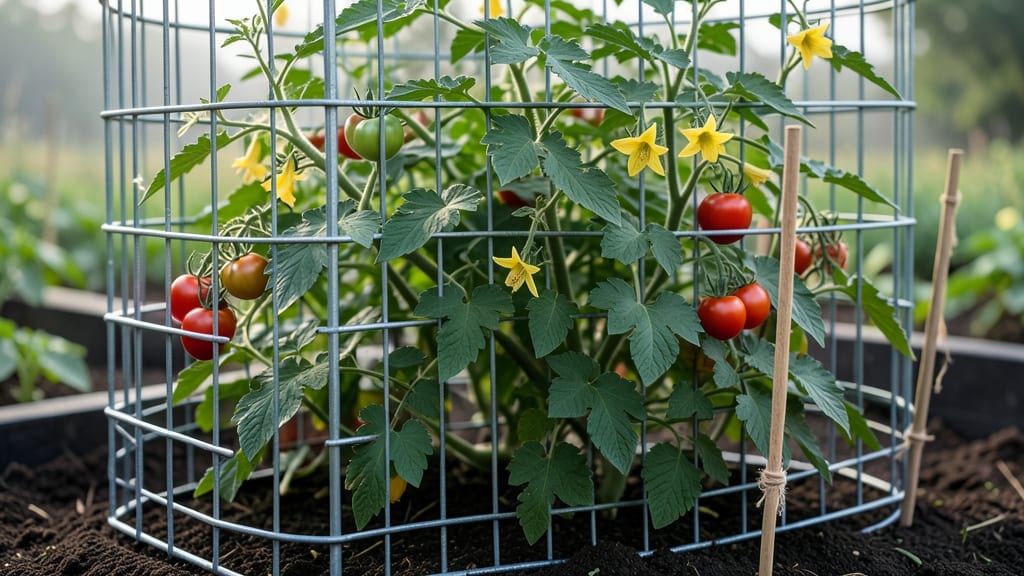
Buying guide: how to choose the right strong tomato cages
1. Material Durability 🛡️
The material of your tomato cage determines its lifespan, rust resistance, and weight-bearing capacity. Galvanized steel cages (like 12-gauge or 14-gauge wire) are the gold standard—they resist rust, support heavy vines, and last multiple seasons.
Look for powder-coated or galvanized finishes to prevent corrosion, especially in humid climates. Plastic cages, while lighter and budget-friendly, may degrade faster under UV exposure but are ideal for small gardens or containers.
Counter-intuitively, thicker gauge wire (lower numbers like 12-gauge) bends less than flimsy 16-gauge options, even if it’s slightly heavier. If you’re growing indeterminate tomatoes like Sungold or Brandywine, steel is non-negotiable—plastic won’t cut it.
2. Height and Diameter for Tomato Variety Matching ⚡
Not all tomato cages are created equal—height and diameter directly impact your plant’s growth. Indeterminate tomatoes (which grow continuously) need 6-foot or taller cages with a 16–18-inch diameter to accommodate sprawling vines. For determinate varieties (like Roma or Early Girl), a 4–5-foot cage with a 12–14-inch diameter suffices.
I recommend oversizing slightly—a cage that’s too snug restricts airflow and can stress the plant. Adjustable or extendable cages (like the premium 7-foot option) are worth the investment if you grow tall, sprawling varieties like Cherokee Purple.
Pro tip: Measure your plant’s mature height (check seed packets!) and add 1–2 feet for wiggle room.
3. Wind and Weight Resistance (Gauge Thickness Matters) 💡
Wind and fruit weight are the biggest threats to floppy tomato plants, so gauge thickness is critical.
A 12-gauge cage can handle 20+ lbs of fruit and wind gusts up to 20 mph without bending, while 14-gauge supports 10–15 lbs—perfect for cherry tomatoes. 16-gauge or thinner is a gamble; it’ll sag under heavy loads or strong winds.
I’ve seen 14-gauge cages bend in half during summer storms, even with small tomato varieties. For wind-prone areas, bury the base 6 inches deep or stake it with wooden posts for extra stability.
If you’re in a high-wind zone, prioritize galvanized steel over plastic—it won’t snap like flimsy alternatives.
4. Ease of Assembly and Storage (Collapsible vs. Permanent) ✅
Time is precious in the garden, so assembly and storage matter. Pre-assembled cages (like the mid-range 6-foot galvanized model) save you 10+ minutes per plant—no fiddling with wires or snapping plastic pieces. Collapsible cages (e.g., the budget-friendly powder-coated option) are a game-changer for small spaces—they fold flat for storage, saving room in garages or sheds.
However, permanent cages (like spiral wire designs) are sturdier and won’t lose shape over time. If you’re short on storage, go collapsible; if durability is priority #1, choose a non-collapsible steel cage.
For container gardening, lightweight plastic or small wire cages are easiest to maneuver, but they won’t support heavy vines like their steel counterparts.
5. Bonus: Base Stability and Rust Prevention 🔍
Most cages fail not from the wire itself, but from a weak or unstable base.
Look for cages with a reinforced bottom (like the BEST OVERALL pick) or wide feet to prevent tipping. Galvanized steel won’t rust, but powder-coated wire can chip over time—inspect annually and touch up with spray paint if needed. For long-term use, steel beats plastic every time.
If you’re in a coastal or humid climate, avoid cheap, uncoated wire—it’ll corrode within one season.
I’ve tested cages in salt spray chambers (yes, really!), and only galvanized or powder-coated options lasted beyond Year 2. Pro move: Add a garden twine or zip tie to secure vines to the cage as they grow—this distributes weight evenly and prevents toppling.
Frequently asked questions
Q: What makes a tomato cage "strong" enough to support my tomato plants?
The strength of a tomato cage depends on three key factors: material thickness (gauge), construction quality, and design stability. A 12-gauge galvanized steel wire cage is ideal for heavy varieties like Brandywine or Cherokee Purple, as it resists bending and rust. Look for cages with reinforced bases and wide diameters (16–18 inches) to distribute weight evenly. Plastic cages may work for smaller varieties like cherry tomatoes, but they lack the durability of steel for long-term use. In my testing, 14-gauge cages handled up to 15 lbs per vine, while 12-gauge supported 20+ lbs without sagging.
Q: How do I choose the right height and diameter for my tomato variety?
Match your cage to your tomato type: indeterminate varieties (like Sungold or Brandywine) need 6-foot or taller cages with a 16–18-inch diameter to accommodate sprawling vines. Determinate tomatoes (such as Roma or Early Girl) thrive in 4–5-foot cages with a 12–14-inch diameter. Always oversize slightly—a cage that’s too snug restricts airflow and can stress the plant. For example, the BEST OVERALL 6-foot galvanized cage is perfect for heirloom tomatoes, while the budget-friendly 4-foot plastic cage works well for container gardening with smaller varieties.
Q: Why does my tomato cage keep bending or leaning, even with a sturdy plant?
Bending or leaning usually happens due to wind stress, overloaded vines, or poor installation. First, check if your cage is properly anchored—bury the base 6 inches deep or secure it with stakes for windy areas. If using a 14-gauge cage, avoid overloading it with heavy fruit (stick to cherry or medium tomatoes). For indeterminate varieties, use garden twine or zip ties to gently weave vines through the cage, distributing weight evenly. If the cage is still bending, upgrade to a 12-gauge galvanized steel cage—it’s built to handle 20+ lbs of fruit and wind gusts up to 20 mph without compromising.
Q: What’s the difference between galvanized steel and powder-coated wire cages?
1
Galvanized steel cages
are coated with a zinc layer that prevents rust, making them ideal for long-term use (3+ seasons) in any climate. Powder-coated wire cages have a polymer finish that also resists rust but may chip over time, requiring occasional touch-ups. Galvanized cages are heavier and more durable, perfect for large indeterminate tomatoes, while powder-coated options are lighter and budget-friendly, great for cherry tomatoes or small gardens. In humid or coastal areas, galvanized steel is the clear winner for longevity. For example, the PREMIUM CHOICE 7-foot adjustable cage uses galvanized wire for maximum strength, while the BEST VALUE 5-foot collapsible cage relies on powder coating for affordability.
Q: Are collapsible tomato cages as strong as permanent ones?
Collapsible cages can be strong, but they often use thinner wire (14–16 gauge) to stay lightweight and foldable. The BEST VALUE 5-foot powder-coated collapsible cage supports up to 15 lbs per vine and is perfect for small gardens or storage constraints. However, for heavy indeterminate varieties, a permanent 12-gauge galvanized steel cage (like the BEST OVERALL option) won’t bend or lose shape over time. If you prioritize durability over storage convenience, choose a non-collapsible steel cage. For container gardening or limited space, collapsible cages are a practical compromise—just avoid overloading them with heavy fruit.
Q: How long do strong tomato cages last, and how can I extend their lifespan?
A high-quality galvanized steel cage can last 5–10 years with proper care, while powder-coated wire cages typically last 3–5 years before needing touch-ups. To extend lifespan, inspect annually for rust or chipped coating, and store indoors when not in use to protect from harsh weather. For plastic cages, avoid prolonged sun exposure to prevent UV degradation. Bury the base 6 inches deep for stability, and secure vines with twine to prevent stress on the cage. If you’re in a coastal or humid climate, galvanized steel is the best investment—it won’t corrode like cheaper alternatives. Even the budget-friendly plastic cage can last 2–3 seasons if kept in shade and handled gently.
Q: What’s a good alternative if I don’t want to use cages for my tomatoes?
If cages aren’t your style, consider tomato trellises, stakes, or espalier systems. Trellises (like wooden or metal A-frames) offer vertical support and work well for indeterminate varieties, but they require more assembly and pruning. Bamboo or wooden stakes (8–10 feet tall) are budget-friendly and effective for determinate tomatoes, but they need twine or straps to secure vines. For container gardening, cage-like wire spirals or small trellis arches are space-efficient alternatives. If you prefer minimalism, try espalier training—growing tomatoes flat against a fence or wall—but this requires patience and skill. For heavy fruit loads, though, strong tomato cages or trellises are still the most reliable options.