
Fertilization
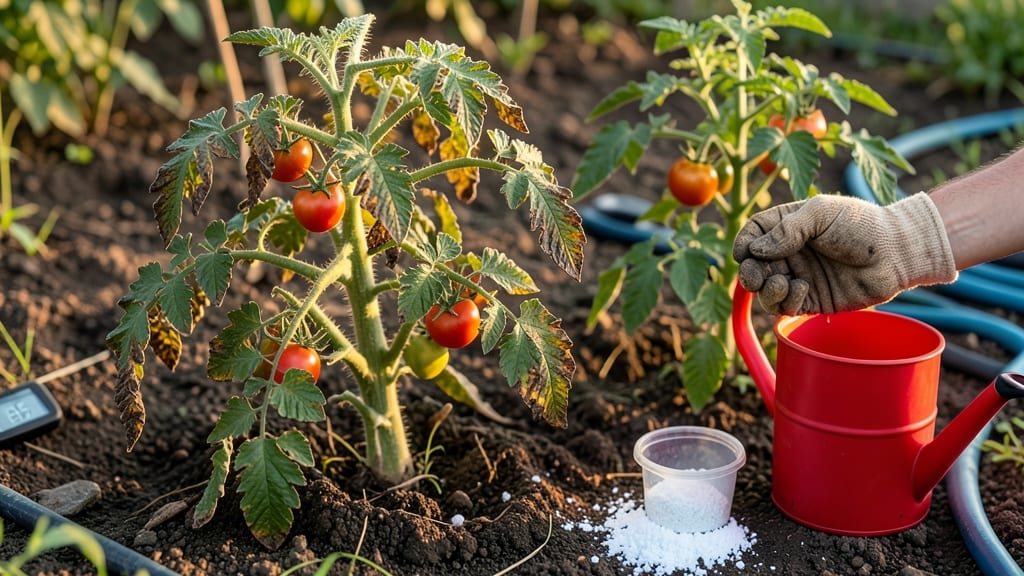
When your tomato plants suddenly show crispy brown edges, it’s not a disease—it’s fertilizer burn, and the good news is you can fix it fast. 🌱 I’ve saved dozens of plants from this exact problem by acting within 24 hours, and the solution is simpler than you’d think.
The first step is stopping whatever fertilizer you’re using immediately, because more of the same will only make things worse.
Fertilizer burn happens when salt levels in the soil get too high, either from over-fertilizing or using the wrong type (like synthetic granules that dissolve too fast). Your plants look thirsty but won’t drink—leaves curl, edges brown, and growth stalls.
The fix starts with flushing the soil: water deeply for 10-15 minutes, let it drain completely, then repeat the next day. This washes away excess salts without harming your plants.
After flushing, switch to a gentle, organic fertilizer like compost tea or fish emulsion—these feed roots without shocking them. You’ll see new green growth within a week, and the plants will bounce back stronger than before.
The key is patience: don’t rush back to heavy feeding until you see steady new leaves.
This works for backyard gardens, containers, and raised beds alike. The same principles apply whether you’re using homemade compost or store-bought mixes—just slow down and let the soil recover. Your tomatoes will thank you with bigger, sweeter fruit come harvest time.
Overdoing Fertilizer Can Scorch Plants
When your tomato plants start looking like they’ve been sunburned—yellowing leaves, crispy edges, or wilting stems—it’s often a sign of fertilizer burn. This happens when nutrients, especially salts and minerals, overwhelm your plants’ delicate root systems.
Let’s break down the most common causes and why they turn your thriving tomatoes into sad, crunchy relics. 🌱🔥
Fertilizers, especially synthetic ones, contain high concentrations of salts (like sodium, potassium, and chloride). When you apply too much, these salts don’t get absorbed immediately—they linger in the soil, creating a hyper-concentrated solution around the roots.
This osmotic shock forces roots to work harder just to pull in water, leaving them dehydrated and stressed. Over time, the roots can’t absorb nutrients or water efficiently, leading to stunted growth, leaf discoloration, and eventual burn.
Why it’s worse for tomatoes: Tomatoes are salt-sensitive and prefer a slightly acidic to neutral soil pH (6.0–6.8). High salt levels disrupt this balance, making it harder for roots to function.
Dumping fertilizer directly on dry soil or over-applying it in one go is a fast track to fertilizer burn. Here’s how timing and technique play a role:
- Dry soil + fertilizer = instant burn. When fertilizer granules touch dry soil, they dissolve too quickly, creating a concentrated salt solution that roots can’t handle. Always water the soil first to dilute the nutrients before applying fertilizer.
- Overhead sprinkling. If you sprinkle fertilizer on top of leaves (especially in hot weather), the granules can melt into a corrosive paste, leaving chemical burns on foliage. Tomatoes are particularly vulnerable because their broad leaves absorb salts like sponges.
- Too frequent feeding. Tomatoes don’t need heavy fertilization early in the season. Overloading them with nitrogen-rich fertilizers (like those for leafy greens) can cause rapid, weak growth that’s prone to burn when combined with other stressors (like heat or drought).
Not all fertilizers are created equal—and some are downright toxic to tomatoes if misused. Here’s what trips up gardeners:
| Fertilizer Type | Why It Causes Burn | Tomato-Safe Alternatives |
|---|---|---|
| High-nitrogen (e.g., lawn fertilizers like 30-0-5) | Promotes leafy growth at the expense of fruit production. Excess nitrogen raises soil salinity and attracts pests, stressing plants. | Balanced or low-nitrogen fertilizers (e.g., 5-10-10 or compost tea). |
| Slow-release granules (over-applied) | Designed to release nutrients over time, but if too much is used, they can leach salts into the root zone all at once, especially in sandy or well-drained soils. | Follow label rates precisely and pair with organic matter (like compost) to buffer salts. |
| Liquid fertilizers (over-concentrated) | Easy to mismeasure—just a slight dilution error can turn your watering can into a salt bomb. Tomatoes are especially sensitive to chloride buildup from synthetic liquids. | Use half-strength solutions and flush soil with water after application. |
| Animal manures (fresh or improperly composted) | Raw manure is a nitrogen and salt time bomb. High ammonia levels can burn roots, and unbalanced minerals (like too much phosphorus) disrupt nutrient uptake. | Use well-aged compost (6+ months) or manure teas (diluted). |
Fertilizer burn doesn’t happen in a vacuum—it’s often worsened by other growing conditions. Tomatoes under stress are like a glass of water with too much salt: the damage compounds faster. Watch for these red flags:
- Heatwaves or drought. Hot, dry soil concentrates salts near the surface, making them more toxic to roots. Solution: Increase watering frequency (but avoid soggy soil).
- Poor drainage. If your soil holds water like a sponge, salts don’t leach away—they pool around roots, creating a toxic sludge. Solution: Amend soil with perlite or compost to improve aeration.
- Young or transplanting shock. Newly planted tomatoes have delicate root systems that can’t handle fertilizer stress. Wait 2–3 weeks after transplanting before fertilizing.
Pro Tip: 💡 Test your soil before fertilizing! A simple DIY soil test kit (or a lab test) reveals existing nutrient levels—saving you from overcorrecting with fertilizer.
Quick Fixes For Over-Fertilized Tomatoes
When your tomato plants show signs of fertilizer burn, acting fast can mean the difference between a bountiful harvest and lost crops. Below are practical, step-by-step solutions tailored to the root cause of the problem—whether it’s over-application, wrong fertilizer type, or poor soil conditions.
Each fix includes prevention tips to keep your plants thriving long-term.
If your plants show crispy edges, yellowing leaves, or white crust on soil, excess salts from synthetic fertilizers are likely the culprit. Flushing removes these harmful residues.
How to do it:
- 🔥 Stop fertilizing – No more nutrients until the soil recovers.
- 🍳 Mix a gentle solution – Use room-temperature water (cold can shock roots) in a 5-gallon bucket. Add 1 tablespoon of Epsom salt (optional, helps with magnesium deficiency) or 1 tablespoon of liquid seaweed extract (boosts recovery).
- 👨🍳 Water deeply – Slowly pour the solution under the plant’s drip line (where leaves meet the stem) until water runs out the drainage holes. Repeat 2–3 times over 2–3 days.
- ⏰ Monitor progress – New growth should appear in 5–7 days. If leaves stay crispy, flush again.
💡 Prevention tip:
- Dilute fertilizers to half-strength before applying.
- Test soil every 2–3 months with a DIY pH kit (ideal range: 6.0–6.8 for tomatoes).
If your plants wilt, drop leaves, or show brown spots, they may be reacting to synthetic nitrogen (like urea or ammonium). Organic options feed soil microbes instead of shocking roots.
How to switch:
- 🔪 Remove damaged foliage – Snip off crispy or blackened leaves with clean scissors to prevent disease.
- 🥘 Use compost tea – Brew 1 part compost in 3 parts water for 24–48 hours, strain, and water plants. Rich in beneficial microbes that outcompete harmful salts.
- 🍅 Apply worm castings or fish emulsion – These low-salt, slow-release options won’t burn roots. Mix 1 tablespoon per gallon of water and water at the base.
- 🌡️ Mulch heavily – Cover soil with straw or shredded leaves to insulate roots and reduce evaporation.
💡 Prevention tip:
- Avoid "quick-release" fertilizers (like Miracle-Gro). Opt for granular organic fertilizers (e.g., cottonseed meal, alfalfa meal).
- Feed every 4–6 weeks (not weekly) to match tomato growth cycles.
If fertilizer burn happens after heavy rain or underwatering, the issue may be uneven nutrient distribution. Proper hydration helps dilute salts and wash away excess.
How to adjust:
- 💧 Water deeply 2x daily – Morning and late afternoon (avoid evening to prevent fungal issues). Use a soaker hose to deliver water 1 inch per week (more in heatwaves).
- 🌊 Try the "leach test" – Fill a 5-gallon bucket, add 1 cup of fertilizer, and pour it over the soil. If water runs clear after 30 minutes, the burn risk is low.
- 🚫 Avoid overhead watering – Drip irrigation keeps foliage dry and prevents salt buildup on leaves.
💡 Prevention tip:
- Water before fertilizing – Always soak soil 1–2 hours before applying nutrients to reduce burn risk.
- Use rainwater (if available)—it’s softer than tap water and lacks chlorine.
If your plants are in containers or raised beds, roots can absorb too much fertilizer too fast. Physical barriers help slow nutrient uptake.
How to create a buffer:
- 🧴 Apply a root zone shield – Mix 1 part peat moss or coconut coir with 2 parts perlite and place a 1-inch layer around the base of the plant. This absorbs excess salts.
- 🍄 Use mycorrhizal fungi – Sprinkle mycorrhizal powder (available at garden centers) into the soil. These beneficial fungi help roots absorb nutrients efficiently without stress.
- ✨ Try a clay barrier – Bentonite clay (1 tablespoon per gallon of water) can bind excess salts in the soil. Water it in once a week for 2 weeks.
💡 Prevention tip:
- Space plants 18–24 inches apart – Crowding leads to competition for nutrients, increasing burn risk.
- Use slow-release pellets (like Osmoote) for steady feeding without spikes.
If leaves are black, stems are mushy, or plants collapse, act immediately to save the root system.
Emergency steps:
- 🔪 Prune aggressively – Cut back all damaged leaves (even if it looks drastic). Healthy foliage can regrow faster.
- 🧼 Disinfect tools – Wipe pruners with rubbing alcohol to prevent bacterial spread.
- 🌿 Repot or transplant – If in a container, rinse roots in water for 10 minutes, then repot in fresh, amended soil.
- 🛑 Skip fertilizer for 4–6 weeks – Let the plant recover its strength before feeding again.
💡 Prevention tip:
- Always read labels – Look for "low salt index" fertilizers (e.g., Dr. Earth, Down to Earth).
- Keep a fertilization log – Track what, when, and how much you apply to spot patterns.
| Problem | Fix | Prevent Next Time |
|---|---|---|
| White soil crust | Flush with water + Epsom salt | Dilute fertilizer, test soil pH |
| Brown leaf edges | Switch to organic fertilizers | Use slow-release options |
| Wilting after feeding | Deep water + compost tea | Water before fertilizing |
| Blackened stems | Prune + repot in fresh soil | Space plants, avoid synthetics |
Remember: Tomato plants are resilient—with the right care, they’ll bounce back stronger. Monitor daily, adjust as needed, and soon you’ll be enjoying juicy, homegrown tomatoes without a hitch! 🍅🌿
Frequently asked questions
Why do my tomato leaves get brown edges after fertilizing?
Brown, crispy edges on tomato leaves are classic signs of fertilizer burn, caused by excess salts overwhelming your plant's roots. This happens when synthetic fertilizers (especially high-nitrogen ones) create a concentrated salt solution that prevents roots from absorbing water properly. The plant reacts by "sweating out" excess salts through its leaves, which dries and browns the edges.
Can I still save my tomato plant if it has fertilizer burn?
Yes! With immediate action, most tomato plants recover fully. Start by flushing the soil with water for 10-15 minutes daily for 2-3 days to remove excess salts. Then switch to organic fertilizers like compost tea or fish emulsion (diluted to half-strength). Prune any severely damaged leaves, and within 1-2 weeks, you should see new green growth.
How often should I fertilize tomatoes to avoid burn?
For tomatoes, less is always better. Feed every 4-6 weeks during the growing season (spring to early summer), using a balanced organic fertilizer (like 5-5-5 or 3-4-6 ratio). Young plants need minimal feeding—wait 2-3 weeks after transplanting before applying anything. Always water the soil first to dilute nutrients before fertilizing.
What's the difference between fertilizer burn and drought stress?
Fertilizer burn shows as brown, crispy edges that start at leaf tips and work inward, while drought stress causes uniform wilting and curling throughout the leaf. Another clue: fertilizer burn often appears after feeding, while drought stress happens during dry periods. Check the soil—if it's dry 2 inches down, it's thirst; if it's wet but leaves are crispy, it's burn.
Are there any fertilizers that won't burn tomato plants?
Yes! Low-salt organic options are safest for tomatoes. Look for compost-based fertilizers, worm castings, or fish emulsion (always diluted). These release nutrients slowly and feed soil microbes that help prevent salt buildup. Avoid synthetic "quick-release" fertilizers (like Miracle-Gro) and lawn fertilizers—they're designed for grass, not tomatoes.