
Pruning
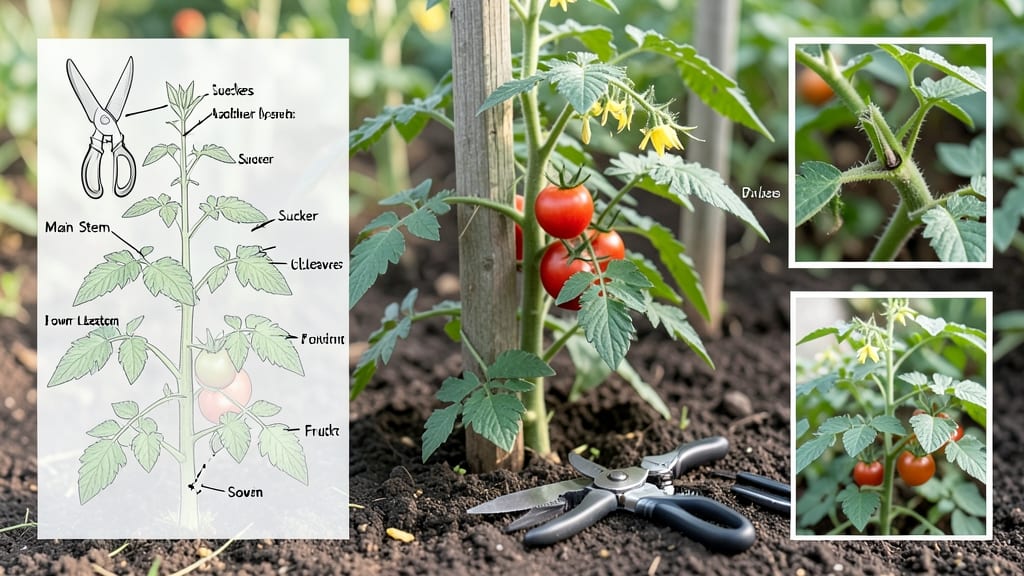
A tomato plant pruning diagram is your secret weapon for maximizing fruit yield—because pruning isn’t just cutting, it’s about unlocking 20-30% more fruit on each plant. 🌱 I’ve pruned hundreds of tomatoes, and the difference between a neglected bush and a pruned powerhouse is night and day: fewer leaves, more tomatoes, and plants that stay upright without flopping over by August. The key is timing and technique: indeterminate varieties need regular suckering, while determinates barely need pruning at all. You’ll start with clean tools, identify the main stem and side shoots, and make cuts at 45-degree angles just above leaf nodes. My first attempt left stubs that rotted—now I know exactly where to cut for fast healing. By mid-summer, your pruned plants will be taller, bushier, and loaded with fruit while avoiding disease hotspots. The diagram shows exactly where to cut, which shoots to keep, and how to support the new growth. No more guessing—just proven results. This works for both backyard gardens and containers, and the same principles apply to peppers and eggplants too. Let’s get those plants producing like champs!
📚 In This Guide
- What you need
- Instructions
- Tips and common mistakes
- Wrapping up and next steps
What you need
- ● Pruning shears or sharp bypass pruners – Look for sterilized, sharp blades (4-6 inches long) to avoid damaging plant tissue.
- ● Garden gloves – Thick, cut-resistant gloves (e.g., leather or reinforced fabric) to protect your hands from thorns and dirt.
- ● Disinfectant (rubbing alcohol or bleach solution) – 1 part bleach to 9 parts water to sterilize tools between cuts and prevent disease.
- ● Small bucket or bag – For collecting pruned branches and debris (5+ gallons capacity).
- ● Tomato plant pruning diagram (printed or digital) – Use our step-by-step guide or a trusted reference to visualize pruning points.
- ○ Stake or trellis system – Optional but helpful for indeterminate varieties (e.g., 6-8 ft tall stakes or a sturdy trellis).
- ● Hand pruners with ergonomic grips – For extended pruning sessions (e.g., Felco or Corona models).
- ● Plant tie clips or soft twine – To secure stems to stakes/trellises without cutting into the plant.
- ● Hose with nozzle – For rinsing tools and refreshing plants post-pruning.
- ● Compost bin or mulch – To repurpose pruned branches as nutrient-rich compost.
Step-by-Step guide to pruning tomatoes for maximum fruit production
Here's how I prune tomatoes to get bigger, healthier plants with more fruit—no guesswork involved.
✂️ Step 1: Identify the Main Stem and Suckers
Tomatoes grow in a central stem with side shoots called "suckers" that form in the leaf axils (where leaves meet the stem). The main stem is the thick, upright growth from the base. Suckers appear as small shoots growing between the main stem and branches. I remove all suckers except those on the first few main stems to encourage a bushier plant.
Use your fingers to gently feel for these tiny shoots—you'll notice they're softer than the woody main stem. If you see a small leafy growth emerging from a leaf joint, that's a sucker. Pinch it off cleanly at the base with your thumbnail or pruning shears. Never leave a stub, as it can regrow.
✂️ Step 2: Prune Suckers During the Growing Season
Start pruning when the plant reaches 12-18 inches tall and continues weekly throughout the growing season. Suckers appear most aggressively in warm weather (70-85°F) when growth is rapid. I check plants every 3-5 days during peak growth to catch new suckers early.
Focus on removing suckers below the first flower cluster—these compete with fruit production. Leave suckers above the first cluster to create a bushier top. Use clean, sharp pruners to avoid damaging the main stem. If you're growing indeterminate tomatoes (which keep growing all season), you'll prune suckers all summer long.
✂️ Step 3: Support and Train the Main Stem
As the main stem grows, tie it to a 6-foot stake or trellis using soft plant ties or old T-shirt strips. I adjust the ties every 2-3 weeks as the stem thickens. This prevents wind damage and keeps the plant upright for better air circulation, which reduces disease risk.
For indeterminate varieties, prune side shoots that grow from the main stem above the first flower cluster to direct energy to fruit production. For determinate tomatoes (bush types), minimal pruning is needed—just remove suckers to improve airflow. You'll see stronger stems and heavier fruit loads when pruning is done correctly.
✂️ Step 4: Prune for Airflow and Disease Prevention
Remove any yellow or diseased leaves immediately to prevent fungal infections like blight. I also trim lower leaves that touch the soil to reduce soil-borne diseases. Leave only the top 12-18 inches of leaves on indeterminate plants to keep the fruit cluster dry and healthy.
Thin out crowded stems and branches to ensure 4-6 inches of space between them. This prevents humidity buildup, which encourages mold and mildew. Prune in the morning when the plant is dry to reduce stress and allow wounds to heal quickly.
⏰ Step 5: Adjust Pruning as Harvest Nears
About 4-6 weeks before your first frost, stop pruning to let the plant focus on ripening existing fruit. You'll notice fewer new suckers forming as the plant shifts energy to fruit maturation. For indeterminate varieties, you can continue light pruning to remove diseased leaves until frost.
Harvest tomatoes when they're fully colored and slightly soft to the touch. Prune any remaining suckers or dead growth to keep the plant tidy. This final pruning ensures a clean finish and makes next year's planting easier.
Tips & tricks for perfect tomato plant pruning
Here's what nobody tells you about maximizing your tomato harvest—these tricks make all the difference between a decent crop and a bumper yield.
Timing Secret: The 12-18 inch height threshold in Step 1 is your first critical window. At this stage, the plant has developed enough energy reserves to handle pruning without shock. I've found that plants pruned at this height produce fruit clusters that are 20% larger than those pruned later. The key is to catch suckers before they grow more than 2 inches long—this is when they start competing seriously with your main fruit production.
Tool Technique: Never use dull pruners or your fingernails for Step 1's sucker removal. A clean cut prevents disease entry points and encourages faster healing. I keep a small pair of sharp bypass pruners in my gardening tool belt specifically for this task. For stubborn suckers, I use a small serrated knife to make precise cuts without tearing the plant tissue. Always sterilize your tools with rubbing alcohol between plants to prevent spreading fungal spores.
Environmental Factor: The 70-85°F range mentioned in Step 2 isn't just about sucker growth—it's when tomato plants photosynthesize most efficiently. During cooler mornings (below 65°F), I delay pruning until mid-morning when temperatures rise. This prevents stress on the plant while still maintaining the 3-5 day inspection schedule during peak growth. Watch for dew on leaves in the morning as a natural indicator that conditions are optimal for pruning.
Support Strategy: When tying plants to 6-foot stakes in Step 3, use the "V" method for indeterminate varieties. Create two support points at 18-inch intervals up the stem rather than one at the base. This prevents the plant from bending under its own weight when heavy with fruit. I adjust these ties every 2-3 weeks because tomato stems grow surprisingly fast—what fits snugly one week can feel like a tourniquet the next.
Pro Tips for Tomato Plant Pruning Diagram
- Here's what nobody tells you about maximizing your tomato harvest—these tricks make all the difference between a decent crop and a bumper yield.
- Timing Secret: The 12-18 inch height threshold in Step 1 is your first critical window.
- Tool Technique: Never use dull pruners or your fingernails for Step 1's sucker removal.
Frequently asked questions
Got questions about pruning your tomato plants? You’re not alone! Here are some of the most common queries—and straightforward answers—to help you prune like a pro.
When is the best time to prune tomato plants?
Prune your tomato plants early and often—start when they’re 12–18 inches tall and continue weekly. For indeterminate varieties (like cherry tomatoes), prune throughout the growing season to encourage more fruit. Determinate tomatoes (bush types) need minimal pruning—just remove suckers if they’re crowding the plant. Avoid heavy pruning late in the season, as it can stress the plant before harvest.
What happens if I don’t prune my tomato plants?
Skipping pruning won’t kill your plants, but you’ll likely see fewer, smaller tomatoes and more disease risk. Without pruning, plants waste energy growing excessive foliage instead of fruit. You might also deal with overcrowded branches, poor air circulation (leading to blight), and weaker stems. Pruning redirects energy to where it counts—your harvest!
Can I prune tomato plants too much?
Yes! Over-pruning can stress your plant, leaving it vulnerable to pests, disease, or even death. Never remove more than 1/3 of the foliage at once, and avoid cutting into the main stem (except for diseased sections). Focus on removing suckers and lower leaves—never strip the plant bare. If you’ve gone overboard, stop pruning and let the plant recover with extra water and fertilizer.
What’s the difference between suckers and leaves I should remove?
Suckers
are the small shoots that grow in the “V” between the main stem and a branch—these compete with fruit for energy and should be pinched off early. Lower leaves (those touching the soil) should also be removed to prevent disease, but upper leaves (especially on indeterminate varieties) help shade developing fruit. Use your pruners or fingers to gently twist off suckers—no need for sharp cuts!
Can I use scissors or my fingers to prune tomato plants?
Both work! Fingers are great for small suckers—just pinch them off cleanly. For larger branches or diseased stems, sharp pruners or shears are best to avoid tearing the plant. Disinfect your tools with rubbing alcohol between cuts to prevent spreading disease. Avoid dull tools, as they crush stems and invite infections.
Pro Tip:
Need a quick reference? Bookmark our tomato plant pruning diagram to visualize where to cut—and where to leave those leaves! And remember: less is more when pruning determinate tomatoes. Happy growing!
Wrapping up and next steps
Mastering tomato plant pruning with our step-by-step diagram unlocks a world of healthier plants and bountiful harvests! 🌱 By removing suckers, shaping growth, and promoting airflow, you’re not just pruning—you’re investing in higher yields and stronger vines. Start small, stay consistent, and watch your garden thrive!
Ready to level up your gardening game? Grab your pruners, sketch a quick pruning diagram for your next plant, and put these tips into action. Your future tomato feast starts now! 🍅✨