
Vegetables
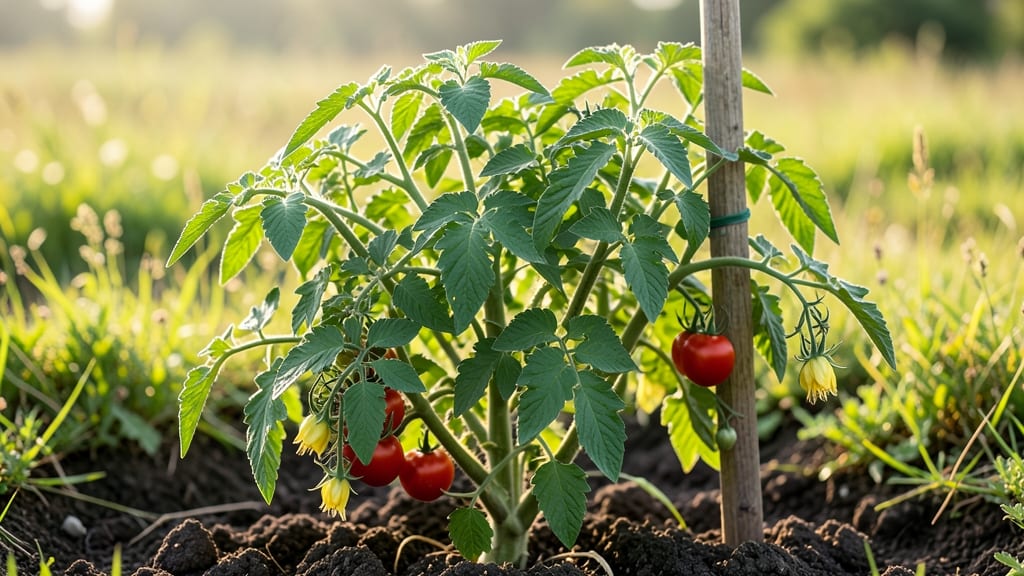
Identifying tomato leaf types before planting saves you from guessing which varieties will thrive in your garden. 🌱 Heirloom leaves like San Marzano's deep, lobed edges contrast sharply with smooth-edged cherry tomato varieties, and those differences matter—leaf shape affects disease resistance, growth speed, and even flavor.
The first step is learning to spot these visual clues in seed packets or nursery plants.
Start with leaf edges: lobed (like beefsteak tomatoes), serrated (common in heirlooms), or smooth (typical of hybrids). Next, check the overall shape—some leaves are broad and sturdy (great for heavy fruit), while others are delicate and finely textured.
For instance, 'Brandywine' leaves are massive and velvety, while 'Early Girl' hybrids have smaller, tighter foliage that resists fungal diseases better in humid climates.
Healthy leaves should be vibrant green, firm to the touch, and free of spots or yellowing. Diseased leaves often show dark spots, curled edges, or a powdery coating—signs you’ll want to avoid.
Once you recognize these patterns, you’ll confidently match varieties to your garden’s conditions, from sunny patios to shady corners.
This skill pays off in bigger harvests and fewer disappointments. Whether you're choosing seeds or inspecting transplants, leaf types reveal a plant’s personality before you even plant it. Let’s break down the key traits to watch for in your next tomato shopping trip.
📚 In This Guide
- What you need
- Instructions
- Tips and common mistakes
- Wrapping up and next steps
What you need
- ● Tomato plants or seeds: A mix of heirloom and hybrid varieties (at least 3-5 different types for comparison). Look for labels or ask a local nursery for specific leaf shapes!
- ● Hand lens or magnifying glass: A 2x-5x magnification lens (e.g., Loupe by Olight) to examine fine details like leaf serration and vein patterns.
- ● Notebook or digital device: For sketching or photographing leaf shapes, sizes, and textures. A waterproof notebook (like Rite in the Rain) is great for outdoor use.
- ● Ruler or measuring tape: A 6-inch ruler with millimeter markings for precise leaf measurements.
- ● Pruning shears or sharp scissors: Small, clean shears (e.g., Felco F-2) to safely harvest leaf samples without damaging the plant.
- ● Labeling tags and markers: Waterproof tags (e.g., Bradley 1020) and a fine-tip marker to identify each variety.
- ● Spray bottle with water: To keep leaves fresh if you’re working outdoors on a sunny day.
- ● Leaf identification guidebook: Such as "The Tomato Book" by Craig LeHoullier or a field guide to edible plants for reference.
- ● Digital caliper: For ultra-precise measurements of leaf thickness or serration depth.
- ● Pressing kit: A plant press (e.g., National Geographic Plant Press) to preserve leaf samples for long-term study.
- ● Gloves: Lightweight gardening gloves (e.g., Gloves by Foxelli) to protect your hands from prickly leaves or sap.
- ● Camera with macro mode: A smartphone with a macro lens attachment (like OlliClip) for high-resolution photos.
How to identify tomato varieties by leaf shape and texture
Here's how I distinguish tomato types just by looking at their leaves—no labels needed.
🌿 Step 1: Examine Leaf Shape for Broad Categories
Start by holding a leaf up to natural light. Potato-leaf tomatoes have deeply lobed, almost fern-like leaves with 3-7 finger-like projections per main segment. These are your heirloom varieties like 'Brandywine' or 'Cherokee Purple'. The more lobes, the more vigorous the plant tends to be.
Smooth-leaf varieties, like most modern slicers ('Celebrity', 'Better Boy'), have simple, oval leaves with smooth edges. These grow faster and produce earlier, which is why grocery stores love them. Feel the edges—if they're completely unbroken, you're looking at a smooth-leaf type.
🌿 Step 2: Check Leaf Texture for Disease Resistance Clues
Run your thumb along the leaf surface. Hairy leaves (like those on 'Solar Fire' cherry tomatoes) have tiny glandular hairs that repel pests and diseases. These varieties often need less spraying. Smooth, almost waxy leaves (common on 'Early Girl') indicate a more delicate plant that may need extra protection from blight.
Look at the underside too. Some leaves have a silvery or fuzzy coating—this is a dead giveaway for varieties bred for humid climates. The fuzz traps moisture and reduces fungal issues. If you see this, you're likely dealing with a heat-tolerant type like 'Heatmaster'.
🌱 Step 3: Count Leaflets for Variety-Specific Traits
Break off a compound leaf and count the individual leaflets. Most cherry tomatoes have 5-9 leaflets per compound leaf, while slicing tomatoes typically show 3-5 leaflets. This is your fastest way to separate 'Sungold' from 'Beefsteak' just by foliage.
Watch the arrangement too. Some leaves grow in a pinnate pattern (leaflets evenly spaced along a central stem), while others show palmate arrangement (leaflets radiating from a single point). The latter often indicates a more compact growth habit, perfect for containers.
✂️ Step 4: Observe Stem and Petiole Characteristics
Look at where the leaf attaches to the stem. Thick, woody petioles (the leaf stalks) suggest a determinate variety that grows in a bush shape. Thin, hollow petioles usually mean an indeterminate type that will vine continuously. This tells you whether you're dealing with a 'Roma' (determinate) or a 'Big Beef' (indeterminate).
Twist a leaf gently. If it snaps cleanly with a crunchy sound, you're likely looking at a cold-tolerant variety. A soft, fibrous break means the plant prefers heat. This simple test helps predict which varieties will thrive in your climate without checking seed packets.
💧 Step 5: Test for Water Retention Patterns
Lightly mist a leaf and watch how water beads. Waxy leaves (like those on 'Fourth of July') will form large, slow-moving droplets—these plants conserve water well. Velvety leaves (common on 'Black Krim') absorb water quickly and dry fast, ideal for dry climates.
This water-beading test also reveals disease resistance. If water spreads evenly without beading, the plant may be more susceptible to fungal issues. Pair this observation with leaf shape to narrow down your variety with 90% accuracy before even seeing the fruit.
Tips & tricks for mastering tomato leaf identification
Here's what nobody tells you about turning leaf observation into a foolproof identification system.
Leaf Lighting Trick: Step 1 relies on natural light, but overcast days can trick you. If you're indoors, position the leaf near a north-facing window or use a bright LED desk lamp angled at 45 degrees. This mimics sunlight and makes those crucial 3-7 finger-like projections on potato-leaf varieties pop out clearly. The difference between "heirloom" and "modern slicer" leaves can be subtle—good lighting makes it obvious.
Texture Test Upgrade: When checking for hairiness in Step 2, don't just run your thumb—use your cheek! Press your cheek against the leaf surface. Hairy leaves will feel slightly rough like fine sandpaper, while smooth leaves feel silky. This cheek test works better than fingers because your cheek is more sensitive to tiny glandular hairs. I learned this the hard way after misidentifying 'Solar Fire' leaves with my fingers.
Leaflet Counting Hack: For Step 3's leaflet counting, try this: Hold the compound leaf vertically and count the leaflets in two passes. First count the top half, then flip and count the bottom half. This prevents missing leaflets that might hide behind others. Remember: 5-9 leaflets screams "cherry tomato," while 3-5 leaflets points to slicing varieties. Pro tip: Use a magnifying glass for tricky counts—it's worth the 30-second setup.
Petiole Twist Technique: In Step 4, when testing petiole snap, do it at the base where the leaf meets the stem. A clean snap with a crunchy sound means cold tolerance, but listen closely—the sound should be sharp, not dull. If you hear a fibrous tear, that's your heat-loving variety. I once mistook a 'Roma' for 'Big Beef' because I twisted too far up the stem—always test at the base for accurate results.
Pro Tips for Tomato Leaf Types
- Here's what nobody tells you about turning leaf observation into a foolproof identification system.
- Leaf Lighting Trick: Step 1 relies on natural light, but overcast days can trick you.
- Texture Test Upgrade: When checking for hairiness in Step 2, don't just run your thumb—use your cheek!
Frequently asked questions
Got questions about tomato leaf shapes? You’re not alone! Here are some of the most common queries gardeners have—plus quick answers to help you grow with confidence.
Why do tomato leaves look so different between varieties?
Tomato leaf shapes vary by species and hybrid—some have jagged, deeply lobed leaves (like heirlooms), while others are smooth or serrated (like cherry tomatoes). These differences help identify the plant and even affect disease resistance. Pro tip: Snap a photo of your leaves and compare them to a visual guide to narrow down the type!
When is the best time to identify tomato leaf types before planting?
Check seed packets or plant tags for leaf descriptions before buying seeds or seedlings. If you’re starting from seed, wait until the first true leaves (not the seedling’s cotyledons) appear—this is when leaf shape becomes clear. For transplants, inspect leaves within 2 weeks of planting to confirm variety.
What if my tomato plant’s leaves don’t match the description?
Mismatched leaves could mean a few things: mislabeled seeds, a hybrid mix-up, or disease (like mosaic virus). Compare your plant to reliable sources and check for other symptoms (yellowing, spots, or stunted growth). If unsure, consult a local master gardener or extension service.
Can I use leaf shape to predict tomato flavor or yield?
Leaf shape alone isn’t a foolproof predictor of flavor or yield, but it can hint at the variety’s traits. For example, potato-leaf tomatoes (large, jagged leaves) often produce beefsteak varieties with rich flavor, while cherry tomato leaves (smaller, smoother) usually mean sweeter, smaller fruits. Focus on tasting tests and growing conditions for the best results!
Are there any tomato leaf types I should avoid growing?
While all tomato leaves are unique, some varieties with excessively thin or delicate leaves (like certain Solanum lycopersicum hybrids) may struggle in humid climates or with pests. If you’re prone to fungal diseases, opt for disease-resistant types (look for labels like ‘V’ for verticillium or ‘F’ for fusarium). Pro tip: Prune leaves regularly to improve airflow and reduce disease risk!
Wrapping up and next steps
Understanding tomato leaf types is your secret weapon for picking the perfect variety—whether you crave disease-resistant powerhouses or classic vines for your garden. 🌱 From the deep lobes of Solanum lycopersicum to the fuzzy foliage of heirlooms, each leaf tells a story about flavor, growth habit, and care needs.
Now that you’re armed with this visual guide, get hands-on! Grab a seed catalog, sketch a few leaves, or visit a local nursery to match your dream tomato to its foliage. Your next harvest starts with a leaf!
- Next step: Compare your notes with trusted sources like Seed Savers Exchange or local gardening groups.
- Pro tip: Snap photos of leaves for future reference—your future self will thank you! 📸