
Plants
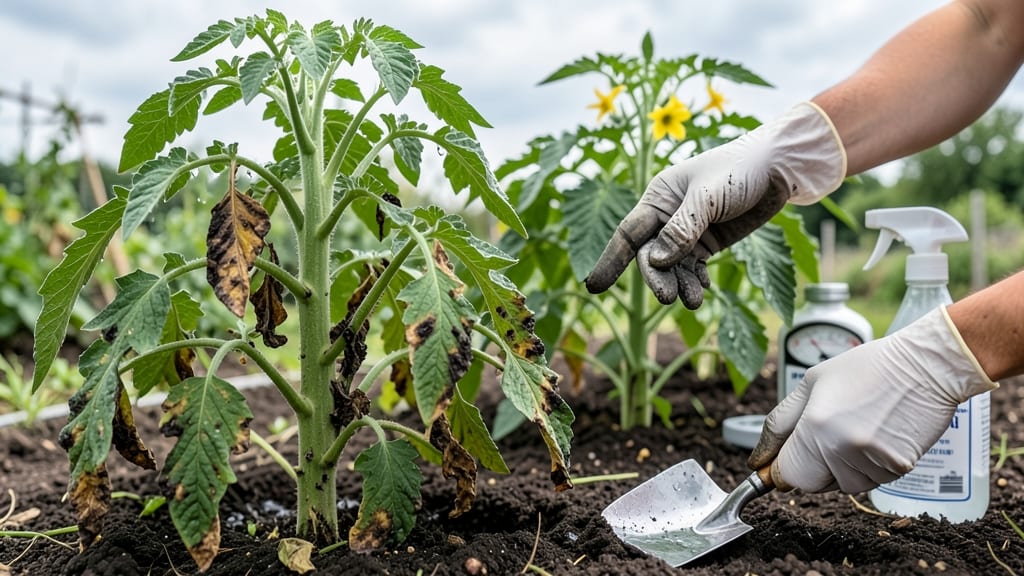
Tomato plant rot can turn your lush vines into a sad, wilting mess in days—unless you catch it early. 🌱 I’ve watched healthy plants collapse from blight and root rot, but I’ve also saved them by acting fast.
The key is spotting the signs before the damage spreads: yellowing leaves, dark spots, or stems that snap easily.
Most rot comes from too much water, poor drainage, or fungal infections—especially in hot, humid summers. My first garden disaster happened when I ignored the warning signs, thinking it was just heat stress.
By the time I realized it was blight, half my plants were gone. The good news? You can still save what’s left with the right steps.
Start by pruning infected leaves immediately and improving airflow around your plants. A simple mix of baking soda and water (1 tablespoon per gallon) can stop early blight in its tracks.
For root rot, adjust your watering and add compost to help the soil drain better. With quick action, your tomatoes can bounce back stronger than ever.
Prevention is easier than cleanup—focus on spacing plants properly, watering at the base, and choosing disease-resistant varieties. A few small changes now mean fewer battles later. Let’s get your tomatoes back on track!
Root Causes Of Tomato Plant Decay
Tomato plants can succumb to rot faster than you think—whether it’s a sudden wilting, blackened stems, or mushy fruit. Understanding the why behind these symptoms is the first step to saving your harvest.
Below, we break down the most common triggers, backed by science, so you can spot the red flags (literally) and act fast.
Tomatoes are thirsty plants, but too much water—especially when roots can’t breathe—turns soil into a bacterial and fungal buffet. Here’s how it happens:
- Waterlogged soil cuts off oxygen to roots, weakening their defenses. Fungi like Phytophthora thrive in soggy conditions, causing root rot (roots turn brown and mushy). - Compacted or clay-heavy soil drains poorly, trapping excess moisture.
Even "well-drained" potting mixes can fail if pots lack drainage holes. - Overhead watering (especially at night) keeps leaves damp, inviting stem rot (Sclerotinia or Botrytis) to set up camp.
💡 Pro Tip: Stick your finger 2 inches into the soil—if it’s damp, wait. Use a moisture meter for precision, and always water at the base, not the leaves.
Microbes don’t just happen—they’re waiting for the perfect moment to strike. These pathogens exploit stressed tomatoes:
| Pathogen | What It Does | Signs to Watch For | How It Spreads |
|---|---|---|---|
| Phytophthora | Attacks roots/stems; causes crown rot | Wilting, blackened stems, yellow leaves | Soil, contaminated tools, rain |
| Fusarium | Clogs plant’s vascular system (wilt) | Sudden drooping, vascular discoloration | Infected soil, seeds, wind |
| Alternaria | Spots on leaves/fruit (early blight) | Concentric rings, black lesions | Spores via water/splash |
| Pseudomonas | Bacterial soft rot | Mushy fruit/stems, foul odor | Contaminated water, wounds |
🔥 Key Trigger: Plants under stress (drought, nutrient deficiency, or injury) are 3x more susceptible to infections. Rot often starts where the plant is already struggling.
Tomatoes are tough, but extreme conditions push them past their limits:
- Temperature swings: Heat stress (above 90°F) weakens cell walls, making them vulnerable to rot.
Cold snaps (below 50°F) slow metabolism, reducing disease resistance. - Humidity traps: Stagnant air (like in greenhouses or dense foliage) slows evaporation, keeping leaves wet longer—ideal for fungal spores. - Poor airflow: Crowded plants or thick canopies trap moisture. Solution: Prune suckers and space plants 18–24 inches apart.
🌡️ Science Note: Fungi like Botrytis grow best at 60–80°F with 90%+ humidity. Break this cycle with fans or shade cloth.
Too much or too little of the wrong nutrients throws a plant’s immune system off balance:
- Excess nitrogen (N): Leads to soft, sappy growth—easy prey for rot. Think of it as a plant with a sugar rush but no defense. - Calcium deficiency: Weakens cell walls, causing blossom-end rot (black, leathery spots on fruit) or cracking stems. - Magnesium/potassium shortages: Reduce disease resistance.
Yellowing between leaf veins? That’s a magnesium cry for help.
📊 Fix It Fast: Flush soil with water to correct over-fertilization. For calcium, use crushed eggshells or a calcium nitrate spray (1 tsp/gallon).
Even minor injuries create entry points for pathogens:
- Pruning cuts: If tools aren’t sterilized (bleach solution), you’re inviting Fusarium to the party.
- Hail/wind damage: Bruised stems or fruit rot faster. Solution: Use row covers or stake plants early.
- Insect wounds: Aphids, hornworms, or even squirrels can chew through protective layers. Scout regularly!
✨ Prevention Hack: Seal pruning wounds with copper fungicide or cinnamon powder (natural antimicrobial).
Fixing Tomato Plant Rot: Step-by-Step Solutions
Tomato plant rot—whether it’s early blight, late blight, or root rot—can feel like a death sentence for your garden. But don’t toss those plants just yet! With the right approach, you can reverse the damage, save your tomatoes, and prevent future outbreaks.
Below, we break down cause-specific fixes, from quick remedies to long-term strategies, so you can get your plants back on track.
Early blight (Alternaria solani) starts with yellow lower leaves and progresses to dark, concentric spots. Here’s how to fight back:
🔥 Immediate Action: Prune and Isolate
- Remove infected foliage 🔪: Snip off leaves with dark spots (at least 6 inches below the damage) using sterilized pruners (wipe with rubbing alcohol between cuts). Do not compost these clippings—toss them in the trash.
- Space plants for airflow 🌬️: Early blight thrives in humidity.
Thin crowded plants or stake them to improve circulation. - Water at the base only 💧: Avoid overhead watering, especially in the evening. Use a soaker hose or drip irrigation to keep leaves dry.
🍳 Fungal Sprays: Natural and Chemical Options
| Method | How to Use | Frequency |
|---|---|---|
| Baking soda spray | Mix 1 tbsp baking soda + 1 tsp dish soap + 1 gallon water. Spray undersides of leaves. | Every 7–10 days |
| Neem oil | Combine 2 tbsp neem oil + 1 tsp soap + 1 gallon water. Spray in early morning (avoid direct sun). | Weekly until symptoms fade |
| Copper fungicide | Follow label instructions (e.g., CuProCide). Apply when leaves are dry. | Every 5–7 days |
🌡️ Long-Term Prevention
- Rotate crops 🔄: Avoid planting tomatoes (or nightshades like peppers/eggplants) in the same spot for 3–4 years.
- Solarize soil ✨: In hot climates, cover soil with clear plastic for 4–6 weeks to kill fungal spores.
- Choose resistant varieties 🌱: Try ‘Mountain Merit,’ ‘Defiant,’ or ‘Bush Early Girl’—they’re bred to resist early blight.
Late blight (Phytophthora infestans) spreads rapidly and can destroy plants in days. If you see greasy, dark spots on leaves or stems, act fast:
⚠️ Emergency Steps: Contain and Treat
- Quarantine infected plants 🚫: Move them far from healthy tomatoes (at least 10 feet away).
Cover with a tarp to prevent spore spread. - Remove ALL infected plant material 🗑️: Burn or trash it—do not compost. - Apply copper fungicide 🛡️: Use fixed copper (like Bonide Copper Fungicide) every 3–5 days until no new spots appear. - Remove mulch 🌿: Late blight spores lurk in organic mulch.
Replace with gravel or black plastic until the threat passes.
👨🍳 Organic and Chemical Boosts
- Serenade ASO 🌿: A biological fungicide with Bacillus subtilis bacteria. Spray every 7–10 days.
- Chlorothalonil (e.g., Daconil) 💊: A chemical last-resort for severe outbreaks. Follow label rates—do not eat tomatoes for 14 days post-application.
🎯 Prevention for Next Season
- Test soil moisture 💧: Late blight loves wet leaves.
Use raised beds or elevated rows to improve drainage. - Avoid night watering 🌙: Water before 10 AM so foliage dries by evening. - Monitor weather 🌦️: Late blight thrives in cool, wet conditions. Sign up for local plant disease alerts (e.g., from your state’s agricultural extension).
Root rot (Phytophthora or Pythium) causes wilting, yellowing, and mushy roots. If your tomato’s leaves droop but the soil feels soggy, it’s time to drain and dry:
💡 Quick Fixes: Save the Roots
- Stop watering immediately 🚰: Let the soil dry out completely (this may take a week).
- Improve drainage 🏗️:
- Add perlite or coarse sand to compacted soil.
- Plant in containers with drainage holes if in-ground soil is heavy clay.
- Repot if needed 🪴: If roots are severely rotted, trim healthy roots, treat with hydrogen peroxide (3%), and repot in fresh, sterile soil.
🔥 Soil and Care Adjustments
- Use fungicide soil drenches 💊: Mix mycorrhizal fungi (like MycoApply) or copper fungicide into water and soak the roots.
- Avoid over-fertilizing 🚫: Too much nitrogen promotes soft, weak roots.
Switch to a balanced 5-5-5 fertilizer once the plant recovers. - Mulch properly 🌾: Use straw or wood chips (not fresh mulch) to keep roots dry.
✨ Prevention Tips
- Test your soil 📊: Aim for a pH of 6.0–6.8 and good drainage.
Amend clay soil with compost and sand. - Water deeply but infrequently 💧: 1–1.5 inches per week (check with a trowel—soil should be dry 1–2 inches down). - Choose drought-tolerant varieties 🍅: ‘Solar Fire,’ ‘Heatmaster,’ or ‘Better Boy’ handle moisture stress better.
No matter the type of rot, these universal strategies will strengthen your tomato plants’ defenses:
- 💡 Pro Tip: Rotate planting spots—never grow tomatoes in the same place two years in a row.
- 🌡️ Heat It Up: Solarize soil in summer (cover with clear plastic for 6 weeks) to kill fungal spores.
- 🛡️ Boost Immunity: Feed plants with compost tea or kelp meal to improve natural resistance.
- 🚫 Clean Up: Remove all plant debris in fall—this breaks the disease cycle.
Remember: The key to beating tomato rot is speed and prevention. Catch it early, act decisively, and next season, your plants will be stronger and healthier—ready to produce juicy, rot-free tomatoes all season long! 🍅🌟
Frequently asked questions
What's the difference between early blight and late blight on tomato plants?
Early blight shows up as concentric brown rings on lower leaves first, while late blight creates greasy, dark spots with white mold that spreads rapidly to stems and fruit. Early blight progresses slowly, but late blight can destroy plants in days—especially in cool, wet weather.
Can I still harvest tomatoes from a plant with rot?
Yes, but only from healthy-looking fruit. Remove any tomatoes with dark spots or soft areas immediately. Wash all harvested tomatoes thoroughly before eating. For plants with late blight, wait 14 days after treatment before harvesting to ensure safety.
How do I know if my tomato plant has root rot or just needs water?
Root rot means the soil stays soggy even after watering, while thirsty plants have dry soil 1-2 inches down. Pull the plant gently—if roots are brown and mushy, it's rot. Healthy roots should be firm and white. Stop watering immediately if you suspect rot and improve drainage.
Will compost tea really help prevent tomato rot?
Compost tea boosts beneficial microbes that outcompete pathogens and strengthens plant immunity. Use it every 2-4 weeks during growing season. For extra protection, mix with 1 tablespoon baking soda per gallon to create a fungal-fighting spray.
Can I save a tomato plant that's already completely collapsed from rot?
Unfortunately, no. If the plant is completely wilted and stems are mushy, it's too far gone. Remove it immediately to prevent spreading spores. Focus on saving nearby healthy plants by improving airflow, adjusting watering, and applying copper fungicide.