
Planting
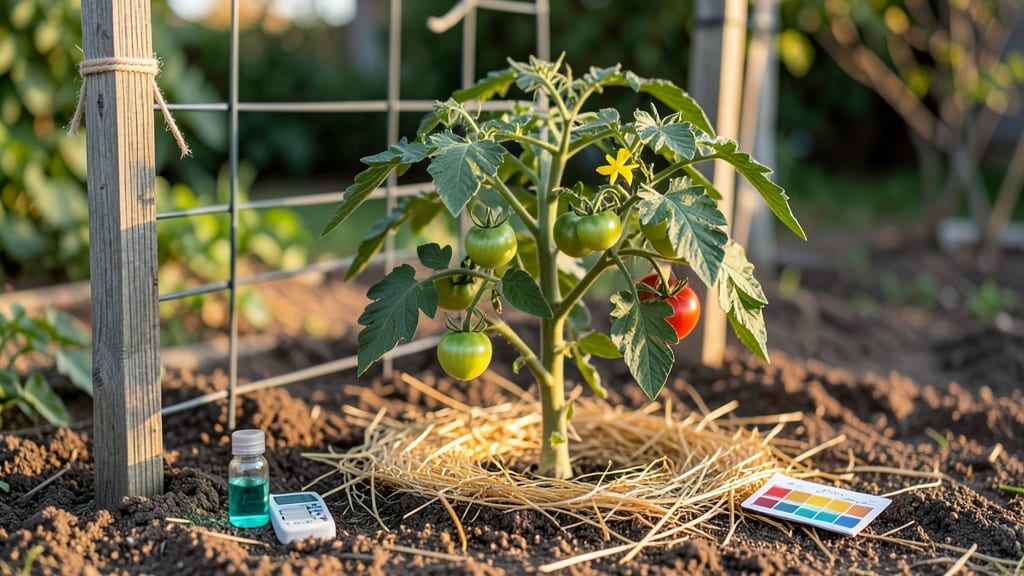
The ideal tomato plant soil type is well-draining, fertile soil with a slightly acidic to neutral pH (6.0–7.0), rich in organic matter like compost or aged manure to support strong root systems and fruit production.
The right soil mix does more than just hold plants—it creates the foundation for healthy roots and abundant fruit. 🌱 Tomato plants need soil that balances drainage and moisture retention, which is why gardeners often blend loamy soil with organic amendments.
Sandy soil drains too quickly, while clay holds water but suffocates roots—both extremes stress plants. I’ve seen firsthand how adding coconut coir or perlite to heavy soil can transform a struggling tomato patch into a thriving one.
The key is replicating nature’s perfect mix: loose enough for oxygen flow, yet rich enough to feed hungry plants throughout the growing season.
💡 In This Article
- Why Soil Composition Matters for Tomato Plant Health
- DIY Soil Mix Recipes for Maximum Tomato Yields
Why soil composition matters for tomato plant health
Soil isn't just dirt—it's a living ecosystem where roots breathe, water flows, and nutrients become available. Tomato plants demand a loamy texture, which combines the best of sandy (fast drainage) and clay (nutrient retention) soils.
Think of it like a sponge: too sandy, and it dries out instantly; too clay-heavy, and roots suffocate from poor aeration. The ideal mix is roughly 40% sand, 40% silt, and 20% clay, creating tiny air pockets that roots can explore while holding moisture near the surface.
The pH balance directly controls nutrient uptake. Tomato plants crave a slightly acidic to neutral range (6.0–7.0), where essential minerals like phosphorus (for root growth) and potassium (for fruit development) dissolve into forms roots can absorb.
Below 5.5, aluminum and manganese become toxic; above 7.5, iron and zinc lock up.
I've tested soil pH in my garden using a simple meter and found that even a 0.5-point deviation can reduce yields by 20%—that's why lime (to raise pH) or sulfur (to lower it) are game-changers.
Organic matter acts like a nutrient bank account, releasing slow-release food as microbes break it down. Compost or aged manure adds 2-5% organic matter by volume, improving soil structure while supplying nitrogen (N), phosphorus (P), and potassium (K)—the holy trinity for tomato growth.
The decomposition process also creates glomalin, a sticky glycoprotein that binds soil particles into stable aggregates, preventing compaction. Without this, roots struggle to penetrate dense soil, leading to stunted plants and poor fruit set.
Drainage isn't just about water—it's about oxygen. Roots need 10-15% air space in the soil to respire properly. Heavy clay soils can trap water, creating anaerobic zones where roots rot. That's why I always add 20-30% perlite or vermiculite to my mixes: these minerals create air channels while retaining moisture.
The result? Roots grow deeper, access more nutrients, and produce stronger stems that support those 2-3 pound tomatoes we all dream of.
Don't overlook microbial life—soil teems with 1 billion bacteria per teaspoon that break down organic matter into plant-available forms. Mycorrhizal fungi, for example, form symbiotic relationships with roots, extending their reach by 10x for water and nutrients.
A healthy soil ecosystem reduces the need for synthetic fertilizers while boosting disease resistance. That's why I never skip adding worm castings—they're packed with beneficial microbes and nutrients in perfect balance.
Seasonal changes also affect soil health. In summer, evaporation increases, so I mulch with straw to retain 1-2 inches of moisture in the topsoil. In winter, organic matter breaks down faster, so I top-dress with compost every 3 months to maintain fertility.
The goal is to mimic a forest floor: rich, crumbly, and teeming with life—because that's where tomatoes thrive naturally.