
Vegetables
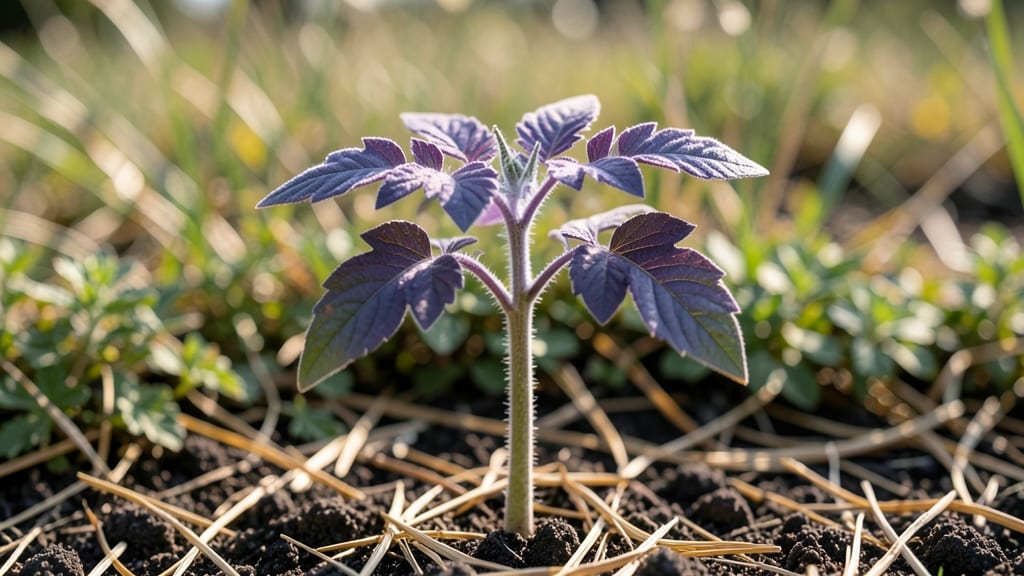
Seeing purple tomato seedlings is never a good sign—but it’s fixable. 🌱 The discoloration usually means phosphorus deficiency or stress, and the good news is that most cases respond quickly to targeted care.
I’ve helped dozens of gardeners turn purple stems back to vibrant green with simple adjustments to soil, water, and nutrients.
Phosphorus deficiency causes the purple hue, often triggered by over-fertilizing with nitrogen-heavy mixes or poor soil drainage. Environmental stress—like inconsistent moisture or extreme temperatures—can also trigger it. The key is acting fast: within 24-48 hours, you can reverse the damage before it weakens the plant’s root system.
Your first move should be a balanced fertilizer (10-10-10 ratio) or a diluted compost tea to restore nutrients. Improve drainage if your soil stays soggy, and avoid watering at night to prevent fungal stress. Most seedlings bounce back within 1-2 weeks of correction, producing sturdy stems ready for transplanting.
For severe cases where purple spreads to leaves or growth stalls, consult a local extension service. They can test your soil pH and recommend targeted amendments.
Prevention is easier: use well-aged compost, avoid over-fertilizing, and keep seedlings in consistent, moderate moisture. Healthy seedlings mean stronger plants and bigger harvests come summer.
Root Causes Of Purple Seedling Stems
Purple-tinged tomato seedlings might look like a striking garden feature, but it’s often a sign of stress or nutrient imbalance. Understanding the underlying causes helps you correct the issue before it affects plant health or yield.
Below, we break down the most common reasons why your tomato seedlings develop purple stems or leaves—and how to address them.
Purple discoloration in tomato seedlings is most commonly linked to phosphorus or nitrogen deficiencies, though other micronutrients can play a role.
🔥 Phosphorus Shortage: The Energy Crisis
Phosphorus is critical for root development, flowering, and energy transfer in plants. When seedlings lack it, stems and leaves may turn deep purple or violet, especially along the veins.
- Why it happens:
- Phosphorus is often locked in soil and unavailable to plants, especially in acidic or highly alkaline conditions.
- Over-fertilizing with nitrogen-heavy fertilizers (like urea) can starve roots of phosphorus uptake.
- Cold soil slows phosphorus absorption, making seedlings vulnerable.
- How to fix it: - Apply a balanced fertilizer (e.g., 10-10-10 or 5-10-10) with a higher phosphorus ratio (look for the middle number). - Use bone meal (3-4-0) or rock phosphate as a slow-release phosphorus source. - Test your soil pH—ideal for tomatoes is 6.0–6.8.
Adjust with lime (to raise pH) or sulfur (to lower it).
🍳 Nitrogen Deficiency: The Growth Slowdown
While phosphorus causes purple in stems, nitrogen deficiency often leads to pale purple or reddish hues, particularly in younger leaves. Nitrogen is essential for chlorophyll production and overall vigor.
- Why it happens:
- Overwatering leaches nitrogen from the soil.
- Poor-quality soil (e.g., sandy or peat-based mixes) lacks organic matter to retain nitrogen.
- Competition from weeds or other plants depletes available nitrogen.
- How to fix it:
- Add compost or well-rotted manure to improve soil fertility.
- Use a quick-acting nitrogen source like blood meal (12-0-0) or fish emulsion (5-1-1).
- Reduce watering slightly to prevent leaching (unless your soil is extremely dry).
👨🍳 Micronutrient Imbalances: The Overlooked Players
Sometimes, manganese, iron, or zinc deficiencies contribute to purple tinges, though they’re less common than phosphorus/nitrogen issues.
- Why it happens:
- High soil pH (>7.0) reduces manganese and iron availability, causing interveinal purple spots.
- Excessive calcium (from hard water or lime) can block micronutrient uptake.
- How to fix it:
- Lower pH with peat moss, pine needles, or sulfur.
- Apply a chelated micronutrient fertilizer (e.g., iron sulfate or manganese sulfate).
- Avoid over-limeing—stick to soil test recommendations.
Not all purple stems are nutrient-related—environmental factors can trigger discoloration as a stress response.
⏰ Temperature Fluctuations: The Cold Shock
Tomato seedlings are sensitive to cold, and sudden temperature drops (below 50°F/10°C) can cause purple stems or leaves as a survival mechanism.
- Why it happens:
- Cold soil slows nutrient absorption, leading to anthocyanin production (the pigment behind purple hues).
- Nighttime chills without daytime warmth stress the plant.
- How to fix it:
- Use row covers or cloches to protect seedlings from cold snaps.
- Hardened seedlings (acclimated to outdoor temps) handle fluctuations better—gradually expose them to cooler conditions.
- Avoid planting too early—wait until soil temps are consistently above 60°F/15°C.
🌡️ Heat or Drought Stress: The Survival Mode
While drought usually causes wilting or yellowing, severe water stress can trigger purple stems as the plant conserves moisture.
- Why it happens:
- Underwatering forces roots to work harder, leading to nutrient imbalances and stress pigments.
- High evaporation rates (hot, dry conditions) deplete soil moisture quickly.
- How to fix it:
- Water deeply but infrequently—tomatoes prefer 1–1.5 inches of water per week.
- Mulch heavily (straw or wood chips) to retain moisture and regulate soil temp.
- Avoid overhead watering—use drip irrigation to keep leaves dry and reduce stress.
In rare cases, fungal infections or pest damage can cause purple discoloration as a secondary symptom.
🔪 Fungal Infections: The Hidden Invaders
Pathogens like early blight or septoria leaf spot can cause purple-black lesions on stems and leaves.
- Why it happens:
- Overcrowded seedlings promote humidity and fungal spread.
- Poor air circulation (e.g., thick mulch or dense planting) traps moisture.
- How to fix it:
- Space seedlings 12–18 inches apart for airflow.
- Remove infected leaves immediately and destroy them.
- Apply copper fungicide or neem oil as a preventive spray.
Pro Tip: 💡 If purple stems appear suddenly and are accompanied by wilting or spots, rule out disease first—act fast to save your seedlings!
Quick Fixes for Purple Seedling Blues
If your tomato seedlings are showing up purple—whether it’s stems, leaves, or even the entire plant—don’t panic! 🌱💜 The good news is that most causes have simple, effective solutions. Below, we’ve broken down the fixes by root cause, so you can take action fast and keep your seedlings thriving.
Cause: Low nitrogen or phosphorus, often from poor soil or overwatering.
How to Fix It:
- 🌱 Amend the Soil
- Mix in compost or well-rotted manure (1-2 inches) around the base of seedlings. This boosts organic matter and nutrients.
- For quick results, use a balanced fertilizer (10-10-10 or 5-10-10) at half-strength. Water thoroughly after applying.
- 💡 Top-Dress with Nitrogen
- Sprinkle blood meal, fish emulsion, or coffee grounds (lightly!) around the seedlings. These are nitrogen-rich and help green up purple stems fast.
- Pro Tip: Avoid overdoing it—too much nitrogen can burn tender seedlings.
- 🌡️ Check pH Levels
- Test your soil pH (ideal for tomatoes: 6.0–6.8). If it’s too high (alkaline), add sulfur or peat moss to lower it.
- If too acidic, mix in lime (calcium carbonate) sparingly.
Prevention:
- Always prep soil with compost before planting.
- Use a slow-release fertilizer at planting time to avoid sudden nutrient spikes.
Cause: Heat stress, drought, or transplant shock turning leaves purple on the underside.
How to Fix It:
- 💧 Hydrate Deeply
- Water slowly and deeply at the base (not overhead) to prevent wilting. Purple undersides often signal thirst.
- Use mulch (straw or grass clippings) to retain moisture and cool roots.
- 🌿 Provide Shade
- If seedlings are in direct hot sun, move them to a shadier spot (e.g., under a 30% shade cloth) for a few days.
- Quick Fix: Place a white sheet or cardboard over the tray to block intense afternoon sun.
- 🌡️ Acclimate Gradually
- If transplanting, harden off seedlings over 5–7 days by exposing them to outdoor conditions slowly.
Prevention:
- Water consistently—tomato seedlings hate drying out.
- Avoid planting in peak afternoon heat (opt for early morning or late afternoon).
Cause: Overwatering or poor airflow leading to damping-off or early blight.
How to Fix It:
- 🔪 Prune Affected Areas
- Snip off purple-spotted leaves with sterilized scissors to prevent spread.
- Remove moldy soil from the tray and repot in fresh, dry mix.
- 🍳 Boost Fungicide Power
- Spray seedlings with a baking soda solution (1 tsp baking soda + 1 quart water + a drop of dish soap) every 7–10 days.
- For severe cases, use copper fungicide or neem oil spray.
- 🌬️ Improve Airflow
- Space seedlings 2–3 inches apart to reduce humidity buildup.
- Use a small fan on low setting (24/7) to circulate air.
Prevention:
- Water only when the top inch of soil is dry—never soggy.
- Avoid overcrowding in trays or containers.
If your seedlings are severely stunted, wilted, or covered in purple mold, it may be time to:
- Repot into fresh, sterile soil mix.
- Start over with new seeds if the issue persists (sometimes soil-borne pathogens are to blame).
Final Pro Tip: 🎯 Keep a garden journal! Note when you fertilize, water, or transplant—this helps you spot patterns and prevent future purple problems. Happy growing! 🍅✨
Frequently asked questions about purple tomato seedlings
Why do my tomato seedlings turn purple?
Purple stems or leaves usually signal phosphorus deficiency (most common) or nitrogen shortage. Cold soil, overwatering, or poor soil quality can also trigger this stress response. The plant produces anthocyanin pigments as a survival mechanism when struggling to absorb essential nutrients.
Is it safe to transplant purple tomato seedlings?
Only if the purple is mild and limited to stems—not leaves—and you’ve corrected the nutrient imbalance. Wait until the color fades to green (usually 3-5 days with proper care). Transplanting stressed seedlings risks further shock. Always harden off seedlings first for 5-7 days before moving them outdoors.
Can I fix purple seedlings with just water?
Water alone won't solve nutrient deficiencies, but proper hydration helps! Purple from drought stress may improve with deep watering (1-1.5 inches per week) and mulching. For nutrient-related purple, you'll need to amend soil with compost or a balanced fertilizer. Think of water as the first step—nutrients are the real fix.
What's the difference between purple from cold and purple from nutrients?
Cold-induced purple appears suddenly after temperature drops (below 50°F/10°C) and affects entire stems/leaves uniformly. Nutrient-related purple develops gradually, often starting at leaf undersides or stem bases. Check soil temperature—if it's cold, protect seedlings with row covers until soil warms to 60°F/15°C.
Will my tomato plants recover if they turn purple now?
Most seedlings recover completely within 1-2 weeks if you address the root cause. Early intervention prevents permanent damage. If purple spreads to leaves or growth stalls, act fast with targeted fertilizer and proper care. The key is consistency—maintain optimal soil moisture, temperature, and nutrients moving forward.