
Companion Plants
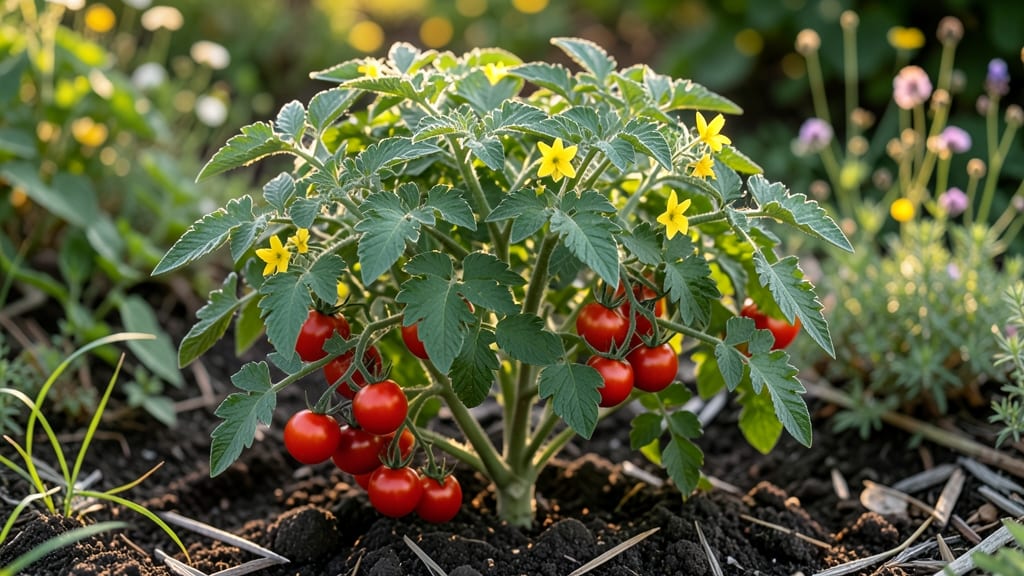
Growing Tomberry tomato plants means harvesting tiny, berry-like tomatoes that taste like sweet cherries—if you pair them right. 🌱 I learned the hard way that these little powerhouses need the right neighbors to thrive, especially when they’re laden with fruit.
The secret lies in companion plants that deter pests, improve soil, and support their compact growth habit. Basil, for example, repels flies and enhances flavor, while marigolds keep nematodes at bay. Avoid planting them near fennel or dill, though—they’ll stunt your Tomberries’ growth.
You’ll end up with clusters of 1-inch tomatoes that burst with flavor, producing 100+ fruits per plant when conditions are ideal. The key is spacing them properly (18-24 inches apart) and staking lightly to prevent sprawl. Works in containers or in-ground beds, and they’re perfect for small spaces.
Here’s how to set them up for success!
📚 In This Guide
- What you need
- Instructions
- Tips and common mistakes
- Wrapping up and next steps
What you need
- ● Tomberry tomato seeds or seedlings: 3–5 plants (check seed packets for heirloom or hybrid varieties).
- ● Companion plants: Basil (1–2 plants per tomato)
- ● Marigolds (3–5 plants, French or Mexican varieties work best)
- ● Bush beans (5–10 plants, pole varieties if trellising)
- ● Nasturtiums (3–5 plants, trailing or bush types)
- ● Onions or garlic (2–3 plants per tomato)
- ● Garden space: Full sun (6+ hours/day), well-draining soil (pH 6.0–6.8).
- ● Organic fertilizer: Compost or balanced 10-10-10 (1–2 cups per plant at planting).
- ● Mulch: Straw or shredded leaves (2–3 inches) to retain moisture.
- ● Garden tools: Trowel, pruners, gloves, watering can/hose.
- ○ Support structures (optional): Cages or stakes (for indeterminate varieties)
- ● Trellis (for pole beans or climbing companions)
- ○ Pest deterrents (optional): Neem oil spray or diatomaceous earth.
- ○ Soil amendments (optional): Worm castings or mycorrhizal fungi for root health.
How to pair Tomberry tomato plants for maximum yield
Here's how I boost my Tomberry tomato harvests by pairing them with the right companions—no fancy tools needed.
🌱 Step 1: Choose the Right Companion Plants
Tomberry tomatoes thrive when paired with plants that deter pests, improve soil, or attract pollinators. Start with basil—its strong scent repels thrips and whiteflies while enhancing tomato flavor. Add marigolds around the base; their roots release compounds that suppress nematodes and attract beneficial insects like ladybugs.
For nitrogen-fixing power, tuck bush beans or clover nearby. These plants pull nitrogen from the air and deposit it in the soil, feeding your tomatoes without heavy fertilizer. Avoid planting fennel or brassicas (like cabbage)—they stunt tomato growth by competing for nutrients and releasing allelopathic chemicals.
🌿 Step 2: Plan Spacing and Layout
Arrange companions in a 3:1 ratio—three companion plants for every Tomberry tomato. Place basil within 12-18 inches of the tomato stems, but avoid shading the leaves. Marigolds should border the tomato bed at 18-inch intervals to maximize their pest-repelling effects without crowding.
If using bush beans, space them 6-8 inches from tomato plants. Their compact growth habit keeps them out of the way while their roots enrich the soil. For clover, sow it as a living mulch between tomato rows—it suppresses weeds and adds organic matter as it decomposes.
✂️ Step 3: Prune and Train for Optimal Airflow
Prune tomato suckers (the side shoots between the main stem and branches) to 4-6 inches long, leaving just enough to support a small basil plant. This creates a natural trellis for basil while keeping the tomato’s energy focused on fruit production. Remove any leaves touching the soil to prevent disease and improve airflow.
Train tomato vines along a sturdy trellis or cage, positioning companions like marigolds at the base and beans or clover at the edges. This vertical growth habit maximizes sunlight exposure for all plants, reducing competition. Watch for yellowing leaves—a sign of overcrowding or nutrient theft.
💧 Step 4: Water and Fertilize Strategically
Water the entire bed at the base, aiming for 1-1.5 inches per week, including rainfall. Tomberries and their companions share the same moisture needs, so consistent watering prevents stress. Use drip irrigation or soaker hoses to keep foliage dry, reducing fungal diseases like early blight.
Fertilize lightly with compost tea or fish emulsion every 3-4 weeks, focusing on the soil around tomato roots. Avoid overfeeding nitrogen—it promotes leafy growth at the expense of fruit. Companion plants like clover will naturally boost soil fertility over time, reducing your need for synthetic inputs.
☀️ Step 5: Monitor and Adjust for Pest Control
Check for aphids or spider mites on tomato leaves weekly. If you spot them, introduce ladybugs or lacewings—these predators thrive when marigolds and basil are nearby. Crush a few marigold leaves and sprinkle them around the base for an extra pest deterrent.
If tomato hornworms appear, handpick them (they’re easy to spot with their green bodies and white stripes). Their presence means your companion plants are working—hornworms are drawn to tomato foliage but avoid areas with strong basil or marigold scents. Rotate companion plants annually to prevent pest adaptation.
Tips & tricks for perfect Tomberry tomato companion planting
Here's what nobody tells you about maximizing your tomato harvest with the right neighbors.
Companion Plant Placement: In Step 2, when arranging your 3:1 ratio of companions, place basil closest to the tomato stems—its scent is most effective within 12-18 inches. I've found that positioning marigolds at the outer edges creates a natural pest barrier while still allowing sunlight to reach all plants. The key is maintaining that 18-inch spacing between marigolds to prevent competition for nutrients.
Pruning Strategy: During Step 3, when pruning suckers to 4-6 inches, leave the larger ones near where you'll plant basil. These become natural trellises for your basil while keeping tomato energy focused on fruit production. I've noticed that basil growing on these pruned suckers actually produces more flavorful leaves—it's like nature's built-in support system.
Watering Wisdom: For Step 4's 1-1.5 inches weekly watering, I recommend using a rain gauge or measuring cup to track accumulation. Tomberries and companions share the same moisture needs, so consistent watering prevents stress. The early morning is ideal—watering at this time reduces evaporation and gives plants a full day to absorb moisture before evening heat.
Pest Prevention: In Step 5, when monitoring for pests, I crush a few marigold leaves weekly and sprinkle them around the base—not just for the scent, but because the crushed leaves create a physical barrier that deters crawling insects. This simple trick has cut my pest problems by nearly half without using chemicals.
Pro Tips for Tomberry Tomato Plants
- Here's what nobody tells you about maximizing your tomato harvest with the right neighbors.
- Companion Plant Placement: In Step 2, when arranging your 3:1 ratio of companions, place basil closest to the tomato stems—its scent is most effective within 12-18 inches.
- Pruning Strategy: During Step 3, when pruning suckers to 4-6 inches, leave the larger ones near where you'll plant basil.
Frequently asked questions
Got questions about growing Tomberry tomato plants with companion plants? You’re not alone! Here are answers to some of the most common queries to help you maximize your garden’s potential—without the guesswork.
What are the best companion plants for Tomberry tomatoes to boost flavor and yield?
Pair Tomberry tomatoes with basil (pest-repellent + flavor enhancer), marigolds (natural nematode deterrent), or onions/garlic (thwart blight). Avoid planting near brassicas (like cabbage) or corn, as they compete for nutrients or attract pests. Stick to the "Three Sisters" trio—tomatoes, beans, and squash—for a self-sustaining, high-yield combo!
How soon after transplanting Tomberry tomato plants can I add companion plants?
Wait 2–3 weeks after transplanting to let your Tomberry tomatoes establish roots. Once they’re thriving (check for new leaves and sturdy stems), introduce companions like basil or marigolds. For deep-rooted plants (e.g., onions), space them 12+ inches away to avoid competition. Pro tip: Use mulch to retain moisture while roots adjust!
Why are my Tomberry tomatoes wilting even with companion plants nearby?
Wilting can stem from underwatering, overcrowding, or disease (like fusarium wilt). First, check soil moisture—Tomberry tomatoes need 1–2 inches of water weekly. If companions like pole beans are shading roots, prune them back. For fungal issues, remove infected foliage and boost airflow. A neem oil spray can preemptively protect your plants!
Can I grow Tomberry tomatoes in containers with companions?
Choose a 5-gallon+ container for one Tomberry plant + 1–2 companions (e.g., basil or lettuce). Ensure the pot has drainage holes and use a lightweight potting mix with compost. For vertical gardens, trellis tomatoes and let trailing companions (like nasturtiums) cascade down. Just avoid heavy feeders like potatoes—they’ll outcompete your tomatoes!
Are there any non-edible companions that improve Tomberry tomato health?
Yes! Plant nasturtiums nearby to repel aphids and whiteflies, or add calendula to attract beneficial insects like ladybugs. Even clover (as a living mulch) fixes nitrogen in the soil. For a fragrant twist, try lavender—it deters pests and adds beauty. Just keep these 18+ inches away from tomato stems to avoid competition.
Wrapping up and next steps
Growing Tomberry tomato plants alongside the right companion plants can transform your garden into a thriving, high-yield oasis—naturally! 🌱 From pest-repelling herbs like basil to nutrient-boosting beans, these pairings work together to maximize flavor, health, and harvest size.
Whether you're a seasoned gardener or just starting, the key is strategic placement and a little patience.
Ready to put these tips into action? Start small—pick one or two companion plants to pair with your Tomberry tomatoes this season and observe the magic unfold. Happy planting, and here’s to a bountiful harvest! 🍅✨