
How To
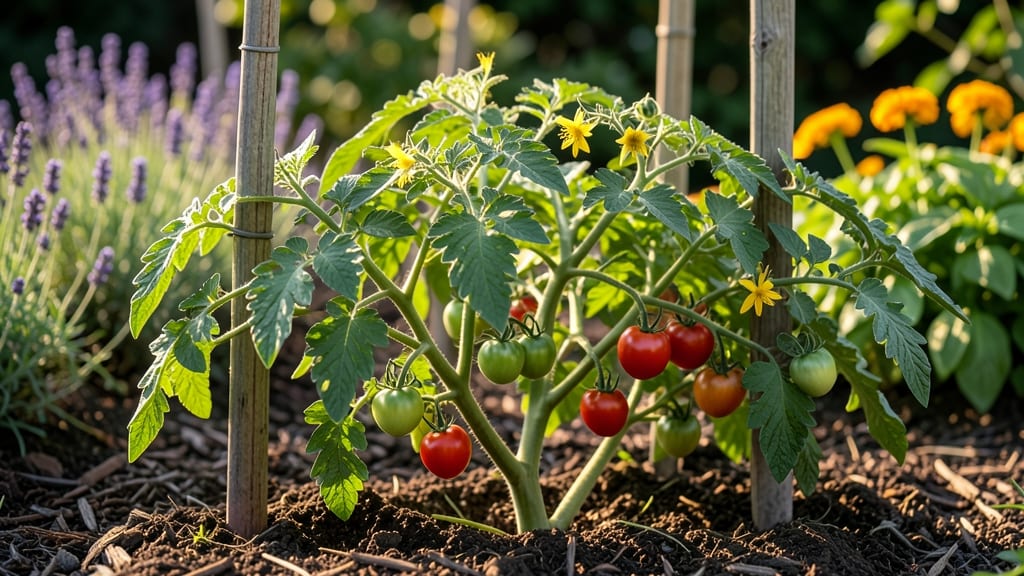
What do tomato leaves look like at their healthiest? They start as deep green, 5-6 inch ovals with jagged edges and prominent veins that fan out like a hand. ✨ The first leaves are fuzzy, but mature foliage smooths out—this is your baseline for healthy plants. Varieties like 'Roma' have narrower leaves, while beefsteaks develop broader, almost maple-like shapes.
Watch for subtle changes: yellowing edges signal overwatering, while brown spots with yellow halos often mean fungal issues. Curling leaves? Check for pests or too much sun. Knowing what's normal helps you spot problems early—before they threaten your harvest.
📚 In This Guide
- What you need
- Instructions
- Tips and common mistakes
- Wrapping up and next steps
What you need
- ● Healthy tomato plant(s) – At least one live specimen (or high-quality photos/videos if studying remotely). Look for plants with mature leaves (not just seedlings).
- ● Magnifying glass or hand lens – A 10x magnification works best for spotting fine details like vein patterns or leaf edges.
- ● Notebook or digital device – For jotting down observations (pen/pencil or a phone/tablet with a note-taking app).
- ● Ruler or measuring tape – To measure leaf size (inches or centimeters).
- ● Reference guide or app – A printed guide (e.g., Tomato Leaf Identification Chart) or a free app like PictureThis or PlantNet.
- ● Camera with macro mode – For close-up shots of leaf textures, colors, and undersides.
- ● Pruning shears or small scissors – To safely snip a leaf for closer inspection (if needed).
- ● White or light-colored background – A sheet or poster board to place leaves for better photo clarity.
- ● Field guidebook on tomato varieties – Books like The Tomato Encyclopaedia by Craig LeHoullier can be a game-changer!
- ○ Gloves (optional) – If handling plants with thorns or rough edges.
How to identify tomato leaves by variety
No need to guess—here's how to tell your tomato plants apart at a glance.
🌿 Step 1: Examine Leaf Shape and Texture
Start with the most obvious clue: leaf shape. Heirloom varieties like Brandywine have deeply lobed, jagged edges with a rough, hairy texture. Run your fingers along the leaves—you'll feel tiny bristles that deter pests. Compare that to modern slicing tomatoes like Better Boy, which have smooth, slightly serrated leaves with fewer lobes.
Look at the leaf veins too. Cherry tomatoes like Sweet 100 often have prominent, raised veins that create a web-like pattern. These leaves also tend to be smaller and more rounded than beefsteak varieties. If you're still unsure, flip the leaf over—some varieties like Black Krim have purplish undersides that darken as they mature.
🌱 Step 2: Check Leaf Color and Growth Pattern
Color reveals a lot about maturity. Young tomato leaves often start light green but develop darker, richer hues as they age. Purple-leaf varieties like Purple Russian show their true color from the first true leaves, while others like Early Girl stay consistently bright green unless stressed. Watch for variegation—some heirlooms like Green Zebra have stripes or splotches that appear early.
Notice how leaves grow on the stem. Determinate varieties (like Roma) have shorter internodes—leaves grow close together in tight clusters. Indeterminate types (like Beefsteak) stretch leaves far apart along vining stems. This spacing difference is your best clue when plants are still small.
☀️ Step 3: Compare Leaf Size and Arrangement
Leaf size correlates directly with plant type. Cherry tomatoes like Sun Gold have palmate leaves (finger-like lobes) that rarely exceed 3-4 inches wide. In contrast, beefsteak varieties like Arkansas Traveler develop massive, deeply lobed leaves that can reach 8-12 inches across. Measure a few leaves—this simple check eliminates half the possibilities instantly.
Observe how leaves attach to the stem. Compound leaves (multiple leaflets) appear on current-season growth, while simple leaves (single leaf) often signal older stems. This pattern helps distinguish between suckers (side shoots) and main stems. If you see clustered compound leaves, you're looking at vigorous indeterminate growth.
🌱 Step 4: Spot Varietal-Specific Traits
Some varieties have signature leaf characteristics that appear early. Black Russian tomatoes develop purple-tinged stems alongside their leaves. Costoluto Genovese leaves have wavy, almost crinkled edges that set them apart. Even disease-resistant hybrids like Mountain Merit show thicker, waxier leaves that repel common tomato blights.
Pay attention to leaf edges. Curly kale-like leaves appear on heirloom paste tomatoes like San Marzano. Rough, sandpapery textures often indicate drought-tolerant varieties like Solar Fire. These subtle differences become obvious once you've handled 20 different plants—your fingers learn before your eyes do.
✂️ Step 5: Verify with Flower and Fruit Clues
While not leaves themselves, flower clusters give away varieties. Determinate tomatoes (like Celebrity) have flat-topped flower clusters, while indeterminate types (like Big Beef) grow pyramid-shaped clusters that continue producing all season. If you see single flowers instead of clusters, you're likely dealing with a cherry tomato variety.
Check for leaf scars on mature plants. Pruned stems (from suckers) leave clean, diagonal cuts, while naturally fallen leaves create ragged edges. These scars help track a plant's growth history and confirm whether you're seeing first-year leaves (smaller, simpler) or mature foliage (larger, more complex).
Tips & tricks for identifying tomato varieties by leaves
Here's what nobody tells you—these tricks will help you spot tomato varieties like a pro, even when the plants are still small.
Leaf Texture is Your First Clue: The hairiness of leaves can tell you a lot. Heirloom varieties like Brandywine have noticeably rough, hairy leaves that feel almost fuzzy to the touch. These tiny hairs aren't just for show—they help deter pests naturally. Compare this to modern varieties like Better Boy, which have smooth, almost waxy leaves. Run your fingers across a few leaves—you'll quickly notice the difference between the bristly heirlooms and the sleek hybrids.
Underside Secrets: Flip leaves over and you'll find hidden clues. Some varieties like Black Krim develop striking purple undersides as they mature, while others remain consistently green. This is especially helpful when comparing leaves from different plants that look similar from the top. The underside color often becomes more pronounced when the plant is stressed by heat or drought, so check during hot afternoons for the best contrast.
Growth Pattern Matters: Pay attention to how leaves attach to the stem. Determinate varieties like Roma have leaves growing in tight clusters with short internodes between them. Indeterminate types like Beefsteak stretch leaves far apart along vining stems. This spacing difference becomes obvious even on young plants. If you're still unsure, look at the stem scars—clean diagonal cuts indicate pruned suckers, while ragged edges show where leaves naturally fell off as the plant matured.
Size Comparison Shortcut: Measure a few leaves—this simple trick eliminates half the possibilities instantly. Cherry tomato varieties like Sun Gold rarely produce leaves wider than 3-4 inches, while beefsteak varieties can develop leaves reaching 8-12 inches across. Keep a small ruler in your gardening toolkit for quick measurements. You'll be amazed how quickly this simple check helps narrow down your options, especially when comparing plants side by side.
Pro Tips for What Do Tomato Leaves Look Like
- Here's what nobody tells you—these tricks will help you spot tomato varieties like a pro, even when the plants are still small.
- Leaf Texture is Your First Clue: The hairiness of leaves can tell you a lot.
- Underside Secrets: Flip leaves over and you'll find hidden clues.
Frequently asked questions
Got questions about tomato leaves? You’re not alone—even seasoned gardeners need a quick refresher! Here are answers to the most common queries to help you spot, identify, and care for tomato foliage like a pro.
What do healthy tomato leaves look like?
Healthy tomato leaves are green, glossy, and smooth, with jagged or serrated edges. They’re typically 5-8 inches long, depending on the variety. Look for a deep, vibrant hue—not yellow, brown, or spotted. Young leaves may appear slightly fuzzy, but mature leaves should be sleek. Pro tip: Hold a leaf up to light—veins should be clearly visible without dark streaks.
Why are my tomato leaves turning yellow?
Yellowing leaves (a condition called chlorosis) usually signal overwatering, nutrient deficiency, or disease. Check the soil—if it’s soggy, reduce watering. Yellowing only on older leaves? Likely a nitrogen deficiency (feed with compost or fertilizer). Yellow edges with crispiness? Your plant may be thirsty or suffering from early blight—remove affected leaves and improve airflow. Act fast: Prune yellowed leaves to redirect energy to healthy growth.
How can I tell the difference between tomato and potato leaves?
Tomato and potato leaves are easily confused, but here’s how to spot the difference:
Feature
Tomato Leaves
Potato Leaves
Shape
Deeply lobed, irregular jagged edges
Smooth or slightly wavy, shallow lobes
Texture
Glossy, hairy when young
Duller, rougher surface
Size
Larger, 5-8 inches
Smaller, 3-6 inches
Still unsure? Check the flowers/fruit—tomatoes have yellow clusters, while potatoes produce purple or white blossoms.
What do tomato leaves look like when they’re diseased?
Diseased tomato leaves often show distinct patterns:
- Early blight: Brown concentric rings on older leaves (starts at edges).
- Late blight: Dark, greasy spots that spread rapidly (often fatal—remove plants immediately!).
- Powdery mildew: White, powdery coating on leaf surfaces (common in humid conditions).
- Spider mites: Yellow stippling + fine webbing on undersides.
Prevent spread: Prune infected leaves, avoid overhead watering, and use fungicides if needed.
Can I eat tomato leaves if they’re healthy?
Yes! Young, tender tomato leaves are edible and packed with vitamin K, potassium, and antioxidants. Use them in salads, pestos, or as a garnish—they taste mildly grassy. But avoid:
- Leaves from store-bought tomatoes (often treated with pesticides).
- Old or woody leaves (tough and bitter).
- Leaves with spots, holes, or chemical residue.
Fun fact: Some chefs use them like spinach—blanch and sauté for a unique twist!
Wrapping up and next steps
Now that you’ve mastered the art of spotting tomato leaves—from the deep green serrations of heirlooms to the fuzzy foliage of Solanum habrochaites—you’re well-equipped to identify your plants with confidence! 🌱 Whether you’re troubleshooting pests, admiring your garden, or planning new varieties, recognizing these leaf shapes and textures is your secret weapon.
Ready to take it further? Snap a photo of your tomato leaves, compare them to your newfound knowledge, and share your finds with fellow gardeners! Happy growing!