
Planting
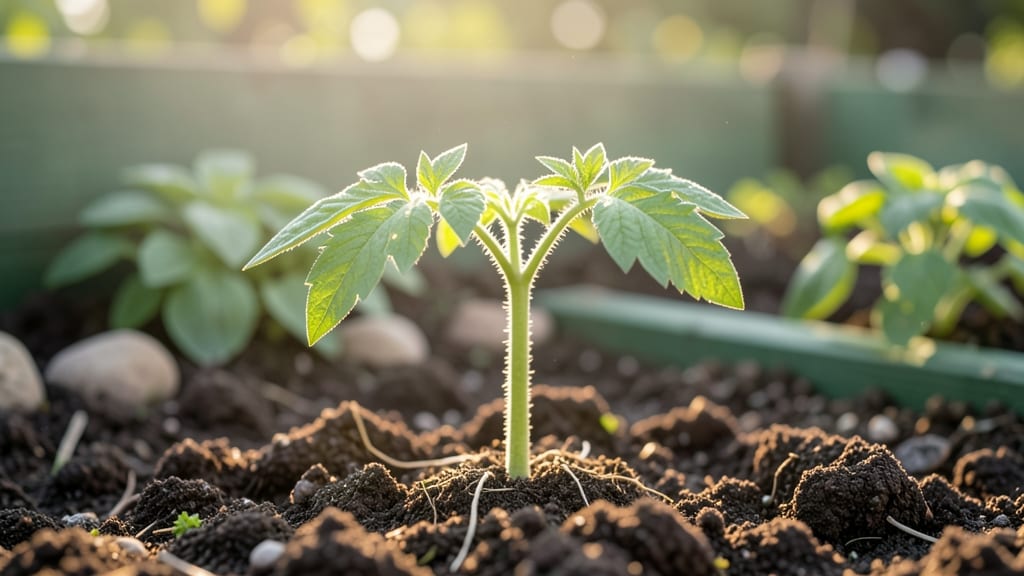
Tomato plant sprouts first look like delicate, pale green or white hair-like strands pushing through the soil. Within a week, they grow into straight, thin stems topped with small, rounded cotyledons—the first leaves that appear before the plant develops its signature tomato foliage.
Those initial sprouts are actually the seed's embryonic shoot breaking through the soil, and their color can vary based on lighting and seed type. 🌱 The cotyledons, which look like tiny shields, store nutrients from the seed to fuel early growth.
What's fascinating is how quickly these sprouts transition—within just 10-14 days, you'll see the first true tomato leaves emerge, which are more elongated and serrated compared to the smooth cotyledons.
This early stage is also when you can spot potential issues. Weak sprouts might appear stunted or yellowish, while healthy ones grow upright with vibrant color. I always recommend keeping sprouts in warm, well-lit conditions to prevent legginess—a common problem where stems stretch too tall in search of light.
💡 In This Article
- Identifying Tomato Seedling Stages by Visual Clues
- Tips for Encouraging Healthy Tomato Sprout Growth
Identifying tomato seedling stages by visual clues
The very first tomato sprouts appear as 1-2 inch pale green or white filaments breaking through the soil, often within 5-10 days of planting seeds. These delicate shoots are actually the hypocotyl—the embryonic stem—that pushes upward through the seed coat.
Under ideal conditions (warmth and moisture), they grow at a rate of about 0.5 inches per day, though this can slow dramatically if soil temperatures drop below 60°F. 🌱
Once the sprouts reach about 1 inch tall, they develop into the cotyledon stage, where two small, rounded leaves unfurl from the stem. These cotyledons (often called "seed leaves") are the plant's first true photosynthetic structures, though they don't resemble mature tomato leaves.
They appear smooth-edged and shield-shaped, typically 0.5-1 inch wide, with a slightly waxy texture that helps retain moisture. This stage lasts about 7-10 days before the first true leaves emerge.
The next phase introduces the first true tomato leaves, which are serrated and more elongated than cotyledons, often with a slightly hairy texture. These leaves appear in a spiral pattern around the stem and are typically 1-2 inches long when they first unfurl.
Here's where you can distinguish tomato seedlings from similar plants: unlike pepper seedlings (which have smooth, oval leaves) or basil (which has more jagged edges), tomato leaves have a distinctive lobed, serrated appearance that becomes more pronounced as the plant matures.
Watch for early warning signs of stress or disease during these stages. Yellowing cotyledons often indicate overwatering or poor drainage, while purple or reddish stems suggest phosphorus deficiency.
Leggy seedlings (stems stretching more than 3 inches tall) typically result from insufficient light, causing the plant to stretch toward any available source. In contrast, healthy seedlings grow upright with stems about 1-2 inches tall and leaves that remain a vibrant green.
Another key visual clue is the root system. While you can't see it without disturbing the plant, healthy tomato sprouts develop a strong taproot that grows downward while the stem grows upward. Weak sprouts may have shallow, sparse roots that fail to anchor properly.
This is why maintaining consistent moisture (but not soggy soil) is crucial—dry soil can stunt root growth, while excess water can cause rot.
For comparison, here's how tomato seedlings differ from common garden mistakes:
- Tomato sprouts: Pale green/white filaments → cotyledons → serrated true leaves
- Pepper seedlings: Smooth, oval leaves with no serration
- Basil seedlings: More jagged edges, smaller overall size
- Damping-off (disease): Sprouts collapse at soil level, turning brown
Understanding these visual cues helps you intervene early—whether it's providing more light for leggy seedlings or adjusting watering to prevent fungal issues. The cotyledon stage is particularly critical because it's when the plant transitions from relying on seed nutrients to producing its own food through photosynthesis. 💫