
Planting
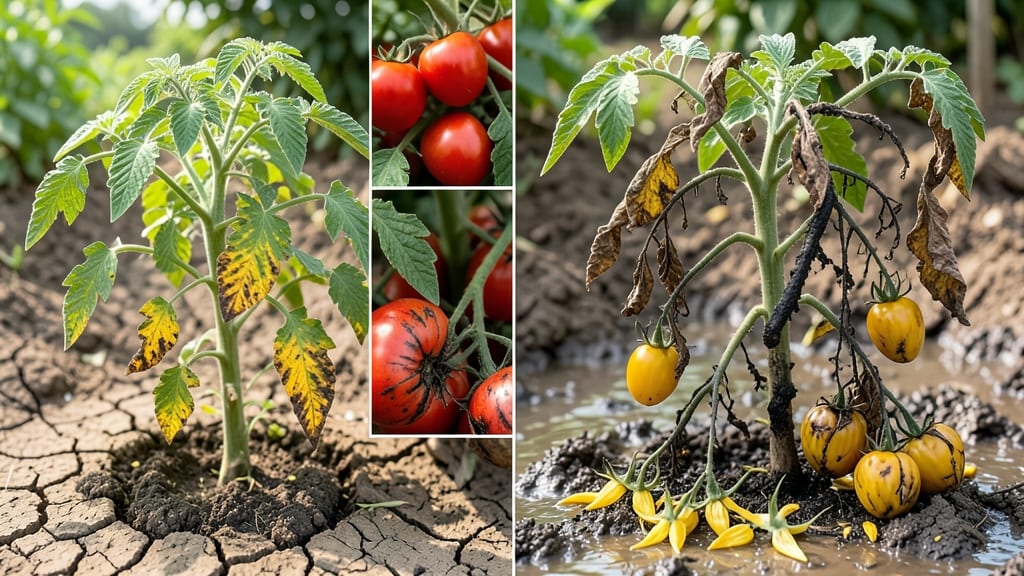
A dying tomato plant looks like this: limp leaves that refuse to perk up—even after watering. 🌱 The first red flag is yellowing between the leaf veins, followed by brown spots that spread like ink on wet paper.
I’ve seen this too many times: one morning the plant’s vibrant green, and by afternoon, it’s a sad, wilted mess. The culprits are usually overwatering (roots drowning in soggy soil), fungal blight (especially in humid weather), or pests like aphids sucking the life out of stems.
Check the soil first—it should feel like a damp sponge, not a swamp. If you see black or dark brown patches on leaves, that’s often early blight, which spreads fast if you don’t act.
Your next move depends on the damage: prune away infected leaves immediately, improve airflow with stakes or cages, and water at the base—not overhead. For stubborn cases, a copper fungicide spray (or baking soda mix) can turn things around if caught early. The good news? Tomato plants are resilient.
With the right fix, you’ll see fresh green growth within a week. Here’s how to diagnose and save yours before it’s too late.
Common Causes Of Tomato Plant Decline
When your tomato plants start looking off, it’s usually a sign that something’s gone wrong beneath the surface. Understanding the root causes (pun intended!) helps you act fast before it’s too late.
Below, we break down the most common reasons your tomato plants might be struggling—and what’s really going on in their tiny, stressed-out worlds.
Tomatoes are thirsty, but too much love in the wrong way can drown them. Overwatering or soggy soil deprives roots of oxygen, leading to:
- Root rot: Fungal infections like Phytophthora thrive in waterlogged soil, turning roots mushy and black.
- Wilting despite wet soil: Roots can’t absorb water efficiently when suffocated, causing leaves to droop even if the soil feels damp.
- Yellowing lower leaves: A classic sign of poor oxygen flow to roots, often starting at the base.
💡 Pro Tip: Stick your finger an inch into the soil—if it’s damp, wait. Use raised beds or containers with drainage holes to prevent waterlogging.
Tomatoes need consistent moisture, especially during fruiting. Skip a watering session or let the soil dry out too much, and you’ll see:
- Crispy, curled leaves: Heat stress causes leaves to pucker and turn brown at the edges.
- Blossom end rot: Calcium uptake drops when roots can’t absorb water, leading to black, sunken spots on tomatoes.
- Stunted growth: Plants conserve energy by slowing down, resulting in fewer flowers or fruits.
🔥 Fix It: Water deeply (1–2 inches per week) and mulch to retain moisture. Early morning watering prevents evaporation.
Hidden invaders can sabotage your plants faster than you think. Look for these red flags:
- Holes in leaves or stems: Caterpillars, hornworms, or aphids chew through foliage, weakening the plant.
- White powdery spots: Powdery mildew thrives in humid conditions, coating leaves and blocking sunlight.
- Black spots or mold: Early blight or late blight (that infamous Irish potato famine culprit!) cause dark, circular lesions.
- Sticky residue: Aphids or spider mites excrete honeydew, attracting sooty mold.
🛡️ Defense Strategy: Inspect plants weekly, remove infected leaves, and use neem oil or insecticidal soap for pests. Rotate crops yearly to prevent soil-borne diseases.
Tomatoes are heavy feeders, and poor soil nutrition shows up in surprising ways:
| Symptom | Likely Cause | Quick Fix |
|---|---|---|
| Yellow leaves with green veins (older leaves first) | Nitrogen deficiency | Add compost or a balanced fertilizer (e.g., 10-10-10). |
| Purple stems or undersides of leaves | Phosphorus deficiency | Use bone meal or a high-phosphorus fertilizer (e.g., 5-10-10). |
| Yellowing between leaf veins (younger leaves) | Magnesium or potassium deficiency | Apply Epsom salt (magnesium) or wood ash (potassium). |
| Stunted growth, weak stems | Calcium deficiency (common in acidic soil) | Crush eggshells into soil or use calcium nitrate. |
🌡️ Soil Test Tip: Test your soil’s pH (aim for 6.0–6.8 for tomatoes). Adjust with lime (to raise pH) or sulfur (to lower it).
Even the best-maintained tomato plants can suffer from external factors:
- Windburn: Fast-moving air dries out leaves, causing brown, papery edges.
- Frost damage: Temperatures below 50°F (10°C) can blacken leaves overnight.
- Poor air circulation: Dense foliage traps humidity, inviting fungal diseases like septoria leaf spot.
- Transplant shock: Moving plants disrupts roots, leading to wilting or stunted growth for 1–2 weeks.
🌿 Solutions: Use windbreaks, mulch to protect roots from temperature swings, and prune for airflow. Avoid transplanting during heatwaves.
Most tomato plant problems stem from a mix of these issues—but the good news? They’re fixable if you catch them early. Next, we’ll cover how to diagnose your plant’s specific distress signals and revive it before it’s too late. 🍅💪
Revive Your Tomato Plant Now
Seeing your tomato plant wilt or droop can feel like a gut punch—especially when you’ve poured time and care into it. But don’t toss it just yet! With the right fixes, you can often bring it back to life. Below, we’ve mapped out practical solutions for the most common causes of a dying tomato plant, along with prevention tips to keep your garden thriving. Let’s get to work! 🌱💪
If your tomato plant’s leaves are yellowing, mushy, or wilting despite wet soil, it’s likely drowning in too much water. Roots need air, not a swamp!
How to Fix It:
💧 Step 1: Stop Watering Immediately
- Let the soil dry out for 2–3 days to prevent further root rot. Stick your finger 1–2 inches into the soil—if it’s soggy, hold off.
🌱 Step 2: Improve Drainage - If your pot lacks drainage holes, transfer the plant to a container with them.
For in-ground plants, amend the soil with compost or perlite to loosen it up. - Pro Tip: 💡 Raise containers slightly off the ground to prevent water pooling at the bottom.
🔄 Step 3: Prune Damaged Leaves
- Snip off any black, mushy, or yellow leaves with clean scissors. This helps the plant redirect energy to healthy growth.
Prevent It:
✅ Water deeply but infrequently—aim for 1–1.5 inches per week, adjusting for rain. ✅ Use well-draining soil—mix in coconut coir or vermiculite if your soil is clay-heavy. ✅ Check for soggy spots—if your garden has poor drainage, consider planting in raised beds.
Crispy, brown edges on leaves or a plant that’s limp to the touch? It’s thirsty—or overheating. Tomatoes need consistent moisture, especially in hot weather.
How to Fix It:
💦 Step 1: Water Thoroughly at the Base
- Soak the soil until water runs out the drainage holes (for pots) or seeps 6–8 inches deep (for in-ground plants). Avoid wetting leaves to prevent disease.
🌿 Step 2: Provide Shade (Temporarily)
- If temperatures are above 90°F (32°C), shield the plant from direct sun with a shade cloth or move potted tomatoes to a spot with afternoon shade.
🍃 Step 3: Mulch to Retain Moisture
- Spread 2–3 inches of mulch (straw, wood chips, or grass clippings) around the base to lock in moisture and cool roots.
Prevent It:
✅ Water in the morning—this reduces evaporation and gives plants a drink before the heat peaks. ✅ Use drip irrigation—it delivers water directly to roots, minimizing waste. ✅ Choose heat-tolerant varieties—look for ‘Heatmaster’ or ‘Solar Fire’ tomatoes if you live in a hot climate.
Spotted, moldy, or oozing leaves? Fungal diseases like early blight or bacterial spot can spread fast if left unchecked. Act quickly to save your plant!
How to Fix It:
🧴 Step 1: Remove Infected Parts
- Clip off all diseased leaves (including those touching the soil) with sterilized pruners (wipe with rubbing alcohol between cuts).
🌧️ Step 2: Apply a Fungicide
- Spray with a copper-based fungicide (like Cupron) or a baking soda solution (1 tsp baking soda + 1 quart water + a drop of dish soap). Reapply every 7–10 days.
🌬️ Step 3: Improve Airflow
- Prune nearby plants to open up the garden and reduce humidity around your tomato. Stake or cage your tomato to keep foliage off the ground.
Prevent It:
✅ Water at the base—never overhead to avoid spreading spores. ✅ Rotate crops—don’t plant tomatoes in the same spot yearly (wait 3 years before replanting). ✅ Choose resistant varieties—look for ‘Defiant PhR’ or ‘Mountain Merit’ tomatoes, which are bred for disease resistance.
Yellowing between leaf veins? Stunted growth? Your tomato might be hungry! Tomatoes are heavy feeders and need a steady supply of nutrients.
How to Fix It:
🌱 Step 1: Test Your Soil
- Grab a soil test kit (or send a sample to your local extension office) to check pH and nutrient levels. Tomatoes thrive in slightly acidic soil (pH 6.0–6.8).
🍲 Step 2: Fertilize Properly
- For nitrogen deficiency (yellow lower leaves): Use a balanced fertilizer (like 10-10-10) or compost tea.
- For magnesium deficiency (yellow patches between veins): Sprinkle Epsom salt (1 tbsp per gallon of water) every 2 weeks.
- For potassium deficiency (weak stems, poor fruit): Apply a banana peel tea (soak peels in water for a week) or a potassium-rich fertilizer.
💧 Step 3: Feed Regularly (But Not Too Much!)
- Feed every 2–3 weeks during the growing season, but stop fertilizing 2 weeks before harvest to avoid bitter fruit.
Prevent It:
✅ Mulch heavily—this slows nutrient loss and keeps roots cool. ✅ Use organic matter—compost or well-rotted manure adds nutrients over time. ✅ Avoid over-fertilizing—too much nitrogen leads to lush leaves but few tomatoes!
Holes in leaves, chewed stems, or sticky residue? Pests like aphids, hornworms, or whiteflies can drain a tomato plant’s vitality overnight.
How to Fix It:
🐜 Step 1: Inspect & Remove Pests
- Handpick hornworms or large caterpillars (they’re easy to spot!).
- Blast off aphids with a strong spray of water from a hose.
- Vacuum up spider mites with a shop vac (they’re tiny but destructive).
🌿 Step 2: Use Natural Repellents
- Neem oil spray (mix 1 tbsp neem oil + 1 tsp mild soap + 1 quart water)—spray early morning or evening to avoid harming bees.
- Plant companion crops like basil, marigolds, or nasturtiums to deter pests.
- Introduce beneficial insects—ladybugs and lacewings eat aphids and mites naturally.
Prevent It:
✅ Inspect plants weekly—catch infestations early! ✅ Remove weeds—they harbor pests and diseases. ✅ Rotate planting locations—this disrupts pest life cycles.
With these fixes, your tomato plant should bounce back in 1–2 weeks (or less for minor issues). Keep an eye on it, adjust care as needed, and soon you’ll be harvesting juicy, vine-ripened tomatoes instead of mourning a lost plant. Happy gardening! 🍅🌟
Frequently asked questions
Can a tomato plant recover if the leaves are completely brown and crispy?
It depends on how much of the plant is still healthy. If only the outer leaves are brown but the inner growth remains green, prune the dead leaves and improve care—your plant may bounce back! However, if the stems are mushy or the entire plant is brown, it’s likely too late. Focus on saving any remaining green growth for future harvests.
What’s the difference between wilting from thirst and wilting from root rot?
Thirst-induced wilting happens during hot days—leaves droop but perk up when watered. Root rot wilting is persistent: leaves stay limp even after watering, and the soil smells sour or rotten. Check the roots—healthy roots are firm and white, while rotten roots are black and mushy.
Why are my tomato plant’s leaves curling but the soil feels damp?
Curling leaves with damp soil usually mean overwatering or pests. First, check for aphids or spider mites on the undersides. If no pests, your roots may be suffocating—stop watering for 2–3 days and improve drainage. Mulch can also trap too much moisture, so remove excess mulch if present.
How do I know if my tomato plant is dying from disease or nutrient deficiency?
Diseases (like blight) show up as spots, mold, or oozing lesions, while deficiencies cause uniform yellowing or discoloration. For example, nitrogen deficiency turns lower leaves yellow with green veins, while early blight creates dark, concentric spots. Test your soil if unsure—nutrient issues respond to fertilizers, while diseases need fungicides.
Is it too late to save my tomato plant if it’s stopped producing flowers?
Not necessarily! Stunted flowering often means stress from heat, drought, or poor nutrition. Fix the issue (water deeply, fertilize with phosphorus, or provide shade), and your plant may rebloom in 1–2 weeks. If it’s late in the season, focus on caring for existing fruit—tomatoes can still ripen even without new flowers.