
Container Gardens
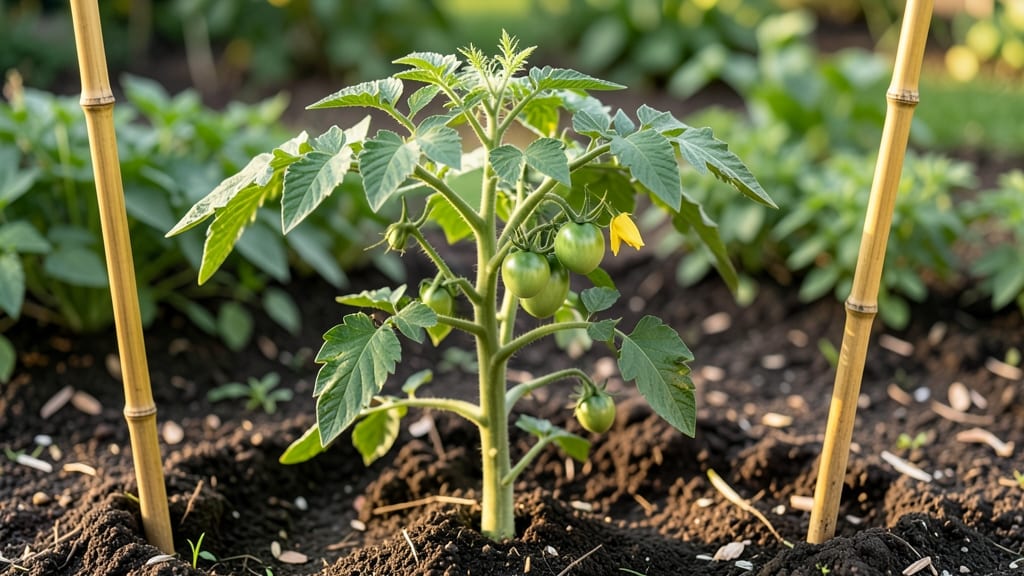
My bamboo tomato stakes saved my garden from a season of flopping vines and lost fruit. 🌱 These lightweight yet sturdy supports transformed my sprawling tomatoes into neat, productive towers—no more tangled messes or broken branches.
The beauty of bamboo is its balance: strong enough to handle 6-8 foot vines yet easy to work with. Unlike metal cages, they won’t heat up in the sun, and they blend seamlessly into any garden. Plus, they’re budget-friendly and biodegradable, so you’re not adding plastic waste to your yard.
By the time harvest rolls around, your tomatoes will be clean, sun-exposed, and easy to pick—no more digging through foliage. The stakes also encourage better air circulation, which cuts down on disease.
Here’s how to use them right: start with 3-4 stakes per plant, space them evenly, and tie vines loosely every 10-12 inches. Avoid over-tightening—you want gentle guidance, not strangulation.
📚 In This Guide
- What you need
- Instructions
- Tips and common mistakes
- Wrapping up and next steps
What you need
- ● Bamboo tomato stakes: 4–6 stakes per container (6–8 feet tall, ½–¾ inch diameter). Opt for split bamboo or solid bamboo for extra durability.
- ● Tomato plants: 1–2 healthy seedlings or transplants (determinate or indeterminate varieties).
- ● Potting soil: 1–2 bags (well-draining, organic mix).
- ● Container: At least 5 gallons per plant (or larger for sprawling varieties).
- ● Garden twine or soft plant ties: 1–2 rolls (jute or biodegradable options work best).
- ● Pruning shears: 1 pair (for trimming excess growth).
- ● Sturdy gloves: 1 pair (to protect hands from splinters or thorns).
- ● Bamboo stake anchors: U-shaped metal or plastic clips to secure stakes to containers.
- ● Slow-release fertilizer: 1–2 tablets or granules (for nutrient boosts).
- ● Mulch: Straw or shredded leaves (to retain moisture).
- ● Watering can or hose with nozzle: For gentle hydration.
How to install bamboo tomato stakes for strong, upright growth
Here's how I set up sturdy bamboo supports that keep tomato plants growing vertically without snapping or flopping.
🪴 Step 1: Choose and Prepare the Right Bamboo Stakes
Select 4-6 foot long bamboo stakes that are at least ½ inch in diameter—thinner ones bend under heavy tomato vines. I like to soak them in water for 24 hours before use; this prevents them from splitting later when the soil dries out. After soaking, let them air-dry slightly so they're damp but not dripping.
Check each stake for cracks or weak spots—run your thumb along the length to feel for any soft areas. Discard any that feel hollow or brittle, as they won't support the weight. You'll need 4 stakes per plant for maximum stability, but at minimum, 2 stakes work for smaller varieties.
✂️ Step 2: Cut Stakes to Proper Length and Sharpen Tips
Measure each stake to be 2-3 inches taller than your plant's expected height—this gives extra support as the plant grows. Use a handsaw or pruners to make clean cuts at a slight angle; this prevents the stake from digging into the soil and splitting. I like to sand the cut edges lightly to avoid splinters when handling.
Sharpen the bottom ½ inch of each stake with a file or sandpaper—this helps them penetrate the soil more easily without resistance. The sharper the point, the more stable the stake will be, especially in loose or rocky soil. Test the tip on a piece of scrap wood first to check your angle.
🌱 Step 3: Install Stakes Alongside Each Tomato Plant
Plant your tomato seedlings in their final location, then insert the bamboo stakes 2-3 inches away from the main stem, not touching it. Drive the stakes 6-8 inches deep into the soil at a 45-degree angle—this creates a natural triangle of support when tied. For extra stability, I like to place one stake on the north side and one on the south side of the plant.
Gently firm the soil around the base of the stake to eliminate air pockets. If your soil is loose, mix in a handful of compost or sand to create a firmer anchor. The stake should stand upright on its own—if it wobbles, dig deeper or add a second stake on the opposite side.
🪢 Step 4: Secure the Plant with Soft Ties
Use soft plant ties (not wire or twine) to attach the tomato stem to the stake at the first true leaves. Loop the tie around the stake once and the stem once, then pull snugly but not tightly—you want to guide growth, not restrict it. As the plant grows, add a second tie 12-18 inches above the first to prevent the stem from bending.
Check the ties weekly and loosen them if the stem appears restricted. I like to use Velcro-style plant ties because they're easy to adjust as the plant grows. Never tie directly to the stake—always loop around the stem first to avoid damaging the bark.
☀️ Step 5: Maintain and Adjust Throughout the Season
As your tomato plant grows, add additional stakes if needed—especially when fruit begins to form. Heavy tomato clusters can cause stems to bend or snap, so I reinforce with a third stake if the plant exceeds 4 feet tall. Water the soil around the stakes regularly to keep it firm and prevent them from loosening.
Watch for signs of strain: if the plant leans heavily against one stake, add a second on the opposite side to distribute weight. In windy conditions, I temporarily tie the plant more securely to prevent flopping. By late summer, your stakes should be nearly invisible—just part of the plant's natural support system.
Tips & tricks for sturdy tomato stake installation
These game-changing tricks will ensure your tomato plants grow vertically without bending or breaking under the weight of heavy fruit.
Preparation is Key: The 24-hour soaking step in Step 1 isn't just a suggestion—it's essential for preventing splits. I've seen stakes crack mid-season when skipped, especially in dry climates. After soaking, let them air-dry slightly so they're damp but not dripping. This balance prevents mold while maintaining flexibility. For extra insurance, I like to bundle stakes together during soaking to prevent them from bowing.
Angle Matters: When installing stakes at a 45-degree angle in Step 3, visualize creating a natural triangle with the plant stem. This angle distributes weight more effectively than vertical stakes, especially when fruit begins to form. For particularly windy areas, consider adding a third stake at a 45-degree angle on the opposite side to create a diamond shape—this provides 360-degree support. Test stability by gently pushing the stake after installation; it should resist movement without bending.
Tie Technique: The soft plant ties in Step 4 deserve special attention. I've ruined stems by tying too tightly, which restricts growth and can actually weaken the plant. Always loop the tie around both the stake AND the stem, then pull snugly but not tightly—you should be able to slide a finger between the tie and the stem. For larger plants, I add a third tie when the plant reaches 3 feet tall, positioning it at the first flower cluster to support developing fruit.
Seasonal Adjustments: In Step 5, remember that tomato plants grow fastest during hot summer months. If you notice your stakes beginning to lean or the plant appears top-heavy, add a second stake immediately. I've seen plants that were perfectly supported at 3 feet suddenly need reinforcement at 4 feet when summer heat accelerates growth. For container-grown tomatoes, consider using wider stakes or multiple smaller stakes to distribute weight more evenly.
Pro Tips for Bamboo Tomato Stakes
- These game-changing tricks will ensure your tomato plants grow vertically without bending or breaking under the weight of heavy fruit.
- Preparation is Key: The 24-hour soaking step in Step 1 isn't just a suggestion—it's essential for preventing splits.
- Angle Matters: When installing stakes at a 45-degree angle in Step 3, visualize creating a natural triangle with the plant stem.
Frequently asked questions
Got questions about using bamboo tomato stakes? You’re not alone! Here are some of the most common concerns—and straightforward answers—to help you grow like a pro.
How tall should bamboo tomato stakes be for my plants?
For container-grown tomatoes, aim for stakes that are 6 to 8 feet tall—taller if your variety is indeterminate (like 'Sungold' or 'Brandywine'). Bury the stake 6 inches deep and tie vines loosely with soft plant ties every 12 inches to prevent damage. Pro tip: If your stakes are too short, use multiple stakes or a cage instead!
When is the best time to install bamboo stakes?
Install stakes at planting time—even if your tomato seedlings are small. This prevents root disturbance later. If you’re retrofitting, do it early in the season (when vines are 6–12 inches tall) to avoid stress. Wait until soil is workable (not soggy or frozen) to avoid compacting the roots.
Can I reuse bamboo stakes from last year?
Yes! Bamboo is durable and biodegradable, so you can reuse stakes for 2–3 seasons if they’re still sturdy. Sanitize them first by soaking in a 1:10 bleach-water solution for 10 minutes, then rinse and dry. Watch for: Splinters, cracks, or mold—replace if compromised.
What if my tomato vines keep breaking the stakes?
If vines snap stakes, you’re likely dealing with overly vigorous growth or weak stakes. Try these fixes:
- Upgrade stakes: Use thicker bamboo (1–1.5 inches in diameter) or reinforced stakes (e.g., fiberglass or metal).
- Prune strategically: Trim suckers (side shoots) to reduce weight and redirect energy to fruit.
- Stake in a triangle: Use 3 stakes tied at the top for extra support.
Are there eco-friendly alternatives to bamboo stakes?
If bamboo isn’t your style, try:
Option
Pros
Cons
Coconut fiber ties + trellis
Biodegradable, lightweight
Less sturdy for heavy vines
Recycled plastic stakes
Reusable, rust-proof
Less "green" than bamboo
Wooden dowels
Cheap, widely available
Can rot faster than bamboo
Wrapping up and next steps
Transforming your container garden with bamboo tomato stakes is a simple, eco-friendly way to support thriving vines and boost your harvest! These sturdy, budget-friendly supports are perfect for gardeners of all levels—just gather your materials, follow the steps, and watch your tomatoes reach new heights. 🌱
Ready to get growing? Start by planting your tomatoes this season and give them the support they deserve. Happy gardening! 🌞