
Plants
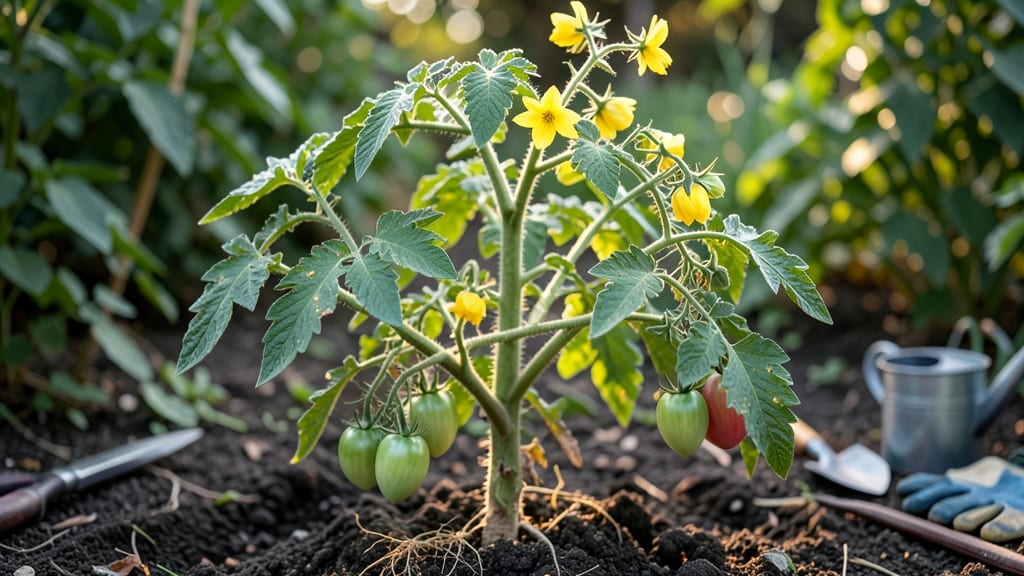
Understanding different tomato plant leaves helps you spot early signs of trouble—yellowing leaves often mean overwatering or nutrient deficiencies, while curled or spotted foliage suggests pests, disease, or environmental stress. Quick action can save your plants.
Tomato leaves change appearance for all kinds of reasons, from normal growth stages to serious problems. 🌱 For example, yellowing between leaf veins usually signals magnesium deficiency, while crispy edges often mean underwatering or high salt levels in the soil.
The key is observing patterns—like whether the issue starts at the bottom or spreads randomly—which helps pinpoint the exact cause. I’ve found that keeping a small notebook by my garden bench helps track changes over time, making it easier to catch problems before they worsen.
What’s interesting is how some symptoms overlap—like brown spots that could mean fungal disease or too much sun exposure. That’s why I always check multiple factors: soil moisture, recent weather shifts, and any new pests I’ve spotted.
For instance, if your leaves are curling upward, it might be heat stress, but if they’re also sticky, aphids could be the culprit. The more details you notice, the faster you can fix the issue.
💡 In This Article
- How to Diagnose Tomato Leaf Problems by Appearance
- Step-by-Step Fixes for Common Tomato Leaf Issues
How to diagnose tomato leaf problems by appearance
Tomato leaves act like a living diagnostic chart, revealing what's wrong with your plant through subtle visual clues. For instance, when you see yellowing that starts between the leaf veins (a condition called interveinal chlorosis), it almost always points to a magnesium deficiency.
This happens because magnesium is crucial for chlorophyll production, and the plant prioritizes keeping it in older leaves—hence the yellowing pattern. 🌿 What's fascinating is how this differs from nitrogen deficiency, where the entire leaf turns yellow, not just the spaces between veins.
The texture of leaves provides even more clues. Crispy or papery leaves with brown edges often signal underwatering or high soil salinity, while soft, mushy leaves with yellowing suggest overwatering or poor drainage.
Curling leaves can mean multiple issues: upward curling typically indicates heat stress or water deficiency, while downward curling often points to overwatering or fungal diseases like early blight.
Even the placement matters—problems starting at the bottom usually mean nutrient deficiencies or root issues, while random spots suggest pests or environmental factors.
Spotting patterns are another critical detail.
Small brown spots with yellow halos usually mean fungal diseases like septoria leaf spot, while larger, irregular brown patches could indicate sun scorch or chemical burn from fertilizers. 🔍 If you notice webbing or tiny holes in the leaves, spider mites or aphids are likely the culprits.
These pests thrive in dry conditions, so checking the undersides of leaves (their favorite hiding spot) can confirm their presence. The key is to examine both sides of the leaves and note any accompanying symptoms like sticky residue (aphids) or fine webbing (spider mites).
Environmental factors play a huge role too. Leaves that suddenly develop crispy edges after a hot day are likely suffering from transpiration stress, where the plant loses more water than it can absorb. This is especially common in sandy soils or when plants are exposed to intense afternoon sun.
Conversely, leaves that wilt and droop in the morning but recover by afternoon might be dealing with root rot from overwatering. The soil temperature matters here—roots struggle to absorb water when soil temps drop below 50°F.
One of the most telling symptoms is the rate of spread. Problems that appear on just a few leaves and stay contained are often manageable, while rapidly spreading issues (like powdery mildew or bacterial spots) require immediate action.
For example, powdery mildew starts as small white patches that grow into fuzzy white coatings, while bacterial spots appear as greasy-looking brown marks that spread quickly in humid conditions. 🌧️ The faster you identify these patterns, the more effective your treatment will be.
Don't overlook the stems either. Wilting that starts at the bottom and moves upward suggests vascular issues like fusarium wilt, where a fungal infection blocks the plant's water transport system.
In this case, you'll often see yellowing leaves paired with stunted growth and a wilting pattern that progresses from the oldest to newest leaves. This is different from blight diseases, which typically attack from the top down.
Understanding these patterns helps you distinguish between similar-looking problems and apply the right fix.