
Companion Plants
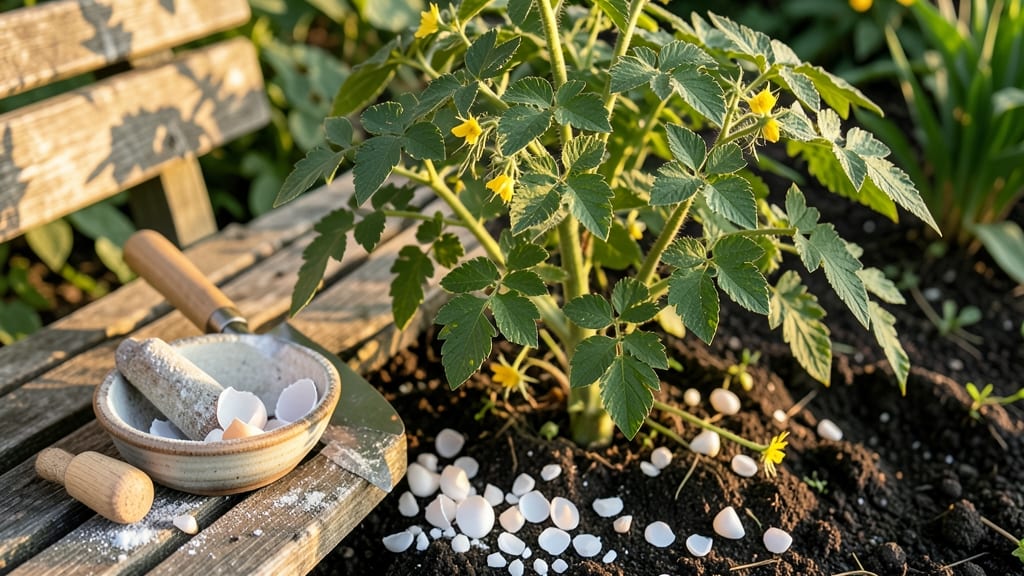
Eggshells help tomato plants by providing essential calcium that prevents blossom-end rot and strengthens plant cell walls, but they must first be crushed and composted to release nutrients into the soil.
Tomatoes crave calcium to develop strong cell walls, and eggshells are a natural, cost-effective source.
When crushed and composted, they break down into a slow-release calcium supplement that improves soil structure while preventing the unsightly dark spots on fruit caused by blossom-end rot. 🌱 I've seen dramatic improvements in plant health when using eggshells—especially in containers where calcium deficiencies are more common.
The key is proper preparation: drying shells completely before crushing prevents mold, and mixing them into compost ensures microbes can access the nutrients efficiently.
For best results, add crushed eggshells to your compost pile or directly into planting holes at the start of the season. You can also create a DIY calcium boost by baking shells at 200°F for 10 minutes to kill bacteria, then grinding them into a fine powder.
This method works particularly well for gardeners who prefer organic amendments over chemical fertilizers.
💡 In This Article
- How Eggshells Supply Calcium for Tomato Growth
- Best Ways to Use Eggshells in Tomato Gardens
How eggshells supply calcium for tomato growth
Tomato plants thrive when their calcium needs are met, and eggshells provide this mineral in a form the plants can easily absorb. Calcium plays a crucial role in forming strong cell walls, which helps tomatoes develop firm fruit and resist diseases like blossom-end rot.
When you crush dried eggshells, you're essentially creating a slow-release calcium source that mimics natural soil amendments. The shells contain approximately 95% calcium carbonate, a compound that dissolves gradually in the soil when broken down by microbial activity and slightly acidic conditions.
The breakdown process begins when crushed eggshells mix with organic matter in compost or soil. Microbes and earthworms accelerate this transformation, converting calcium carbonate into calcium ions (Ca²⁺) that tomato roots can uptake through their root hairs.
This process works best in slightly acidic to neutral soil (pH 6.0-7.0), where microbial activity is most efficient.
In alkaline soils (pH above 7.5), calcium becomes less available, which is why pairing eggshells with compost or peat moss can improve their effectiveness by creating a more favorable environment for nutrient release.
What makes this calcium boost particularly valuable is how it prevents blossom-end rot, a common tomato problem where the blossom end of the fruit turns brown and mushy. This deficiency occurs when calcium can't reach the growing fruit fast enough, often due to inconsistent watering or poor soil conditions.
By adding crushed eggshells at planting time, you create a calcium reservoir that becomes available as the plant grows, ensuring a steady supply to developing fruit. The visual improvement is noticeable—plants show stronger stems and leaves, and fruit remains firmer and less prone to cracking.
However, there's a science to making this work effectively. Raw eggshells take 6-12 months to fully decompose in compost, so timing matters. For container-grown tomatoes, where calcium deficiencies are more common, I recommend adding crushed eggshells every 4-6 weeks during the growing season.
The key is balance—too much calcium can interfere with magnesium and potassium uptake, so use eggshells as a supplement rather than a primary fertilizer. Think of it as giving your tomatoes a natural calcium-rich "multivitamin" that supports their overall health.
For those curious about the numbers, a single eggshell contains about 2.2 grams of calcium. If you crush and compost 10 eggshells per plant, you're providing roughly 22 grams of calcium—enough to support a medium-sized tomato plant through its growing season.
This natural approach is particularly appealing for organic gardeners who want to avoid synthetic fertilizers while still achieving professional-level results in their gardens.
What most gardeners don't realize is how eggshells also improve soil structure. The coarse texture of crushed shells creates small air pockets that enhance drainage while retaining moisture, which is especially beneficial for tomatoes that dislike soggy roots.
This dual benefit—nutrient boost plus improved soil aeration—makes eggshells one of the most underrated organic amendments for tomato cultivation. 🌱