
Size
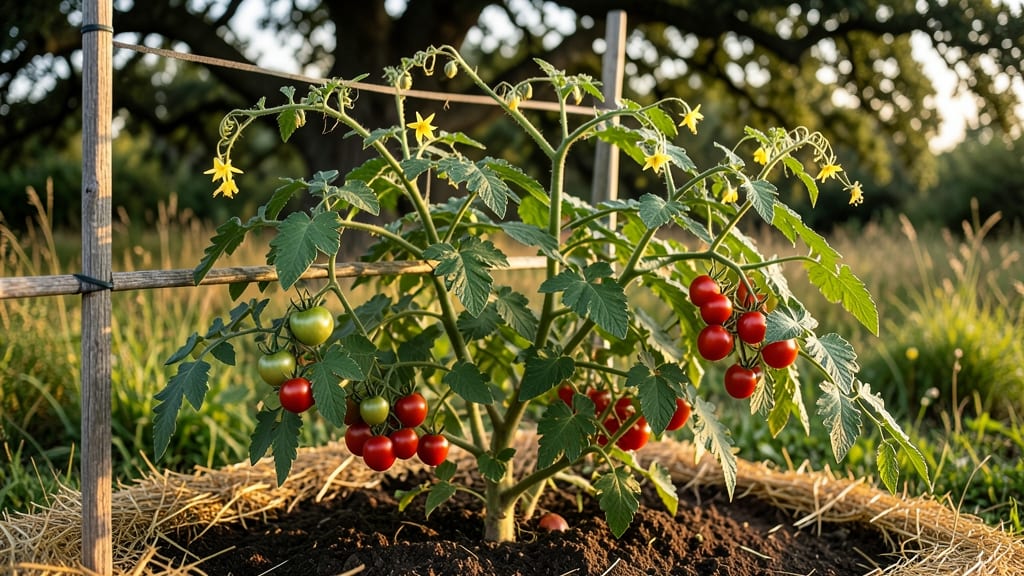
Tomato plants grow from compact bushes to towering vines—the difference between determinate and indeterminate types is everything. 🌱 I’ve seen determinate varieties stay under 3 feet while my indeterminate cherry tomatoes stretched toward the sky, needing 6-foot cages.
Size directly affects how you’ll stake, prune, and even where you plant them. Determinate plants stay bushy and predictable, perfect for containers or small spaces, while indeterminate types keep growing until frost. My 4-foot-tall indeterminate plants produced more fruit than my 2-foot determinate ones—just with more support. The trade-off?
Indeterminate varieties need constant training or they’ll flop. You’ll adjust your garden layout based on size: determinate plants work in tight rows, while indeterminate types thrive with vertical space. A 6-foot trellis can turn a sprawling vine into a tidy, high-yielding feature.
Choose your varieties with your space in mind—it makes all the difference.
For containers, stick to determinate or dwarf indeterminate types—they won’t outgrow their pots. In-ground gardens can handle both, but indeterminate plants need sturdy stakes or cages to prevent sprawl. I’ve seen 8-foot-tall tomatoes with proper support, while neglected ones sprawl into messy, low-yielding tangles.
Size isn’t just about space—it impacts care too. Indeterminate plants need regular pruning to focus energy on fruit, while determinate types produce all at once and then decline. Plan your garden layout with both types in mind, and you’ll maximize harvests without sacrificing space.
📚 In This Guide
- What you need
- Instructions
- Tips and common mistakes
- Wrapping up and next steps
What you need
- ● Tomato Seeds or Seedlings: Indeterminate varieties (e.g., Sungold, Beefsteak): 3–5 plants (for sprawling vines)
- ● Determinate varieties (e.g., Roma, Cherry): 1–3 plants (compact bushes)
- ● Containers or Garden Space: For containers: 5-gallon pots or larger (indeterminate) or 1–3 gallon pots (determinate)
- ● For garden beds: 18–24 inches of spacing between plants (indeterminate) or 12–18 inches (determinate)
- ● Potting Soil: 1–2 bags of high-quality, well-draining potting mix (avoid garden soil)
- ● Fertilizer: Balanced 10-10-10 or organic options like compost/manure (follow package rates)
- ● Support Structures: Indeterminate: Cages (6+ ft tall), stakes (7+ ft), or trellises
- ● Determinate: Small cages (3–4 ft) or stakes (4–5 ft)
- ● Required: Gloves (to protect hands from thorns/soil)
- ● Watering can or hose with a gentle nozzle
- ● Pruning shears (for trimming indeterminate plants)
- ● Mulch (straw or shredded leaves to retain moisture)
- ○ Optional (But Helpful!): pH test kit (ideal soil pH: 6.0–6.8)
- ● Drip irrigation system (for consistent watering)
- ● Shade cloth (if growing in hot climates)
- ● Plant ties (for securing vines to stakes)
- ● 🌞 Sunlight: 6–8+ hours of direct sun daily (more for indeterminate varieties)
- ● 💧 Water: Consistent moisture (1–2 inches per week; indeterminate plants may need more)
- ● 🌡️ Temperature: Ideal germination: 70–85°F; avoid frost (below 50°F harms young plants)
- ● 📅 Timing: Start seeds indoors 6–8 weeks before last frost or transplant seedlings after soil warms
Understanding tomato plant growth: determinate vs indeterminate size
Here's how to predict your tomato plant's mature size—and why it matters for your garden layout.
🌱 Step 1: Identify Your Tomato Variety Type
Determinate tomatoes grow to a predictable 3-5 feet tall and stop when fruit sets, making them perfect for small spaces or container growing. You'll see this as a bushy, compact shape with leaves clustering near the top. Indeterminate varieties, on the other hand, keep growing 6-12+ feet tall until frost, producing fruit along the entire stem. Look for "indeterminate" or "vining" on seed packets—this tells you whether to plan for a trellis or cage.
I always check the plant tag or seed packet description first. Determinate types like 'Roma' or 'Celebrity' are great for sauces and canning because they ripen all at once, while indeterminates like 'Sungold' or 'Better Boy' produce fruit over months. This difference affects everything from spacing to pruning strategy.
☀️ Step 2: Plan Your Garden Layout Based on Mature Size
For determinate varieties, space plants 18-24 inches apart in rows 2-3 feet apart. Their compact growth means they won't need support unless heavy fruit causes branches to sag. You'll see this as a neat, rounded plant that fills its designated space without sprawling. Indeterminates need 24-36 inches apart and 3-4 feet between rows—they'll grow taller than you are if unchecked, so plan for vertical space or a sturdy trellis.
I like to sketch my garden bed before planting. For determinates, I draw a grid with 2-foot squares. For indeterminates, I mark taller plants along the edges where they won't shade shorter varieties. This prevents the "jungle effect" where plants crowd each other and fruit rots from poor air circulation.
✂️ Step 3: Prune for Size Control and Health
Determinate tomatoes rarely need pruning beyond removing suckers (the small shoots between main stems and branches). Focus on removing lower leaves that touch the soil to prevent disease. You'll know when to stop pruning determinates when they start flowering—they'll naturally slow growth to focus on fruit production. For indeterminates, prune aggressively to control height and improve airflow. Remove suckers weekly and trim branches back to 4-6 main stems using clean, sharp shears.
I prune indeterminates in stages: first to establish the main stem, then to shape the plant, and finally to remove overcrowded leaves. This keeps plants 6-8 feet tall instead of letting them reach 12 feet. The key is to prune early in the morning when plants are turgid—this reduces stress and speeds healing.
🪴 Step 4: Choose Support Structures Based on Growth Habits
Determinate tomatoes thrive in 18-inch cages or simple stakes. Their weighty fruit clusters need support, but their compact growth means they won't outgrow standard structures. You'll see this as a plant that fills its cage evenly without requiring additional tying. Indeterminates need 6-foot tall stakes or strong trellis systems—I prefer wooden A-frame trellises for heavy varieties like 'Beefsteak'. Tie stems every 12 inches with soft plant ties to prevent stem damage.
Don't skip support for indeterminates—even if they're young. A 6-foot plant with heavy fruit can snap under its own weight. I install trellises at planting time and add ties as the plant grows. For determinates, I use galvanized wire cages because they're rust-resistant and last multiple seasons.
⏰ Step 5: Adjust Care Based on Growth Rate
Determinate tomatoes grow quickly in spring but slow dramatically after flowering. You'll notice this as a sudden halt in height increase around 6-8 weeks after planting. At this point, focus on watering at the base and mulching heavily to retain moisture. Indeterminates grow continuously until frost, so they need consistent watering (1-2 inches per week) and regular feeding with a balanced fertilizer every 2-3 weeks. Watch for new leaf growth—this signals the plant is still actively growing and needs more nutrients.
I set reminders for indeterminates because their growth can be overwhelming. A plant that was 3 feet tall in May might reach 8 feet by July if unchecked. The trick is to prune first, then feed—this prevents the plant from putting all its energy into foliage instead of fruit.
Tips & tricks for mastering tomato plant sizing
Between us, knowing exactly how big your tomato plants will get saves you from crowded gardens and disappointed yields. Here's what nobody tells you about managing those growth patterns.
Variety Verification: Always double-check seed packets or plant tags for "determinate" or "indeterminate" labels—this isn't just gardening jargon, it's your blueprint. I once planted a batch labeled "indeterminate" as determinate because I missed the fine print, and ended up with 10-foot monsters crowding my patio. The height difference between 5-foot determinates and 12-foot indeterminates affects everything from spacing to support structures.
Pruning Precision: For indeterminate varieties, that weekly sucker removal isn't optional—it's how you keep plants at the manageable 6-8 feet range instead of letting them reach their full 12-foot potential. I prune early in the morning when plants are turgid because the cut surfaces heal faster in cooler temperatures. And always use clean, sharp shears—dull tools crush stems and invite disease.
Support System Strategy: Don't wait until plants are already toppling to install support. For indeterminates, set up your 6-foot stakes or A-frame trellises at planting time. I use soft plant ties every 12 inches to prevent stem damage, and always check ties weekly—they can tighten as plants grow. For determinates, those 18-inch cages work perfectly, but add a few extra ties if you're growing heavy varieties like 'Beefsteak'.
Growth Rate Awareness: That 6-8 week growth spurt for determinates is your window to focus on watering and mulching. After flowering begins, growth slows dramatically—this is when you shift from encouraging height to preserving fruit quality. For indeterminates, set calendar reminders every 2-3 weeks for fertilizer because their continuous growth demands consistent nutrients. Watch for new leaf growth as your signal to feed.
Pro Tips for How Big Do Tomato Plants Get
- Between us, knowing exactly how big your tomato plants will get saves you from crowded gardens and disappointed yields.
- Variety Verification: Always double-check seed packets or plant tags for "determinate" or "indeterminate" labels—this isn't just gardening jargon, it's your blueprint.
- Pruning Precision: For indeterminate varieties, that weekly sucker removal isn't optional—it's how you keep plants at the manageable 6-8 feet range instead of letting them reach their full 12-foot potential.
Frequently asked questions
Got questions about tomato plant sizes? You’re not alone! Whether you're planning your garden layout or troubleshooting a runaway vine, here are some of the most common queries—answered for you.
How tall do indeterminate tomato plants grow?
Indeterminate tomato plants can reach 6 to 12 feet tall (or even taller!) if left unpruned. They grow continuously throughout the season, so they’ll need sturdy stakes, cages, or trellises. Without support, they may sprawl uncontrollably—so plan ahead!
How big do determinate tomato plants get?
Determinate varieties stay compact, typically growing 3 to 5 feet tall and wide. They produce fruit in clusters near the top before stopping, making them ideal for containers or small gardens. No pruning is usually needed!
How long does it take for tomato plants to reach full size?
Most tomato plants take 6 to 8 weeks from transplanting to reach full size, depending on warmth and care. Indeterminate varieties grow faster vertically, while determinate ones bulk up quicker. Watch for early flowers—this signals rapid growth!
Can I prune my tomato plants to control their size?
Yes! Pruning indeterminate plants (removing suckers and lower leaves) keeps them manageable and improves airflow. For determinate types, minimal pruning is needed—just snip off diseased or overcrowded branches. Pro tip: Prune in the morning to let wounds dry faster!
Are there dwarf tomato varieties for small spaces?
Dwarf or "bush" tomatoes (like 'Tiny Tim' or 'Micro Tom') max out at 1 to 2 feet tall and thrive in pots. They’re perfect for balconies, windowsills, or urban gardens. Just ensure they get 6+ hours of sunlight daily for best results.
Why is my tomato plant growing too big or leggy?
Leggy growth usually means insufficient light or overcrowding. Move plants to sunnier spots, thin seedlings, or use grow lights. For indeterminate types, add support early. Bonus fix: Bury stems deeper when transplanting to encourage stronger roots!
Wrapping up and next steps
Understanding whether your tomato plants are indeterminate (reaching 6-10+ feet) or determinate (staying 3-5 feet) helps you plan your garden like a pro! 🌱 Whether you’re growing in containers, trellises, or open beds, knowing their size ensures you give them the space—and love—they deserve.
Now that you’re armed with this knowledge, grab those seeds or seedlings and get planting! Ready to harvest juicy, homegrown tomatoes? Check out our gardening tips to maximize your yield and enjoy the fruits of your labor. 🍅✨