
Pests
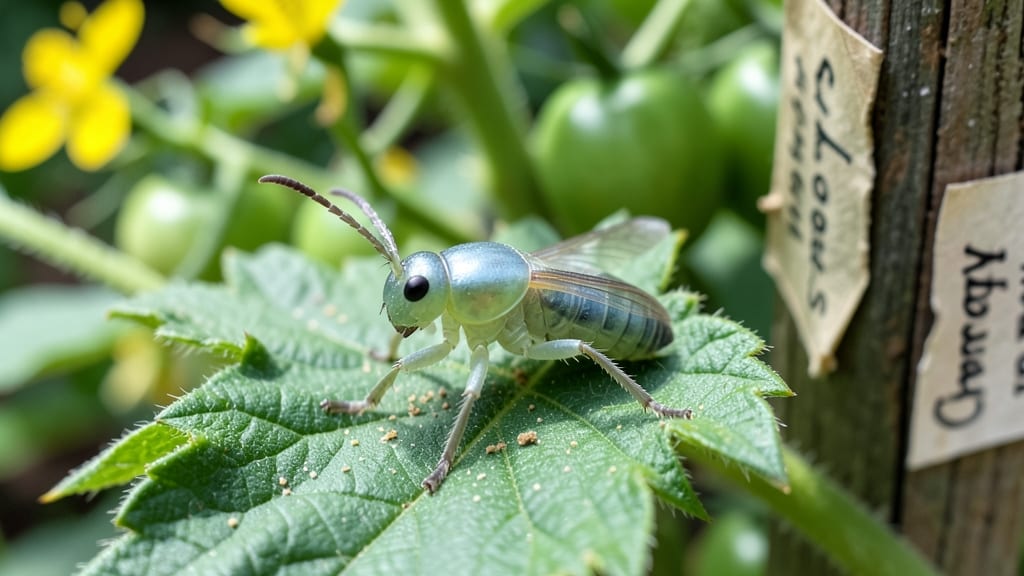
To get rid of tomato aphids, spray plants with a mixture of water, dish soap, and neem oil, or use a strong stream of water to dislodge them. Repeat every 3-4 days until infestation clears, focusing on undersides of leaves where aphids cluster most densely.
Tomato aphids multiply rapidly because they feed on plant sap and reproduce without mating, making them a persistent garden pest. 🌱 The key to eliminating them lies in disrupting their life cycle—neem oil interferes with their ability to reproduce, while dish soap suffocates them by breaking down their protective wax coating.
A strong water spray works best when applied directly to clusters, as it physically removes them before they can spread further.
For best results, I recommend treating plants in the early morning or late evening when temperatures are cooler, which reduces stress on your tomatoes. Always test homemade sprays on a small leaf first to ensure they don't cause damage.
This approach not only clears existing infestations but also deters new ones from settling in.
💡 In This Article
- Why Tomato Aphids Thrive and How Natural Sprays Disrupt Them
- Best Homemade Aphid Sprays for Tomatoes (Recipes and Application Tips)
Why tomato aphids thrive and how natural sprays disrupt them
Tomato aphids thrive because they reproduce at an astonishing rate—some species can produce up to 80 offspring in just 2 weeks without mating. These tiny insects feed on plant sap through their needle-like mouthparts, which deliver enzymes that break down cell walls and extract nutrients.
This feeding process weakens plants by depriving them of essential sugars and nutrients, often causing leaves to curl or yellow. What makes them particularly aggressive is their ability to excrete honeydew, a sticky substance that attracts ants and fosters fungal growth like sooty mold.
The biological mechanisms behind natural sprays like neem oil and soapy water are fascinating. Neem oil contains azadirachtin, a compound that disrupts aphid feeding and reproduction by interfering with their hormone systems. It prevents them from molting properly, leading to deformities and death within 24-48 hours.
Meanwhile, dish soap works by breaking down the waxy protective layer on aphids' bodies, causing dehydration and suffocation. This dual approach—chemical disruption and physical removal—is why these methods are so effective when applied together. 🔥
Understanding aphid behavior is key to their control. They prefer the undersides of leaves because it provides shelter from predators and direct sunlight. This is why thorough spraying must target these areas, often requiring you to flip leaves gently to reach hidden clusters.
Aphids also release alarm pheromones when threatened, which signals nearby aphids to drop off the plant and find new hosts. This is why treating the entire plant—not just visible clusters—is crucial to prevent rapid reinfestation.
Temperature plays a surprising role in aphid vulnerability. Studies show that natural sprays like neem oil work best when applied at 60-75°F temperatures. Below 50°F, the oil becomes less effective, while above 85°F, it can stress your tomato plants.
This is why early morning or late evening applications are ideal—they allow the spray to work while minimizing plant damage. The combination of these factors explains why consistent, targeted treatments yield the best results.
What most gardeners don't realize is that aphids have a short lifespan of 1-2 weeks, meaning they're vulnerable to repeated interventions. By applying natural sprays every 3-4 days, you're essentially breaking their life cycle before they can establish large colonies.
This is particularly effective when combined with physical removal methods like blasting them off with water, which creates a two-pronged attack on their survival strategies. 💫
For those dealing with severe infestations, introducing natural predators like ladybugs or lacewings can provide long-term control. These beneficial insects feed exclusively on aphids and their eggs, creating a biological balance.
However, they work best as a preventive measure rather than a cure, which is why combining them with immediate spray treatments gives you the fastest results. The key is consistency—aphids won't stand a chance against this multi-faceted defense strategy.
Remember that aphids are most active during warm, humid conditions, which is why summer months often see worse infestations. By understanding these environmental triggers, you can time your treatments more effectively.
For example, reducing overhead watering (which creates humid conditions) can make your plants less attractive to aphids while keeping them healthier overall. This holistic approach addresses both the immediate problem and the underlying conditions that allow aphids to thrive. ✨