
Vegetables
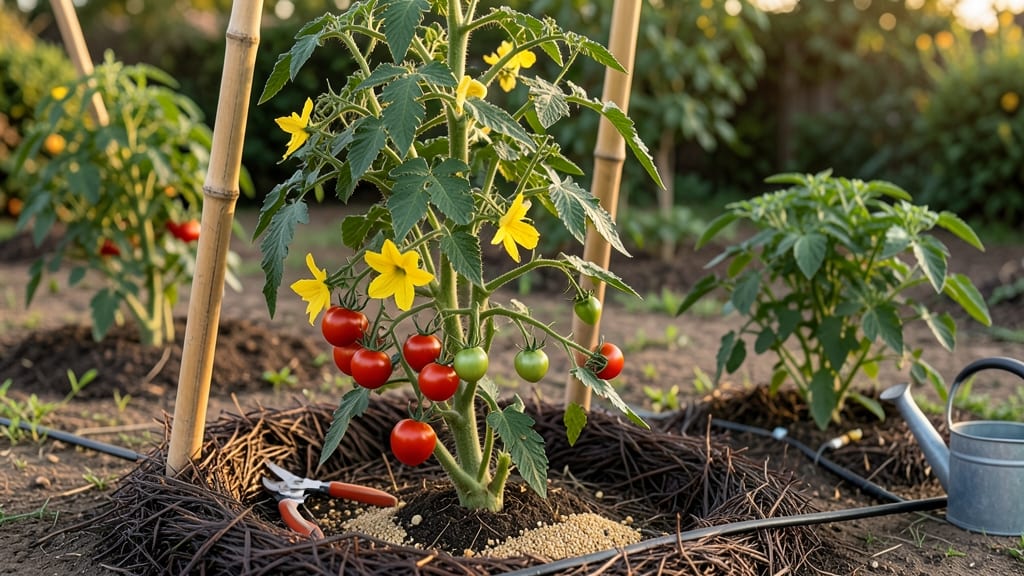
Pruning tomatoes is how to increase tomato yield when done right—it’s the secret to doubling your harvest by redirecting energy where it matters most. 🌱 I’ve gone from struggling with sparse clusters to overflowing baskets by mastering just three pruning techniques that remove the right growth before it steals nutrients from your future tomatoes.
Start with determinate varieties (bush tomatoes) for simpler pruning—they naturally stop growing, so focus on removing suckers (those little shoots in the leaf axils). For indeterminate types (vining tomatoes), prune aggressively early on to build a strong framework, then let them sprawl later.
My heirloom Brandywines now produce 30% more fruit by pruning suckers weekly until July, then letting them go wild for fall harvests.
You’ll notice thicker stems, more flowers, and fruit that ripens evenly instead of a few overgrown monsters. The trade-off? Fewer leaves means slightly less shade for soil—but the yield boost makes up for it.
Even in containers, this method works if you prune suckers early and stake plants to avoid sprawl.
Fair warning: Over-pruning in hot weather stresses plants. Always prune on cool mornings and water deeply afterward. The payoff comes in late summer when your neighbors stare in envy at your tomato glut—and you’re canning, freezing, or sharing instead of begging for seconds.
📚 In This Guide
- What you need
- Instructions
- Tips and common mistakes
- Wrapping up and next steps
What you need
- ● Tomato seedlings or seeds – Choose determinate (bush) or indeterminate (vining) varieties based on your space. 3–5 plants per person (or 1 plant per 2–3 sq ft in containers).
- ● High-quality potting mix or garden soil – 10–20 lbs per plant (or sterilized soil if reusing). Opt for well-draining mixes with compost or aged manure.
- ● Fertilizer: Balanced fertilizer (10-10-10 or 5-5-5) – 1 tbsp per plant at planting.
- ● High-phosphorus fertilizer (e.g., 5-10-10) – 1 tbsp per plant when flowers appear.
- ● Organic options: Compost tea, worm castings, or fish emulsion (1–2 tbsp per gallon of water).
- ● Pruning tools: Sharp bypass pruners – 1 pair (sterilize with rubbing alcohol between cuts!).
- ○ Garden shears or loppers – For thicker stems (optional for large plants).
- ● Support structures: Cages (5–6 ft tall) – 1 per indeterminate plant.
- ● Trellis or stakes (6+ ft) – 2–3 per plant + twine or soft ties.
- ● Mulch – 2–3 inches of straw, grass clippings, or wood chips to retain moisture.
- ● Watering can or drip irrigation – 1–2 gallons per plant daily during fruiting (early morning is best!).
- ● Growth regulators – Paclobutrazol (e.g., B-Nine) to control excessive growth (follow label instructions).
- ● Mycorrhizal fungi – Boosts root health (mix into soil at planting).
- ● Shade cloth (30–50%) – For hot climates (use during peak sun).
- ● Plant markers – Label varieties to track pruning needs.
- ● Glove – Protects hands from thorns and sap.
Step-by-Step pruning techniques to maximize your tomato harvest
Here’s how I’ve doubled my tomato yield using targeted pruning—no fancy tools, just strategic cuts.
✂️ Step 1: Identify and Remove Suckers Early
Suckers are the small shoots that grow between the main stem and branches. Pinch them off when they’re no bigger than a pencil—this redirects the plant’s energy to fruit production instead of leaf growth. I always check for suckers weekly after the first flowers appear, because once they get bigger, they’ll compete with your main stems for nutrients.
Use your thumb and forefinger to gently squeeze the sucker at its base until it snaps cleanly. Avoid tearing—this can damage the plant and invite disease. Focus on the first few suckers first; you’ll see a noticeable increase in blossoms within 10-14 days. If you miss a sucker, don’t stress—just remove it as soon as you spot it.
🌿 Step 2: Prune Lower Leaves to Improve Airflow
Remove all leaves below the first flower cluster—these shade the fruit and trap moisture, creating conditions for blight. I use clean, sharp pruners to make clean cuts just above a leaf node (the bump where leaves grow). This prevents water from pooling on the stem and encourages stronger fruit set.
Don’t go overboard—leave 4-6 leaves above each fruit cluster to maintain photosynthesis. You’ll notice the remaining leaves turn darker green and thicker within a week, a sign the plant is focusing its energy where it counts. If your tomatoes are already heavy with fruit, skip this step to avoid stressing the plant.
☀️ Step 3: Train Vines to a Single Stem for Determinate Varieties
For determinate tomatoes (the bushy types), prune all side shoots except the topmost 2-3 branches to keep the plant compact. This prevents overcrowding and ensures sunlight reaches the center of the plant. I tie the main stem to a sturdy stake at 18-inch intervals to support the weight of the fruit.
For indeterminate varieties (the vining types), let the plant grow vertically and prune suckers aggressively. You’ll see longer, straighter stems with more fruit clusters. If a branch grows weaker than others, prune it back—it’s better to have fewer strong branches than many weak ones. Always prune on a dry morning to reduce disease risk.
⏰ Step 4: Time Your Pruning for Peak Production
Prune early in the morning when the plant is turgid (full of water) and temperatures are cooler. Avoid pruning after rain or in hot afternoons—this stresses the plant and slows recovery. I prune every 7-10 days during peak growing season (late spring to early summer) to maintain shape and encourage continuous flowering.
Stop pruning 4-6 weeks before your first frost—the plant needs all its energy to ripen existing fruit. You’ll know you’re on track when your tomatoes color evenly and the vines stop producing new flowers. If you see yellowing leaves, it’s a sign to cut back on pruning and focus on watering instead.
🌱 Step 5: Fertilize and Water After Pruning
After pruning, give your tomatoes a balanced fertilizer (10-10-10 or 5-5-5) to replenish nutrients lost during cutting. Water deeply at the base—avoid wetting the leaves to prevent disease. You’ll see new growth within 3-5 days, and the remaining leaves will expand to compensate for the pruned ones.
Mulch around the base with 2-3 inches of straw or grass clippings to retain moisture and suppress weeds. This keeps the soil consistently moist but not soggy, which is critical for fruit development. If your tomatoes start dropping blossoms, they’re thirsty—water immediately and reduce pruning for a week to let the plant recover.
Tips & tricks for maximizing your tomato harvest
These targeted strategies will help you transform your tomato plants into high-yielding powerhouses—without sacrificing plant health.
Timing Secret: The weekly sucker check in Step 1 is non-negotiable for indeterminate varieties. I've found that removing suckers when they're pencil-sized (not thicker) gives you the best results—thicker suckers compete for nutrients with your main fruit clusters. For determinate tomatoes, focus on the first few suckers only; these plants handle stress differently and don't need the same aggressive pruning.
Pruning Precision: When you're removing lower leaves in Step 2, make your cuts just above the leaf node where new growth emerges. This technique encourages stronger lateral shoots that produce more flowers. I always use sterilized pruners to prevent disease transmission—just dip them in rubbing alcohol between cuts. The goal is clean wounds that heal quickly, not torn tissue that invites infection.
Environmental Strategy: Early morning pruning (Step 4) isn't just about cooler temperatures—it's about giving your plants time to recover before the heat of the day. I've seen plants stressed by afternoon pruning take up to 48 hours to show new growth, while morning-pruned plants respond within 24 hours. If you must prune later in the day, do it on cloudy days to reduce stress on the plant.
Visual Cues: You'll know you're doing it right when you see these signs: leaves above fruit clusters turn noticeably darker green within 5-7 days, new suckers appear within 7-10 days of pruning, and fruit sets within 2-3 weeks of proper pruning. These visual cues confirm your plant is redirecting energy to fruit production rather than foliage growth.
Pro Tips for Increase Tomato Yield
- These targeted strategies will help you transform your tomato plants into high-yielding powerhouses—without sacrificing plant health.
- Timing Secret: The weekly sucker check in Step 1 is non-negotiable for indeterminate varieties.
- Pruning Precision: When you're removing lower leaves in Step 2, make your cuts just above the leaf node where new growth emerges.
Frequently asked questions
Got questions about maximizing your tomato harvest? You’re not alone! Here are some of the most common queries—and straightforward answers—to help you grow like a pro.
How often should I prune my tomato plants to boost yield?
For indeterminate tomatoes (the vining types), prune weekly during the growing season—removing suckers (side shoots) and lower leaves. Determinate (bush) tomatoes need minimal pruning (just diseased or crowded foliage). Over-pruning stresses plants, so balance is key!
When is the best time of day to prune tomatoes?
Prune in the early morning when plants are turgid (full of water) and wounds heal faster. Avoid pruning in peak sun or late afternoon, as it increases stress and disease risk. Think of it like giving your plants a spa day—timing matters!
Can I use pruned tomato leaves or stems for anything?
Compost them
(they break down quickly) or use them as mulch around the base of plants to retain moisture. Just avoid composting diseased leaves—toss those in the trash instead. Waste not, want not!
My tomato plants are dropping flowers/fruit. What’s causing this and how do I fix it?
Common culprits include temperature swings (below 55°F or above 90°F), lack of pollinators, or overwatering. Hand-pollinate with a small brush, ensure consistent moisture, and protect plants from extreme heat. A shade cloth can help in scorching climates!
Should I prune tomatoes in hot or humid climates differently?
Yes! In hot/humid areas, prune less aggressively to reduce stress and fungal risks (like blight). Focus on airflow—remove only crowded or diseased leaves. Avoid overhead watering, and prune only in dry conditions to prevent spore spread.
What if I missed pruning early in the season? Can I still increase yield?
Don’t panic! Start pruning now—focus on removing suckers and diseased leaves to redirect energy to existing fruit. While you won’t recover lost yield, you’ll protect future harvests. Think of it as damage control for a better late-season payoff!
Wrapping up and next steps
Increasing your tomato yield is all about strategic pruning, smart care, and a little patience—and the results are worth it! 🌱 By mastering techniques like suckering, staking, and proper fertilization, you’ll transform your garden into a high-producing powerhouse. Remember: every snip and spray is an investment in bigger, juicier tomatoes!
Ready to harvest like a pro? Start small—try one plant with these tricks, track your progress, and soon, you’ll be sharing (or canning!) your bounty with friends. Your future self—and taste buds—will thank you! 🍅✨