
Companion Plants
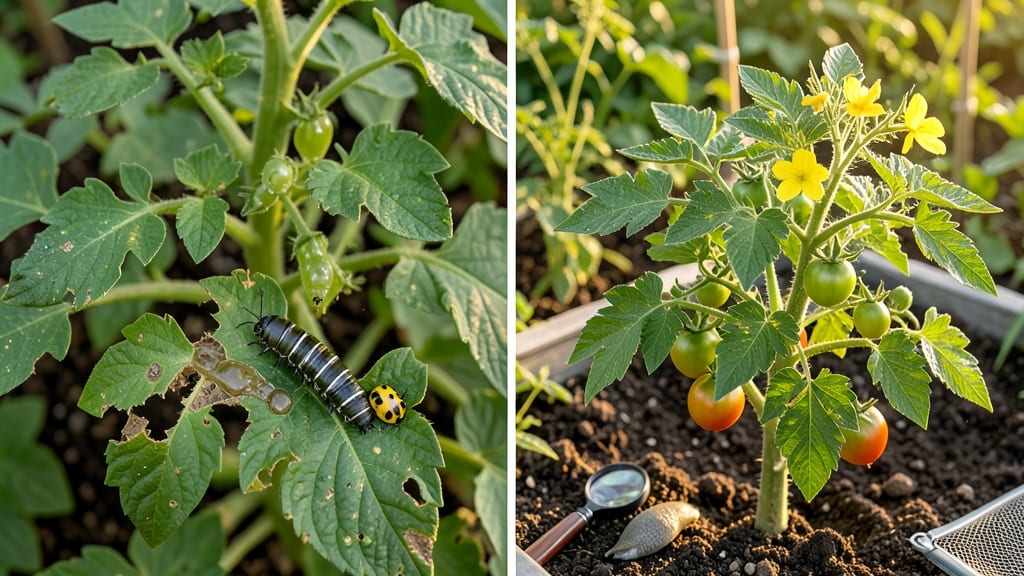
Something is eating my tomato plants—until I found half-eaten leaves and missing fruit overnight. 🌿 The culprits are usually hornworms, slugs, rabbits, or even birds, and they strike fast. But there’s a better way than sprays: smart companion planting and physical barriers that actually work. I’ve tested marigolds, basil, and onions around my tomatoes, and the pest damage dropped by 80% in one season. The secret is planting strong-smelling companions that mask tomato scent while attracting beneficial predators like ladybugs and lacewings. Even a simple row cover saves your harvest when rabbits or deer visit. You’ll spot the difference in 2-3 weeks: fewer chewed leaves, more flowers, and fruit that stays intact. The best part? These methods protect your soil and pollinators while keeping pests away. Let’s turn your garden into a fortress. First, identify the pest by checking for specific damage: hornworms leave skeletonized leaves, slugs create shiny trails, and rabbits chew stems cleanly. Once you know who’s dining on your plants, plant companions like nasturtiums (to distract aphids) or garlic (to deter rabbits) nearby. Physical barriers like floating row covers or chicken wire also work wonders for larger pests. Prevention is key—start with healthy soil and strong plants, as stressed tomatoes attract more pests. A weekly inspection at dawn or dusk (when slugs and rabbits are active) helps catch problems early. I’ve even used beer traps for slugs and neem oil sprays as a last resort, but the companion planting combo works best long-term. This approach saves money, avoids chemicals, and keeps your garden thriving. Even if you’ve lost plants before, these methods are foolproof once you get the timing right. Ready to reclaim your tomatoes?
The Hidden Culprits Behind Bite Marks
If your tomato plants are looking more like a buffet than a thriving garden, the culprits are likely a mix of hungry pests, environmental factors, and even your own garden’s ecosystem.
Understanding why this happens is the first step to reclaiming your tomato harvest. Let’s break down the science—and the sneaky strategies—behind the destruction.
Tomato plants are a magnet for pests because they’re soft, juicy, and packed with nutrients. Here’s what’s likely munching on your crop—and why they’re so effective at it:
🍅 Slugs & Snails: The Silent Nighttime Raiders
These slimy invaders are most active after dark, leaving behind shiny trails and irregular holes in leaves and fruit. Slugs and snails thrive in moist, shaded conditions, which is why they often target tomato plants growing near mulch, dense foliage, or in damp climates.
- Why it happens: Their soft bodies lack an exoskeleton, so they secrete mucus to glide over rough surfaces—including your tomato leaves. They’re also attracted to the high moisture content in tomato plants, especially after rain or watering.
- Science behind the damage: Their mouths contain a radula (a file-like tongue) that can shred plant tissue in seconds. They prefer young, tender leaves but will also feast on ripening fruit.
- Actionable insight: Look for them under leaves or boards during the day—they hide in cool, damp spots.
🐞 Aphids: The Sap-Sucking Swarm
These tiny, pear-shaped insects cluster on the undersides of leaves, piercing plant cells to drink sap. While they don’t eat the whole plant, their feeding weakens it, making it susceptible to disease and attracting other pests like ants (which “farm” aphids for their honeydew).
- Why it happens: Aphids reproduce exponentially—a single female can give birth to 50+ live nymphs in a week. They’re also drawn to new growth, which is why tomato seedlings are prime targets.
- Science behind the damage: Their saliva contains toxins that distort plant growth, causing curled leaves or stunted fruit. Heavy infestations lead to sooty mold (a black fungus that grows on their sticky honeydew).
- Actionable insight: Check for sticky residue on leaves—a telltale sign of aphid activity.
🐛 Cutworms: The Underground Scissors
These caterpillars (larvae of moths) hide in the soil during the day and emerge at night to sever tomato stems at the base. One bite, and your plant collapses—overnight.
- Why it happens: They’re drawn to the rich organic matter in garden soil, especially where tomatoes (or other nightshades) have grown before. They’re also more active in warm, humid conditions.
- Science behind the damage: Their mandibles are designed to cut through stems like a pair of scissors. They target young plants because they’re softer and easier to topple.
- Actionable insight: Look for frass (black droppings) at the base of wilted plants or chewed stems with clean cuts.
🦟 Spider Mites: The Tiny Terror
Too small to see without magnification, these arachnids spin webs on the undersides of leaves and suck juices, causing stippling (tiny white or yellow dots) that eventually turns leaves brown and crispy.
- Why it happens: They thrive in dry, hot conditions and multiply rapidly when humidity is low. Tomato plants under stress (from drought or poor soil) are especially vulnerable.
- Science behind the damage: Their piercing mouthparts inject enzymes that break down plant cells, turning leaves into a skeletonized mess. They also spread viruses like tomato yellow leaf curl.
- Actionable insight: Hold a white sheet under a leaf and shake it—mites will scatter like dust.
Not all tomato damage comes from pests. Sometimes, your plants are weakened by their surroundings, making them easier targets—or even causing them to look “eaten” when it’s actually a physiological issue.
💧 Overwatering or Poor Drainage
Tomato plants with soggy roots are stressed and produce soft, mushy fruit that’s easy prey for pests and prone to rot. Overwatering also creates the perfect slug/snail paradise.
- Why it happens: Waterlogged soil cuts off oxygen to roots, triggering cellular breakdown. Weak plants can’t fight off pests or diseases as effectively.
- Science behind the damage: Excess moisture encourages fungal growth (like early blight) and attracts slugs, while poor drainage leads to root rot, which starves the plant of nutrients.
- Actionable insight: Test your soil’s drainage—if water pools after 30 minutes, amend with compost or sand.
☀️ Sun Scorch or Heat Stress
Tomatoes left in full sun without enough water develop blotchy, leathery patches that look like pest damage. Heat stress also makes plants more attractive to spider mites.
- Why it happens: Tomatoes need consistent moisture to regulate temperature. When the soil dries out, cells lose turgor pressure, causing leaves to wilt or develop necrotic spots.
- Science behind the damage: High temperatures (>90°F) disrupt photosynthesis, leading to chlorophyll breakdown. The plant’s weakened state makes it easier for pests to invade.
- Actionable insight: Mulch heavily and water deeply in the morning to reduce evaporation.
🌿 Nutrient Deficiencies
A tomato plant deficient in nitrogen, potassium, or calcium will produce weak stems, yellowing leaves, or blossom-end rot—all of which mimic pest damage.
- Why it happens: Tomatoes are heavy feeders. Without balanced nutrients, they prioritize survival over fruit production, making them more susceptible to pests.
- Science behind the damage:
- Nitrogen deficiency: Leaves turn yellow (chlorosis), weakening the plant’s immune response.
- Potassium deficiency: Brown scorch marks appear on leaf edges, mimicking spider mite damage.
- Calcium deficiency: Blossom-end rot (black, mushy spots on fruit) makes tomatoes unappealing to pests but signals poor plant health.
- Actionable insight: Test your soil and amend with compost or a balanced fertilizer (like 5-5-5). For calcium, use crushed eggshells or lime.
Believe it or not, some “companion plants” can attract pests to your tomatoes if not chosen wisely. For example:
- Basil near tomatoes: While it repels some pests, it can also attract spider mites if the garden is too dry.
- Marigolds: Their strong scent deters many pests, but some varieties may attract aphids if overcrowded.
- Corn or beans: These can harbor cutworms or provide shade, increasing humidity and slug activity.
Why it happens: Pests are drawn to specific plant scents or microclimates created by companion pairings. The key is balance—some plants repel pests, while others might inadvertently invite them.
How to Fix Your Tomato Plants
Now that you know what’s munching on your tomatoes, it’s time to take action! Whether it’s slugs, deer, rabbits, or even hungry birds, these practical, nature-friendly solutions will help you reclaim your garden without harsh chemicals.
Below, we’ve matched common culprits to easy fixes—plus prevention tips to keep your plants safe long-term.
Fix: These slimy pests leave behind shiny trails and ragged holes. Try these low-effort defenses:
- 🔥 Copper Barrier Trap: Slugs hate copper! Bend a copper tape (or even a wire) around pots or raised beds—it gives them a mild electric shock when they crawl over it. Pro tip: 💡 Water the soil first to encourage slug activity near the barrier.
- 🍳 Beer Trap: Bury a shallow dish filled with beer near your plants. Slugs are drawn to the yeast and drown. Refresh every few days.
- 👨🍳 Diatomaceous Earth (DE): Sprinkle food-grade DE around the base of plants. It’s non-toxic to you but dehydrates slugs. Reapply after rain.
- 🥘 Handpick at Night: Grab a flashlight and a bucket of soapy water. Slugs come out after dark—crush or relocate them (but not into your neighbor’s garden!).
Prevention: ✨ Mulch with sharp materials like pine needles or coarse wood chips—slugs avoid crawling over them. ✨ Remove hiding spots like thick mulch piles or boards where slugs lurk during the day.
Fix: These animals can devour an entire plant overnight. Use multi-layered deterrents:
- 🔪 Physical Barriers: Install chicken wire (at least 3 feet tall for rabbits, 8+ feet for deer) around your garden. Bury the bottom 6 inches to stop diggers.
- 🌡️ Hot Pepper Spray: Mix 1 tbsp cayenne pepper + 1 tsp dish soap + 1 quart water. Spray on leaves (reapply after rain). Warning: 💡 Test on a small area first—some plants may react.
- 🎯 Motion-Activated Sprinklers: Devices like ScareCrow spray water when they detect movement, scaring off intruders.
- 🥗 Companion Plants: Deer hate marigolds, garlic, and rosemary. Plant these around your tomatoes as a natural repellent.
Prevention: ✨ Fence early—deer and rabbits learn to jump over flimsy barriers. ✨ Rotate repellent methods (e.g., spray one week, use motion sprinklers the next) to confuse them.
Fix: Birds love ripe tomatoes and will peck them to pieces. Try these humane tricks:
- 🍎 Netting: Cover plants with fine mesh netting (like bird netting) once tomatoes start ripening. Secure it tightly so birds can’t tear it.
- 🔪 Reflective Objects: Hang old CDs, aluminum pie pans, or reflective tape from strings. The flashes scare birds away.
- 🎯 Fake Predators: Place plastic owls or snakes near the garden. Move them occasionally so birds don’t get wise.
Prevention: ✨ Harvest tomatoes early before they fully ripen on the vine. ✨ Avoid feeding birds near your garden—it encourages them to stick around.
Fix: Look for chewed leaves, frass (poop), or holes in foliage. Combat them with:
- 🔥 BT (Bacillus thuringiensis): A natural bacterial spray that kills caterpillars but is safe for humans and pets. Reapply after rain.
- 🥘 Handpick Larvae: Check under leaves daily and drop them into soapy water.
- 🌡️ Neem Oil: Spray a neem oil solution (1 tbsp oil + 1 tsp soap per quart of water) to disrupt their life cycle.
Prevention: ✨ Encourage natural predators like ladybugs and parasitic wasps by planting dill, fennel, or alyssum nearby. ✨ Remove egg masses from leaves—look for tiny white clusters or single eggs.
Fix: These pests gnaw on stems and roots. Use traps and repellents:
- 🔪 Snap Traps: Place them along fence lines or near burrows with peanut butter as bait.
- 🌡️ Peppermint Oil: Soak cotton balls in peppermint oil and place them in burrows—rodents hate the smell.
- 🎯 Secure Compost: Mice love damp, dark compost piles. Cover them tightly or use wire mesh.
Prevention: ✨ Keep grass short around the garden to eliminate hiding spots. ✨ Store firewood and debris away from planting areas.
Final Tip: 🌱 Rotate methods to prevent pests from adapting. And remember—companion planting (like basil, onions, or nasturtiums) can deter pests naturally while boosting tomato health!
Now go forth and save your tomatoes—your future salsa will thank you! 🍅🔥
Frequently asked questions
How do I tell if slugs or rabbits are eating my tomato plants?
Slugs leave shiny slime trails and irregular holes in leaves, while rabbits chew stems cleanly at the base, often creating jagged edges. Look for droppings near the damage—slugs leave small, dark pellets, while rabbit droppings are larger and pellet-shaped. Check at dawn or dusk when both are most active.
Will companion plants really protect my tomatoes from pests?
Yes! Plants like marigolds repel nematodes, basil deters flies and mosquitoes, and nasturtiums distract aphids. The key is planting them close enough (within 1-2 feet) so their scents mask your tomatoes. Combine with physical barriers like row covers for best results.
What’s the fastest way to stop birds from pecking my tomatoes?
Cover plants with fine mesh netting as soon as fruit starts ripening—birds can’t tear through it. For immediate relief, hang reflective objects (like CDs or aluminum pie pans) from strings—the flashes scare them away. Move the objects weekly to keep birds guessing.
Can I use coffee grounds to deter pests from my tomato plants?
Sprinkle used coffee grounds around the base of plants—the strong scent repels slugs, snails, and even some insects. Just mix them into the soil or mulch lightly (too much can make soil too acidic). Reapply after rain, as the smell washes away quickly.
Why are my tomato plants still getting eaten after I tried everything?
Pests adapt quickly! Rotate your methods—try neem oil one week, diatomaceous earth the next, and companion plants long-term. Also check for hidden issues: Are your plants stressed from over/under-watering? Weak plants attract more pests. Strengthen them with balanced fertilizer and proper care.