
Size
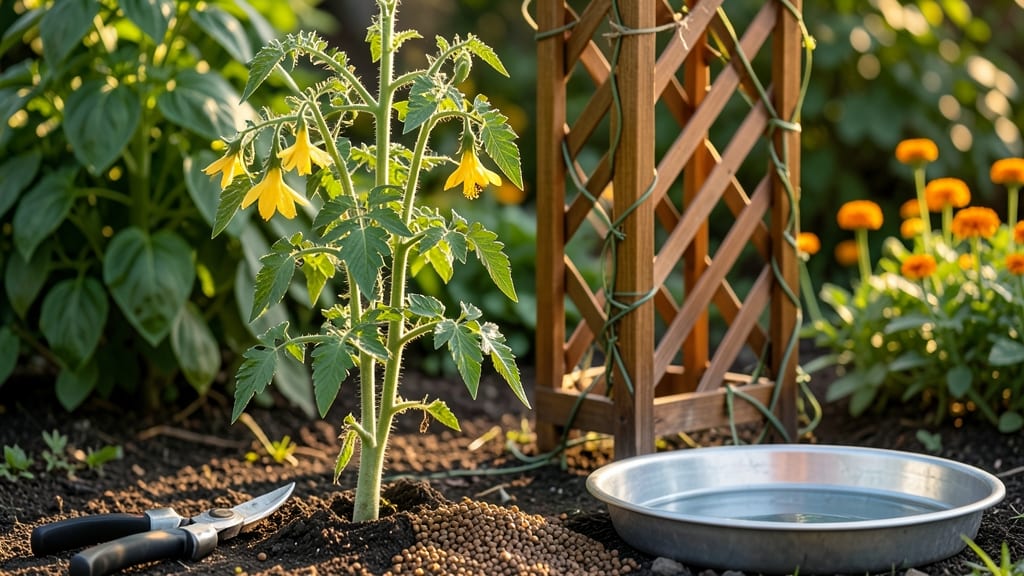
When tomato plants get too tall, prune the main stem above the first flower cluster to redirect energy to fruit production, remove suckers (side shoots), and stake or cage plants for support. Avoid over-pruning to prevent stress or disease risks.
Tall tomato plants often need height control to maximize fruit production and prevent structural damage. 🌱 The key is balancing pruning with plant health—over-trimming weakens the plant, while proper cuts encourage bushier growth and stronger stems.
I recommend pruning indeterminate varieties (like Roma or Beefsteak) more aggressively, since they grow continuously, while determinate types (like Cherry tomatoes) need minimal trimming. Staking or caging after pruning provides essential support, helping the plant channel energy into ripening fruit rather than flopping over.
Timing matters too: early morning pruning reduces stress from heat exposure, and using clean, sharp pruners prevents tearing stems. For best results, focus on removing suckers (the small shoots that form in the leaf axils) regularly throughout the growing season.
This technique not only controls height but also improves air circulation, reducing the risk of fungal diseases like blight.
💡 In This Article
- Tomato Plant Pruning Science: When and How to Control Height
- Step-by-Step Tomato Plant Pruning Guide for Tall Growth
Tomato plant pruning science: when and how to control height
Tomato plants grow tall primarily due to auxin hormones, which regulate cell elongation in the stem. Indeterminate varieties (like 'Sungold' or 'Brandywine') produce continuous growth because their apical meristem—located at the tip—keeps pumping out auxin. This hormone suppresses lateral shoot development, forcing energy upward.
When you prune above the first flower cluster, you're essentially telling the plant to redirect its auxin production downward, stimulating side branches that bear more fruit. 🌿 Determinate types (like 'Celebrity') grow to a fixed height and stop flowering when they reach maturity, so they need minimal pruning—just removing diseased leaves or excessive foliage.
The timing of pruning matters because auxin levels fluctuate with light exposure. Pruning in the morning (when auxin production peaks) gives the plant time to recover before evening temperatures drop.
Studies show that removing suckers—those small shoots growing between the main stem and branches—can increase yield by up to 30% by improving air circulation and reducing competition for nutrients. For tall indeterminate plants, aim to leave 3-4 main stems after pruning, as fewer stems produce larger, sweeter tomatoes.
Over-pruning, however, can stress the plant, making it vulnerable to pests like aphids or diseases like early blight.
Pruning also affects the plant's vascular system. When you cut the main stem, the plant's phloem (which transports sugars) and xylem (which carries water) must adapt to new growth patterns. This adaptation takes energy, so avoid removing more than one-third of the plant's foliage at once.
The goal is to maintain a balance: enough leaves to photosynthesize (feeding the plant) but not so many that they shade the fruit, leading to poor ripening. 🌞 For example, a 6-foot-tall indeterminate plant might need 4-6 pruning sessions throughout the season, while a 4-foot determinate plant may only require light trimming.
Another critical factor is the plant's root system. Pruning above the first flower cluster encourages the roots to grow wider, stabilizing the plant and improving nutrient uptake. This is why staking or caging after pruning is essential—it prevents the plant from toppling over as it redirects energy.
Without support, tall tomato plants can develop weak stems, leading to split fruits or broken branches. For instance, a Beefsteak tomato plant left unstaked after pruning might produce heavy fruit that pulls the stem down, causing stress and reducing yield by 20-25%. 🌱
Environmental conditions also influence pruning effectiveness. In hot climates, prune more aggressively to reduce water loss through transpiration, while in cooler regions, you might prune less to protect the plant from temperature stress.
For example, in Zone 9 (hot summers), prune to leave 12-18 inches of stem between pruning points, whereas in Zone 5 (cooler summers), you might space pruning points 15-20 inches apart.
Always use sterilized pruners to avoid introducing pathogens, and prune just above a leaf node (where new growth can emerge) to encourage healthy regrowth.
What most gardeners overlook is how pruning affects the plant's flowering cycle. Indeterminate tomatoes produce flowers continuously, so pruning too late in the season (after mid-August in most climates) can delay fruit ripening.
The key is to prune early and often, focusing on removing suckers before they grow larger than 2 inches. This keeps the plant's energy focused on developing existing fruit rather than supporting unnecessary growth.
For instance, a Roma tomato plant pruned weekly from May to July will yield 20-30% more tomatoes than one left unpruned, with fruits that ripen more uniformly and have fewer blemishes.