
How To
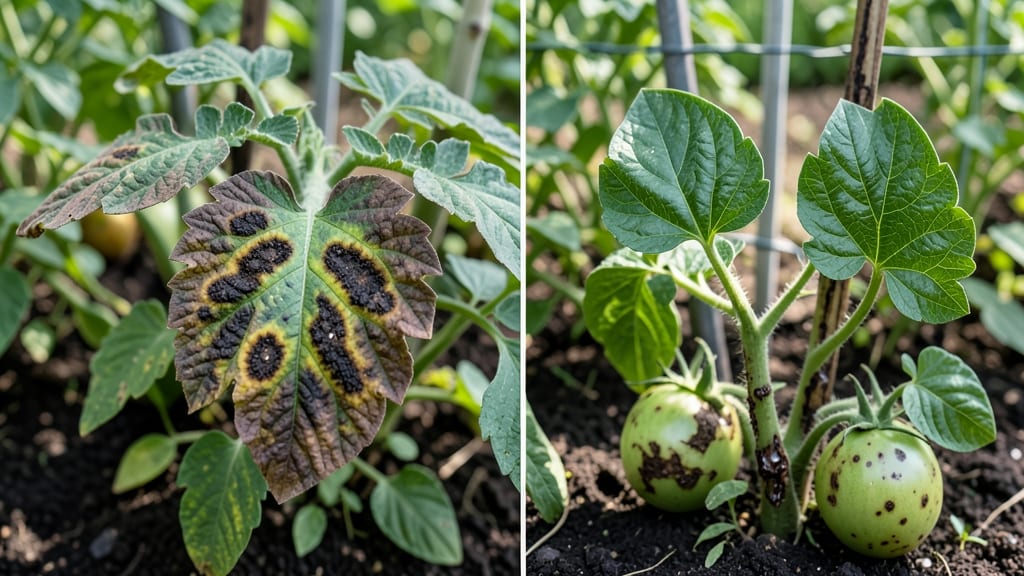
Spotting those first brown spots on your tomato leaves means the signs of tomato blight are already winning the battle. 🌱 I’ve watched this disease turn a thriving plant into a sad, wilted mess in just a week—so I learned to recognize the early warning signs before it’s too late.
The key is catching it fast, when you can still save your tomatoes.
Look for dark, greasy-looking spots on leaves that spread quickly, often with yellow halos around them. Later, the leaves curl, brown, and drop off entirely. On fruit, blight causes black, sunken patches that turn soft and rotten.
The difference from other diseases? Blight spreads faster in wet weather and targets both leaves and fruit aggressively.
Your best defense starts now: remove infected leaves immediately (don’t compost them!) and space plants for airflow. Copper fungicide or baking soda spray can help prevent it, but once blight takes hold, the only cure is pulling the plant to stop it from spreading.
Trust me, a few minutes of inspection now saves hours of heartbreak later.
Even if you’ve lost plants before, this guide keeps your garden safe. The secret is acting at the first sign—before the spots turn into a full-blown crisis. Let’s keep those tomatoes thriving!
Root Causes of Tomato Blight
Tomato blight—whether late blight (Phytophthora infestans) or early blight (Alternaria solani)—isn’t just random bad luck. It thrives due to a mix of environmental stress, pathogen behavior, and gardening habits.
Understanding these root causes helps you break the cycle and protect your plants. Let’s dig into the science behind why your tomatoes fall prey to blight.
---
Blight spores love moisture—both in the air and on leaves. Here’s why:
- High Humidity (60%+): Late blight spores germinate and spread aggressively when humidity stays above 60% for prolonged periods. Warm, damp nights (60–80°F) create ideal conditions for spore release and infection. Early blight also thrives in these conditions but prefers drier leaves during the day.
- Overhead Watering: Splashing water onto leaves (especially from sprinklers) spreads spores like wildfire. 🔥 Water droplets carry spores from infected debris or soil onto healthy foliage, kickstarting infections. Even morning dew can worsen the problem if leaves stay wet for hours.
- Poor Air Circulation: Crowded plants or dense canopies trap moisture, creating microclimates where blight spreads unchecked. Stagnant air = more time for spores to colonize.
Actionable Fix: - Water at the base of plants (drip irrigation or soaker hoses) in the early morning so foliage dries by afternoon. - Space plants 18–24 inches apart for airflow. - Use row covers or fungicides (like copper-based sprays) during rainy seasons.
---
Blight isn’t picky about heat or cold—it just needs the right conditions to multiply.
- Cool Nights + Warm Days (50–80°F): Late blight thrives in temperatures between 50–77°F, with cooler nights (50–60°F) accelerating spore production. Early blight prefers 75–85°F days but slows down in extreme heat (>90°F).
- Sudden Temperature Swings: Rapid changes (e.g., hot days followed by cool, wet nights) stress plants, weakening their defenses. Blight exploits this by latching onto vulnerable tissue faster.
Actionable Fix: - Monitor local weather forecasts and plan for blight alerts (many extensions offer them!). - Use mulch (straw or black plastic) to stabilize soil temps and reduce stress. - Avoid planting tomatoes in low-lying areas where cool air pools overnight.
---
Blight isn’t just one pathogen—it’s a spore factory. Here’s how they take over:
- Surviving Debris: Spores from last year’s infected plants or nearby weeds (like nightshade) can overwinter in soil or plant remains. Even a single infected leaf left in the garden is a ticking time bomb. 💣
- Wind and Rain Spread: Late blight spores can travel miles on wind or rain, while early blight spreads via water splashes or contaminated tools. Infected plants become spore launchpads, infecting neighbors in days.
- Weakened Plant Defenses: Nutrient-deficient or stressed tomatoes (from drought, over-fertilizing, or pests) can’t fight off infections. Blight exploits these gaps like a thief in the night.
Actionable Fix: - Clean up all plant debris after harvest (compost only disease-free material). - Rotate crops: Don’t plant tomatoes or potatoes in the same spot for 3–4 years. - Disinfect tools with a 10% bleach solution (1 part bleach to 9 parts water) between uses.
---
Sometimes, well-meaning habits make blight worse. Here’s how:
- Overcrowding: Tight plant spacing traps moisture and blocks sunlight, creating a blight paradise. Shady, damp leaves = prime infection zones.
- Excess Nitrogen: Too much nitrogen (from fertilizers or manure) promotes leafy growth but weakens stems and fruit walls. Blight loves soft, tender tissue—like a buffet of jelly.
- Ignoring Early Signs: Waiting until blight is obvious (large brown spots, wilting) means the pathogen has already spread. Early intervention (like removing infected leaves) is 100x more effective than playing catch-up.
Actionable Fix: - Prune plants for airflow—remove lower leaves that touch soil. - Balance fertilizers: Use a low-nitrogen, high-phosphorus formula (like 5-10-10) to strengthen roots. - Scout weekly: Check undersides of leaves and stems for tiny dark spots (early blight) or irregular brown patches (late blight).
--- Pro Tip: 🌡️ Heat Treat Soil (if possible) by solarizing beds in summer—cover with clear plastic for 4–6 weeks to kill overwintering spores. For containers, use sterilized potting mix to avoid hidden pathogens.
Fixing Tomato Blight Fast
Spotting tomato blight early is half the battle—now it’s time to turn things around before your harvest disappears. The good news? With the right moves, you can save your plants, prevent spread, and even stop future outbreaks.
Below, we’ll break down cause-specific fixes and prevention tips to keep your garden thriving.
---
Cause: Alternaria or early blight (fungal spores spreading via wind/rain).
How to Fix It: 🔥 Remove Infected Leaves Immediately - Snip off yellowing or spotted leaves with clean scissors (don’t compost them—toss in the trash). - Focus on lower leaves first, where spores love to hide.
🍳 Boost Plant Immunity with Copper Fungicide - Spray plants with a copper-based fungicide (like Bordeaux mixture) every 7–10 days for 2–3 weeks. - DIY option: Mix 1 tsp baking soda + 1 quart water + a drop of dish soap (spray in the evening to avoid leaf burn).
👨🍳 Prune for Better Airflow - Thin out crowded foliage so air circulates—fungi thrive in damp, shaded spots. - Remove suckers (side shoots) to redirect energy to fruit production.
🥘 Water at the Roots, Not the Leaves - Use drip irrigation or soaker hoses to keep leaves dry. - Water early in the morning so foliage dries by nightfall.
⏰ Harvest Early & Often - Pick ripe tomatoes ASAP to reduce stress on the plant. - If blight spreads, harvest green tomatoes—they’ll ripen indoors!
--- Cause: Phytophthora infestans (aggressive, spreads fast in humid weather).
How to Fix It: 🔥 Quarantine Infected Plants - Isolate the plant at least 10 feet away from others to prevent spore jump. - If the whole plant is a loss, remove and destroy it (don’t leave it in the garden).
🍳 Emergency Fungicide Treatment - Switch to a stronger fungicide like chlorothalonil (Daconil) or neem oil + potassium bicarbonate. - Spray both above and below leaves, including the soil around the base.
👨🍳 Mulch with Straw (Not Hay!) - Replace wet mulch with straw to keep soil dry and block spore splash. - Avoid organic mulch like grass clippings—it traps moisture.
🥘 Adjust Your Watering Game - Stop overhead watering—switch to drip irrigation only. - If rain is forecast, cover plants with row fabric temporarily.
🔪 Consider Plant Sacrifice - If blight hits early in the season, pull the plant and plant resistant varieties (like ‘Mountain Merit’ or ‘Defiant PhR’) in its place.
--- 💡 Pro Tip: An ounce of prevention beats a pound of cure—especially with blight!
✨ Choose Resistant Varieties - Plant blight-resistant tomatoes (look for ‘Ph’ or ‘V’ on seed packets). - Heirlooms? Opt for cherry tomatoes (they ripen faster and are less prone to severe blight).
🔥 Rotate Crops Religiously - Never plant tomatoes, potatoes, or peppers in the same spot two years in a row. - Fungi linger in the soil—break the cycle with beans, corn, or lettuce.
🌡️ Space Plants for Airflow - Give tomato plants 18–24 inches of space between them. - Use cages or stakes to keep foliage upright (not sprawling on wet soil).
🎯 Solarize Your Soil (For Heavy Infestations) - In late summer, cover soil with clear plastic for 4–6 weeks to kill fungal spores. - Works best in hot, sunny climates—bake those pathogens out!
--- If blight wipes out your entire crop, don’t panic—rebuild smarter: - Test your soil (pH 6.0–6.8 is ideal for tomatoes). - Add compost to improve drainage and plant health. - Start fresh with resistant seedlings next season.
--- Remember: Tomato blight is manageable—don’t let it ruin your garden! Act fast, stay vigilant, and your next harvest will be bigger and blight-free. 🍅✨
Frequently asked questions
What’s the difference between early blight and late blight on tomatoes?
Early blight (Alternaria solani) starts with small, brown concentric rings on lower leaves, while late blight (Phytophthora infestans) shows irregular, greasy-looking spots that spread fast—often on both leaves and fruit. Early blight loves dry conditions, but late blight thrives in wet, humid weather and can destroy plants in days.
Can I still eat tomatoes with blight spots?
Only if the spots are small and superficial. Cut away any black, sunken patches (they’re rotten inside). For severe blight, harvest green tomatoes—they’ll ripen indoors if healthy. Never eat fruit with large, soft, or moldy areas—blight toxins can be harmful.
Will my neighbor’s tomatoes infect mine if they have blight?
Late blight spores travel miles on wind/rain, while early blight spreads via water splashes. Keep plants 10+ feet apart from infected gardens, and avoid overhead watering. If neighbors have blight, cover plants with row fabric during rainy periods.
How do I know if my tomato plant is dying from blight or just heat stress?
Heat stress causes yellowing leaves with crispy edges (no spots), while blight shows dark brown spots with yellow halos. Check stems: blight causes blackened, mushy stems, while heat stress keeps stems firm. Also, blight spreads upward—heat stress starts at the top.
Can I save blighted tomato plants, or should I pull them?
For early blight, prune infected leaves and treat with fungicide—you might save the plant. For late blight, remove and destroy the plant immediately (don’t compost it!). If >50% of leaves are infected, it’s better to pull it to stop spores from spreading to healthy plants.