
Vegetables
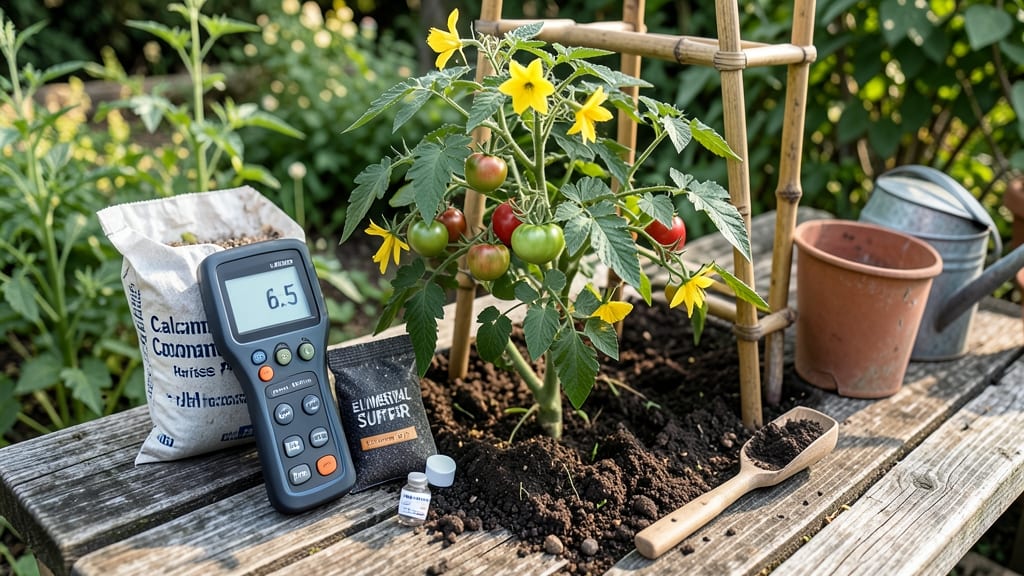
The ideal tomato soil pH level ranges from 6.2 to 6.8, balancing acidity and alkalinity to maximize nutrient uptake, especially for calcium and phosphorus. Regular pH testing prevents common issues like blossom-end rot or stunted growth.
Tomatoes are finicky about soil chemistry, and that 6.2–6.8 range isn't arbitrary—it's where calcium and phosphorus become most bioavailable. 🌱 Outside this window, nutrients lock up: too acidic (<6.0) starves plants of phosphorus, while alkaline soil (>7.0) blocks iron and manganese uptake, causing yellowing leaves.
I've seen gardeners waste months chasing "perfect" soil only to realize their pH was off by just 0.5 points—small shifts make huge differences.
Testing is your first line of defense. Most garden centers sell DIY pH test kits for under $10, or you can send samples to a lab for precise readings.
The key is adjusting gradually: if your soil is too alkaline, work in elemental sulfur (1–2 pounds per 100 sq ft) in early fall; for acidity, mix in pelletized lime (5–10 pounds per 100 sq ft) in late winter. Patience pays off—rushing adjustments can disrupt microbial life in the soil.
💡 In This Article
- How Soil pH Affects Tomato Nutrient Uptake
- Step-by-Step Guide to Adjusting Soil pH for Tomatoes
How soil pH affects tomato nutrient uptake
Soil pH directly controls which nutrients tomatoes can absorb through their roots. At the ideal 6.2–6.8 range, calcium becomes highly available—critical for cell wall strength and preventing blossom-end rot. Phosphorus, another key player, peaks in availability around pH 6.5, fueling root development and flower formation.
The science lies in how hydrogen ions (H+) compete with nutrient ions for root uptake sites: too many H+ (low pH) or too few (high pH) disrupt this balance.
Alkaline soil (pH 7.0+) creates a double whammy for tomatoes. First, iron and manganese—essential for chlorophyll production—precipitate into insoluble forms, causing yellowing between leaf veins (iron chlorosis). Second, calcium uptake drops sharply, leading to weak stems and blossom-end rot.
I've seen tomato plants in pH 7.5 soil develop stunted growth despite receiving fertilizer, because the nutrients simply weren't accessible. 🌿 The root zone's pH can even vary by 0.5 points just inches away, creating nutrient hotspots that confuse plants.
Micronutrient availability follows precise pH curves. For example, zinc becomes scarce below pH 6.0, while boron (needed for cell division) locks up above pH 7.2. These deficiencies manifest as stunted growth, brittle stems, or deformed leaves—symptoms gardeners often misdiagnose as disease.
The soil's cation exchange capacity (CEC) also drops in extreme pH conditions, reducing its ability to hold onto nutrients between waterings.
Organic matter plays a hidden role here. Compost and well-rotted manure naturally buffer pH swings by 10–20%, maintaining nutrient availability even when soil pH drifts slightly. This is why healthy garden soil often tests slightly more forgiving than sterile potting mixes.
The microbial community thrives in the 6.2–6.8 range, breaking down organic matter into forms tomatoes can use—another reason why synthetic fertilizers alone can't compensate for poor pH management.
Visual clues help diagnose pH issues early. Yellowing leaves with green veins signal iron/manganese deficiency (common in alkaline soil), while purple stems indicate phosphorus starvation (seen in acidic conditions). The key is acting before symptoms appear: regular testing catches problems when they're still reversible.
For example, adding 1 pound of sulfur per 100 sq ft can lower pH by 0.5 points over 2–3 months, while lime raises it by 1 point per 1,000 pounds applied**.
What most gardeners overlook is how pH interacts with moisture. In waterlogged soil, even the right pH can cause nutrient leaching because oxygen deprivation forces roots to scavenge harder for what's available. This is why raised beds—with their better drainage—often produce healthier tomatoes even when soil pH is slightly off.
The lesson? Perfect pH matters, but it's just one piece of the soil puzzle. ✨