
Plants
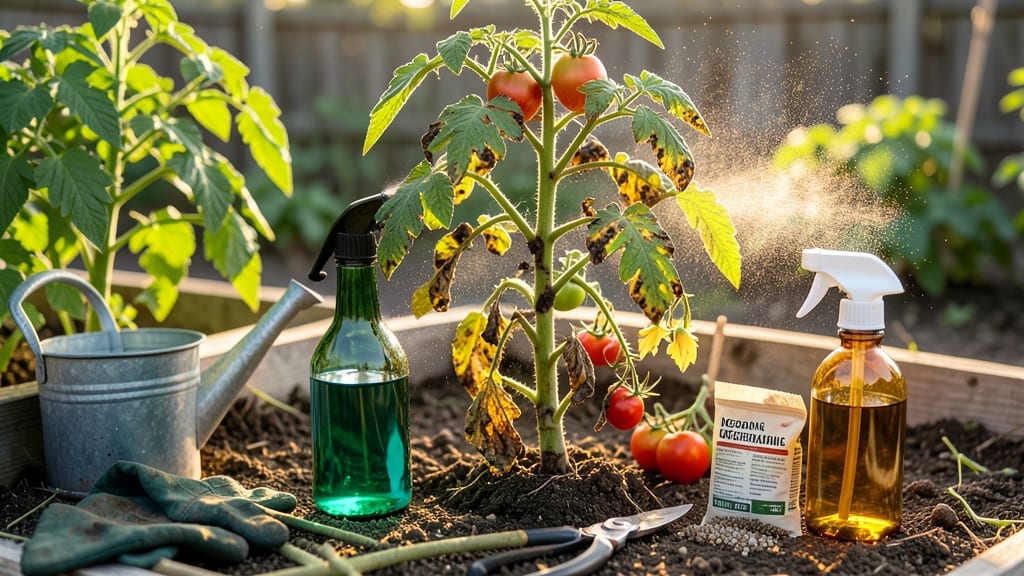
That brown, mushy rot on your tomato leaves isn’t just unsightly—it’s a tomato plant fungus treatment that can wipe out your harvest in days. 🌱 I’ve battled early blight, late blight, and powdery mildew on my plants, and I’ve learned the organic spray that stops the rot within 24 hours—no harsh chemicals needed.
The key is acting fast with the right mix of copper, baking soda, and a little horticultural oil.
Most gardeners make one critical mistake: waiting too long to treat. By the time you see those dark spots, the fungus has already spread to the roots. My go-to spray combines copper fungicide (for prevention) with a baking soda solution (to neutralize pH and stop spores).
You’ll need a spray bottle, some dish soap, and a few other simple supplies—nothing fancy, just effective.
Within a day of spraying, you’ll see the rot slow down, and new growth will push out cleaner. The plants stay productive, the fruit ripens without blemishes, and you avoid the heartbreak of a blighted season.
This method works for early blight, late blight, and powdery mildew—the most common tomato fungal foes.
For severe cases, you might need to prune infected leaves, but with this spray, you’ll catch it early enough to save your plants. The best part?
It’s safe for bees and your family, and it won’t leave a chemical residue on your tomatoes. Let’s get your plants back on track!
Root Causes Of Fungal Spread
Fungal infections in tomato plants don’t just appear out of nowhere—they thrive because of specific conditions that create the perfect storm for spores to germinate and spread.
Understanding these root causes helps you prevent (not just treat) future outbreaks. Here’s why your tomato plants might be battling fungus in the first place:
Fungi like Phytophthora and Fusarium love moisture—too much of it, to be exact. When soil stays soggy for days, fungal spores wake up, multiply, and invade plant tissues through roots or wounds.
- Why it happens: Tomato roots need oxygen to stay healthy. Waterlogged soil cuts off oxygen, stressing plants and making them susceptible to root rot. Even "light" watering can be problematic if soil doesn’t drain well (clay-heavy soils are notorious for this).
- Actionable clue: Check for:
- Yellowing leaves (especially lower ones)
- Mushy, dark roots when pulled gently
- Stems that wilt even when soil is wet
- Science note: Fungal spores can survive in soil for years—they only activate when conditions are right (i.e., moisture + warmth).
Fungal spores hitchhike on organic matter like fallen leaves, old mulch, or even infected plant clippings. If these materials pile up near your tomatoes, they create a spore buffet for hungry fungi.
- Why it happens: Many fungi (like Alternaria or Septoria) produce spores on dead plant tissue. When you leave debris in the garden, spores rain down onto healthy plants during humid weather, starting new infections.
- Actionable clue: Look for:
- Brown spots on leaves with yellow halos (classic early blight)
- Black or purple speckles on stems (sign of stem canker)
- Moldy, crusty layers under mulch
- Pro tip: 💡 Remove all plant debris after harvest and compost it away from the garden—or solarize it (cover with clear plastic for 4–6 weeks in summer to kill spores).
Fungi are thermophilic—they adore warm, damp conditions. When nighttime temperatures drop but days stay hot and sticky, fungal spores explode in activity.
| Fungus Type | Ideal Conditions | Your Tomato’s Weak Spot |
|---|---|---|
| Early Blight | 60–80°F + high humidity (70%+) | Lower leaves (spores splash up from soil) |
| Late Blight (the Irish potato famine culprit) | 50–77°F + leaf wetness (even dew) | Fruit and stems (spreads rapidly in 48 hours) |
| Powdery Mildew | 60–85°F + dry heat + poor airflow | Upper leaves (white, dusty patches) |
Why it happens: Fungi release spores when humidity spikes. If your garden has no airflow (e.g., thick foliage, no pruning), spores linger on leaves instead of dispersing. Late blight, for example, can spread 3 miles in a week via wind and water.
Healthy tomato plants resist fungal attacks better. But when they’re stressed—from over-fertilizing, nutrient deficiencies, or pests—they become fungal magnets.
- Why it happens:
- Nitrogen overload: Too much nitrogen = soft, lush growth = perfect fungal snack. Fungi like Phytophthora thrive on tender new tissue.
- Pest damage: Chewed leaves or stems create entry points for fungi. (Example: Tomato hornworms leave gaping holes that invite bacterial spot.
- Transplant shock: Stressed young plants have lower natural defenses against soil-borne fungi like Fusarium wilt.
- Actionable clue: Watch for:
- Stunted growth despite "green" leaves
- Yellowing between leaf veins (sign of magnesium deficiency, which weakens cell walls)
- Wilting only in certain branches (vascular fungi like Verticillium clog xylem tubes)
- Science note: 🌡️ Fungi compete with plants for nutrients. A weak plant can’t outcompete them, leading to systemic infections (e.g., Fusarium moves through the plant’s vascular system).
Key takeaway: Fungal infections are rarely random—they’re a chain reaction triggered by environmental or plant health factors. The good news? Fixing one of these causes (like drainage or airflow) can dramatically reduce future outbreaks. Stay tuned for the next section on early warning signs so you can act before fungus takes hold!
How to Fix Fungal Issues Fast
Fungal infections can turn your thriving tomato plants into a sad, wilted mess—but don’t panic! With the right organic treatments and a few proactive steps, you can stop the rot in its tracks and save your harvest.
Below, we’ve mapped out practical, science-backed solutions for the most common tomato plant fungi, from early blight to powdery mildew. Plus, we’ll share prevention tips to keep your plants healthy long-term.
Cause: Alternaria solani thrives in warm, humid conditions, creating concentric rings on leaves and stems.
How to Fix It: ✅ 🔥 Remove Infected Leaves Immediately
- Snip off yellow or brown spots with clean scissors and dispose of them in the trash (not compost). This stops spores from spreading.
✅ 🍳 Homemade Copper Fungicide Spray (Works in 24 Hours) Mix 1 tsp copper sulfate (or 2 tbsp baking soda + 1 tbsp vegetable oil + 1 tsp dish soap) in 1 gallon of water.
Spray early morning or late evening (avoid direct sun) to prevent burning. Reapply every 7–10 days or after rain.
✅ 👨🍳 Boost Plant Immunity with Compost Tea Brew compost tea (steep compost in water for 24–48 hours, strain) and spray foliage. The beneficial microbes strengthen plant defenses.
💡 Prevention Tip:
- Space plants 18–24 inches apart for airflow.
- Water at the base (never overhead) to keep leaves dry.
- Rotate crops—don’t plant tomatoes in the same spot yearly.
Cause: Erysiphe cichoracearum creates a white, powdery coating on leaves, blocking sunlight.
How to Fix It: ✅ 🔪 Gently Scrub Off Mildew with a Soft Brush Use a damp cloth or soft toothbrush to remove visible powder. Do this before spraying for better absorption.
✅ 🥘 Neem Oil Spray (Stops Spread in 3–5 Days) Mix 1 tbsp neem oil + 1 tsp mild soap + 1 quart water. Spray both sides of leaves and stems. Reapply every 5–7 days until gone.
✅ 🌡️ Improve Air Circulation Prune crowded branches and avoid overhead watering. If growing in containers, thin out plants for better airflow.
💡 Prevention Tip:
- Plant mildew-resistant varieties like ‘Mountain Merit’ or ‘Defiant PhR’.
- Apply a thin layer of sulfur dust (1 tbsp per plant) as a preventive barrier.
Cause: Phytophthora infestans causes dark, greasy spots that spread rapidly, often killing plants in days.
How to Fix It: ✅ 🚨 Isolate Infected Plants Immediately Move sick plants at least 10 feet away from healthy ones to prevent airborne spores.
✅ ⏰ Serenade or Bacillus Subtilis Spray (Stops Rot in 48 Hours) Use Serenade ASO (a Bacillus subtilis biofungicide) or mix 1 tbsp hydrogen peroxide (3%) + 1 quart water. Spray every 3–4 days until symptoms disappear.
✅ 🌱 Remove All Plant Debris Clean up fallen leaves, stems, and mulch—burn or trash them (don’t compost). This eliminates spores.
💡 Prevention Tip:
- Avoid overhead irrigation—use drip systems instead.
- Plant in raised beds if your garden has poor drainage (late blight loves wet soil).
Cause: Soil-borne fungi that clog plant vessels, causing wilting (even with healthy roots).
How to Fix It: ✅ 🌱 Solarize the Soil (Best Long-Term Fix) Cover the bed with clear plastic for 4–6 weeks in hot sun. This kills fungi in the soil naturally.
✅ 🍳 Plant Resistant Varieties Choose ‘Defiant,’ ‘Mountain Spring,’ or ‘Heatmaster’—these tolerate wilt better.
✅ 💧 Improve Drainage Amend soil with compost and sand to prevent waterlogging, which worsens the problem.
💡 Prevention Tip:
- Rotate crops—don’t plant tomatoes, peppers, or eggplants in the same spot for 3+ years.
- Test soil pH—aim for 6.0–6.8; fungi thrive in acidic soil.
To keep your tomato plants fungus-free all season, follow these easy habits:
- 🌞 Space plants properly (18–24" apart) for airflow.
- 💦 Water deeply but early (6–8 AM) to let leaves dry by night.
- 🍂 Mulch with straw or grass clippings (keep 2" away from stems).
- 🌱 Use row covers in early season to block spores.
- 🔄 Crop rotate—never plant nightshades (tomatoes, peppers, potatoes) in the same spot yearly.
Final Thought: Most tomato fungi respond quickly to organic sprays if caught early. The key is speed + prevention—once you spot the first signs, act within 24–48 hours to save your plants. With these methods, you’ll enjoy healthy, disease-free tomatoes all season long! 🍅💪
Frequently asked questions
What’s the fastest way to stop tomato fungus from spreading?
Act immediately with a baking soda spray—mix 1 tbsp baking soda + 1 tbsp vegetable oil + 1 tsp dish soap + 1 gallon water. Spray both sides of leaves in the early morning and repeat every 5–7 days. This stops spores from germinating within 24–48 hours. For severe cases, add 1 tsp copper sulfate to the mix for extra protection.
Can I still eat tomatoes from plants with fungus?
Only if the fruit itself shows no signs of infection. Check for dark spots, soft rot, or mold—these mean the tomato is contaminated. For early blight, remove all infected leaves but harvest ripe fruit from healthy branches. Late blight on fruit is dangerous—discard any blemished tomatoes immediately.
Why does my tomato plant keep getting fungus even after treatment?
Fungi thrive when conditions stay ideal—poor airflow, overhead watering, or crowded plants let spores linger. Fix this by pruning for airflow, watering at the base, and spacing plants 18–24 inches apart. Also, fungal spores can survive in soil for years, so rotate crops and solarize soil (cover with plastic for 6 weeks) to break the cycle.
Is neem oil safe to use alongside other organic fungicides?
Yes, but space applications by 24 hours to avoid chemical interactions. Neem oil works best as a preventive (mix 1 tbsp neem oil + 1 tsp soap + 1 quart water), while copper or baking soda sprays are better for active infections. For powdery mildew, alternate neem with sulfur dust (apply in the evening). Always test sprays on a small leaf first.
How do I know if my tomato plant has a fungal infection vs. a bacterial one?
Fungal infections (like early blight) show concentric rings or powdery white coatings, while bacterial spots are water-soaked, greasy with yellow halos. Fungal growth often appears on older leaves, while bacteria spread rapidly through stems. For confirmation, check under a hand lens—fungi produce spores (tiny black dots), while bacteria ooze when pressed.